



Who Really Owns Heirloom Beans?
Who Really Owns Heirloom Beans? The Fight to Keep Food in the Commons
By Lisa Riznikove, Chief Bean Officer, Foodocracy
Food trademarks have been in the news a lot lately, and Foodocracy has been at the center of it.
In the past few weeks, Slate and The Los Angeles Times have both covered a dispute between Foodocracy and Rancho Gordo, a Napa-based heirloom bean company that holds a federal trademark on the term "bean club", and has sent cease-and-desist letters to at least two small businesses, including ours, for using that phrase to describe their subscription services. We've also been featured on the Today Show and in the San Francisco Chronicle, which originally broke the story.
I didn't go looking for this fight. And I want to be honest: this piece is not really about that specific dispute, or about any one company. I have thoughts about the merits of this particular trademark — we'll get to those, but the story I actually want to tell is bigger and more i

mportant than us versus anyone.
This is about a pattern. A quiet, accelerating trend in the food world of generic and descriptive terms being locked up through trademark, terms that small farms and independent sellers depend on to describe what they do, to be found by the customers who are looking for them, and to build the kind of sustainable income that keeps them farming. And it is a pattern that, whether intentionally or not, consistently favors players with resources over the farmers and small businesses at the foundation of our food system.
We have some thoughts about that.
Who gets to own the language of food?
Not the beans themselves. Not the farms. Not the seeds, though that battle has been raging for decades. I'm talking about the words, the common, descriptive, centuries-old words that farmers use to sell their crops, that home cooks use to find ingredients, that food writers use to tell origin stories. Words like heirloom bean. Words like club. Words like Medianoche.
What happens when a company decides those words belong to them?

The Enclosure of the Seed Commons — A Pattern We Should Recognize
To understand what's happening in the specialty food world, it helps to zoom out. Way out, not to the level of the biggest agribusiness players, but to the farmers themselves.
The consolidation of agricultural power has been building for decades, quietly and methodically, at every scale. It doesn't require a multinational corporation. The pattern repeats wherever one player in a market grows large enough to set the terms, to define the category, control the vocabulary, and make everyone else look like a derivative. It has happened in seeds. It is happening in specialty food.

In the seed industry, the mechanism was intellectual property. Starting in the 1980s and accelerating through the 1990s, seeds began to be treated not as living things that farmers had cultivated and exchanged for ten thousand years, but as patentable inventions. Farmers who had saved seeds for generations found themselves legally prohibited from doing so. Independent plant breeders found that genetic material they had always freely accessed was suddenly locked behind licensing agreements. Regional seed companies that had served farming communities for generations were acquired, consolidated, and absorbed. The commons, that vast, shared inheritance of agricultural diversity that belongs to all of us, began to shrink.
The numbers tell the story. Historians estimate that farmers once cultivated approximately 7,000 plant species throughout human history. Today, just 12 species provide 75% of the world's food. We have lost more than 75% of agricultural genetic diversity in the past century alone.
Scale doesn't excuse this. A company doesn't have to be a global giant to cause harm through consolidation. The damage to a small farm in Morelos or a dry-farmed operation in the Sacramento Valley is equally real whether the pressure comes from a multinational or a well-capitalized niche player with a 34,000-person waitlist. What matters is whether the power is being used to open the market or to close it.
From Seeds to Words: The Next Barrier
I want to be clear: Foodocracy is not a legal organization, and I'm not writing this as a legal brief. But I am someone who has spent years working directly with small farms — in California, in Wisconsin, in Arizona, in Mexico, and what I'm watching happen in the specialty food world is a recognizable pattern. A new kind of consolidation of power. Not of seeds this time, but of language.

The language of food is not neutral. Bean variety names like Ayocote Morado, Flor de Mayo, Anasazi, these words carry centuries of meaning. They come from indigenous communities, from regional farming traditions, from the agricultural lexicon of entire cultures. They exist in the public domain because they have always been there: common names for common things, passed farmer to farmer, cook to cook, generation to generation.
When a company trademarks a phrase that describes a category, not their brand, but the thing itself, they are staking a claim on shared vocabulary. And the consequences fall hardest on the people who can least afford to fight back.
Small farms don't have trademark attorneys on retainer. They don't have the budget to monitor competitor filings or challenge a USPTO registration. When a dominant player in a niche market claims ownership of a commonly used descriptive term, small growers and small sellers often don't even know it happened until they've already been told to stop using it. A company doesn't need to be a global conglomerate for this dynamic to play out. It just needs to be significantly larger than the farmers it sources from, and in specialty food, almost everyone is.
That's not brand protection. That's gatekeeping.
What Happens When One Player Defines a Category
There's a concept in market theory about what happens when a single company becomes so dominant in a niche that it begins to define that category in the public imagination. The brand and the thing become synonymous in consumers' minds, and that synonymy becomes a kind of informal monopoly, even without formal legal protection.
We've seen this play out in specialty food before. When a single company dominates media coverage, commands the longest waitlists, and sets the cultural reference point for an entire product category, smaller players face a different kind of headwind: not just competition, but the constant implication that their version is derivative. That they are copies of something that, in fact, predated the dominant player, or grew independently alongside it, or serves entirely different farmers and communities.

The copycat label, and it circulates, in emails, in social media, in the ambient chatter of a niche food world, is one of the most effective tools for consolidating a market. It doesn't require legal action. It just requires repetition.
This is why the language matters. When a small farm or a mission-driven marketplace can't use the straightforward, descriptive terms that consumers search for, when the common vocabulary of a category has been claimed, it's not just an inconvenience. It directly threatens the ability of smaller players to be found, to tell their story, and to build the sustainable income that keeps independent farms viable.
When Language Gets Trademarked: Why the Law Is Supposed to Prevent This
Here's where it's worth getting into the legal weeds for a moment, because the rules around generic trademarks exist for a very good reason, and understanding them makes clear why the current trend of generic terms slipping through is so damaging.
Trademark law in the United States has a foundational principle: generic terms cannot be trademarked. Full stop. The logic is straightforward. A generic term describes the category of a product, not a specific brand within it. "Email" cannot be trademarked. "Cereal" cannot be trademarked. These words belong to everyone who sells those things, because if one company owned them, every competitor would be legally blocked from using the most natural, intuitive language to describe what they sell.
The test the courts use is called the "primary significance" test: does the term primarily signal source (i.e., a specific brand) or category (i.e., a type of product)? If a consumer hears "bean club" and thinks first of a type of subscription rather than a specific company, the term functions generically, and under trademark law, it should not be ownable.
The Pop Tart principle: Kellogg's invented the toaster pastry category in 1964 and Pop-Tarts became so dominant that the brand name became nearly synonymous with the product type. But Kellogg's never trademarked "toaster pastry", the descriptive category term. As a result, competitors can freely call their products toaster pastries, giving consumers the ability to search for, find, and choose among options. Pop-Tarts still dominates the category. The lack of a generic trademark didn't hurt Kellogg's. But it did ensure that the market remained open.
The Subway "Footlong" precedent: In 2013, the Trademark Trial and Appeal Board (TTAB), the administrative body within the USPTO that resolves trademark disputes, ruled against Subway's attempt to trademark the term "Footlong" for sandwiches. This wasn't a small or obscure brand. Subway was, at the time, the largest fast food chain in the world by number of locations, and had invested enormously in marketing "Footlong" as a signature product. None of that mattered. The TTAB ruled that "footlong" described a characteristic of the product — and therefore belonged to the category, not to any single seller. Critically, the ruling explicitly held that even heavy advertising investment cannot transform a generic term into a protectable trademark. The market for foot-long sandwiches stayed open. Subway continued to dominate it anyway.
These cases exist because the system, when it works correctly, protects the commons of commercial language and the lack of trademark did not cause the originator to lose market dominance. That's because the trademark of generic terms isn't about clearing up consumer confusion, its about creating a competition-free market for the dominant player. The problem is that the system doesn't always work correctly — and lately, in the specialty food world, it has been failing in ways that are increasingly hard to ignore.
Generic terms are slipping through. A term like the one trademarked by Rancho Gordo describes, plainly and directly, a subscription club that delivers beans. It tells a consumer what type of product they're looking at, not which company is selling it. That is the definition of a generic, descriptive term. Legal experts who have reviewed the trademark have noted that if it were to be challenged, it would face serious scrutiny, and potentially cancellation, on exactly these grounds. But here's the problem: challenging a trademark registration is expensive. It requires filing a petition with the TTAB, engaging trademark counsel, and sustaining a legal process that can take years. That is simply not an option for most small farms or independent food marketplaces.
And the stakes are higher now than they have ever been. In the age of search engines and AI-powered discovery, the words consumers use to find products are the infrastructure of commerce for small brands. When a small farm in California or a family operation in Mexico wants to reach the home cook who is looking for an heirloom bean subscription, they depend entirely on being able to use the language that consumer is actually typing into a search bar. Lock up that language, and you don't just win a legal dispute, you quietly reshape who gets found and who disappears.
The Momofuku lesson: In 2024, chef David Chang's company Momofuku sent cease-and-desist letters to small, independent food brands, many of them minority-owned and women-owned, demanding they stop using the terms "chili crunch" and "chile crunch" to describe their products. Jing Gao, founder and CEO of Fly by Jing, called it "a dangerous precedent for the squashing of fair competition, not to mention how ridiculous it is to try and take ownership of a generic cultural term." The backlash was immediate and overwhelming. Chang issued a public apology on his podcast and announced that Momofuku would no longer enforce the trademark, a meaningful concession, even if it stopped short of formally relinquishing the registration.
The Momofuku story illustrates something important: the court of public opinion is often the only court accessible to small brands. Legal challenges to generic trademarks are theoretically available to anyone, but practically available only to those with deep pockets. When the formal legal system is too expensive to access, the only recourse left is transparency, making the case publicly, clearly, and on the merits, and trusting that consumers and the broader food community will respond.
That is exactly what we are doing here.
The Open Source Alternative: What the Seed World Got Right
The seed world has spent the last decade developing a counter-model. The Open Source Seed Initiative (OSSI), founded in 2012 by a coalition of plant breeders, farmers, and academics, took direct inspiration from the open source software movement. Their premise was simple: seeds are a commons. The genetic diversity of crops has always been a shared inheritance, and no company should be able to lock it away.
The OSSI Pledge commits breeders to keeping their varieties perpetually available, free to grow, save, breed, and share, with only one condition: you can't restrict others from doing the same. It's a protected commons: free, but not unprotected.
The model is imperfect and not universally applicable. But the underlying philosophy is exactly right. Some things are too important to the collective good to be privatized. Seeds are one of them.
We believe the language of food is another.
Why We Put the Medianoche in the Public Domain

Before the conversation about bean trademarks became news, we made a deliberate decision, and it's worth explaining carefully, because it's different from simply protecting something that already existed.
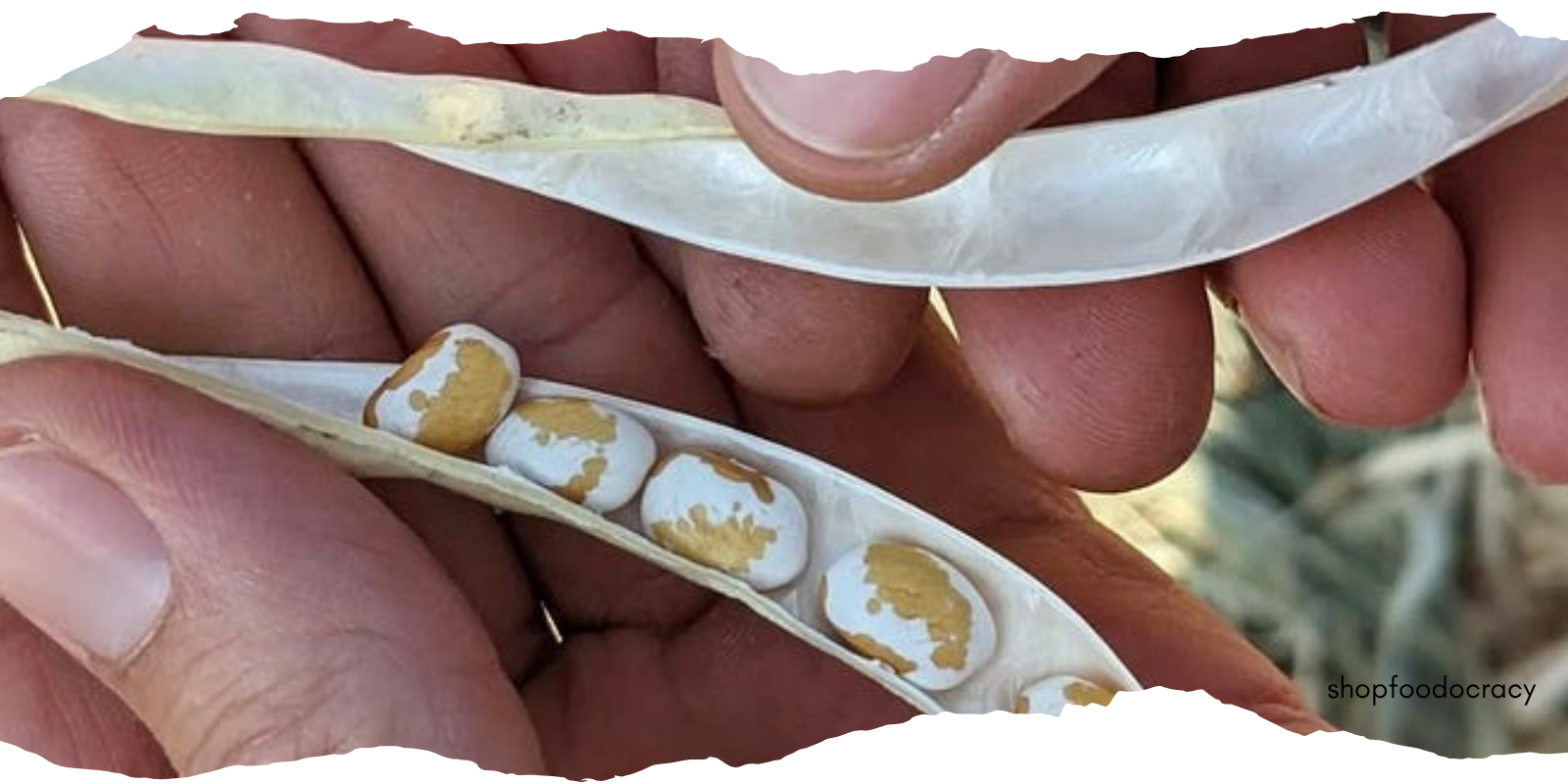
The Medianoche is an Ayocote bean: a family of large, meaty climbing beans with deep roots in Mexican indigenous agriculture. The Ayocote is ancient. The specific variety we source, with its extraordinary inky-black color and its particular flavor profile, did not previously have a name in commerce. We named it. Medianoche, midnight, for the depth of its color.
It is grown by Joel Rivero and his family, small shareholder farmers in a tiny village in Mexico. This crop is not a hobby or a side business. It is the livelihood that keeps them farming, that keeps them from leaving their land and becoming wage laborers on a large corporate operation somewhere else. That distinction matters enormously. Every time someone buys a bag of Medianoche beans, they are making it possible for one family to stay on one piece of land and keep growing one irreplaceable variety. That is what "supporting small farms" actually looks like up close.
We could have trademarked it. We chose not to. Instead, we placed the name formally in the public domain. READ MORE
We announced it publicly. We documented it. We wanted there to be a clear record.
This wasn't a PR strategy, and it wasn't simply preservation, it was a gift forward. We named this bean so that farmers could benefit from it universally: so that any grower, any seller, any cook could use the name freely, without owing anyone a licensing fee or a permission slip. The name belongs to the bean and to the farmers who grow it, not to us. We believe that's how it should work, that when a marketplace has the opportunity to contribute something to the food commons rather than claim it, that's what it should do.
You can read more about how we got here, and what Foodocracy is, where we came from, and what this moment means to us, in this letter from our founder.
What This Means for Small Farms

Let me make this concrete, because abstract arguments about intellectual property tend to obscure the human cost.
We work with La Comandanta, a women-owned Mexican company dedicated to preserving indigenous varieties of beans and corn and the traditional milpa farming system, the ancient practice of growing beans, corn, squash, and chilis together in a way that has sustained communities and built soil health for millennia. We work with the Brossy family at Ernie's Organics in California, with Fifth Crow Farm on the San Mateo coast, with Mike Heath and his dry-farmed beans in the Sacramento Valley. These are small operations. Their margins are thin. Their ability to reach customers depends entirely on being findable, on being able to describe their products clearly, to use the names their buyers are already searching for.
When the common language of a food category gets privatized, these farmers lose visibility. Not because their product is inferior. Because the words that would make them discoverable belong to someone else.
Farmers already earn an average of just 10 cents on every dollar spent at the supermarket. The rise of direct-to-consumer food markets, subscription clubs, online marketplaces, farmers' market-style e-commerce, was supposed to change that equation. A farmer growing a rare heirloom bean variety should be able to describe it plainly, sell it directly, and keep a meaningful share of the revenue.
That vision only works if the marketplace is truly open. If the language of food remains in the commons.
The Bigger Picture: Anti-Consolidation as a Food Value
Foodocracy was founded on a simple belief: that a more independent food system is better for all of us. Better for the soil, better for biodiversity, better for the farmers who grow our food, and better for the communities that depend on those farms.
We are explicitly, deliberately, unapologetically anti-consolidation.
That means we prioritize small farms over large ones. We pay prices that reflect the actual cost of growing food with integrity. We don't require our farmers to sign exclusivity agreements that trap them in a single distribution relationship. We publish information about where our beans come from, who grew them, and how, not as a marketing tactic, but because radical transparency is the only way to hold ourselves and our supply chain accountable.
And it means we will continue to fight, through our sourcing practices, our advocacy, and yes, our words, against the enclosure of the food commons. Whether that enclosure takes the form of seed patents, corporate consolidation of the supply chain, or the trademarking of the language that small farms depend on to survive.
The heirloom bean community is small. It's passionate. And it's at a crossroads: it can become another niche food category defined and controlled by a dominant player, or it can remain what it has always been, a living, diverse ecosystem of small farmers, independent sellers, and home cooks who care deeply about where their food comes from.
We're choosing the ecosystem.
What You Can Do
If you believe that food and agriculture should belong to the many rather than the few, here's where to start:
Buy direct from small farms. Every dollar you spend with a farmer-first marketplace instead of a consolidated retailer changes the math for a real person growing real food.
Ask where your beans come from. Not just the country. The farm. The farmer. The variety name. If a company can't tell you, that's information.
Support the open source seed movement. Organizations like the Open Source Seed Initiative and Seed Savers Exchange are doing the hard work of keeping agricultural diversity in the commons.
Pay attention to who's defining the language. When a company claims exclusive rights to describe what they sell, ask whether that description belongs to one brand or to all of us.
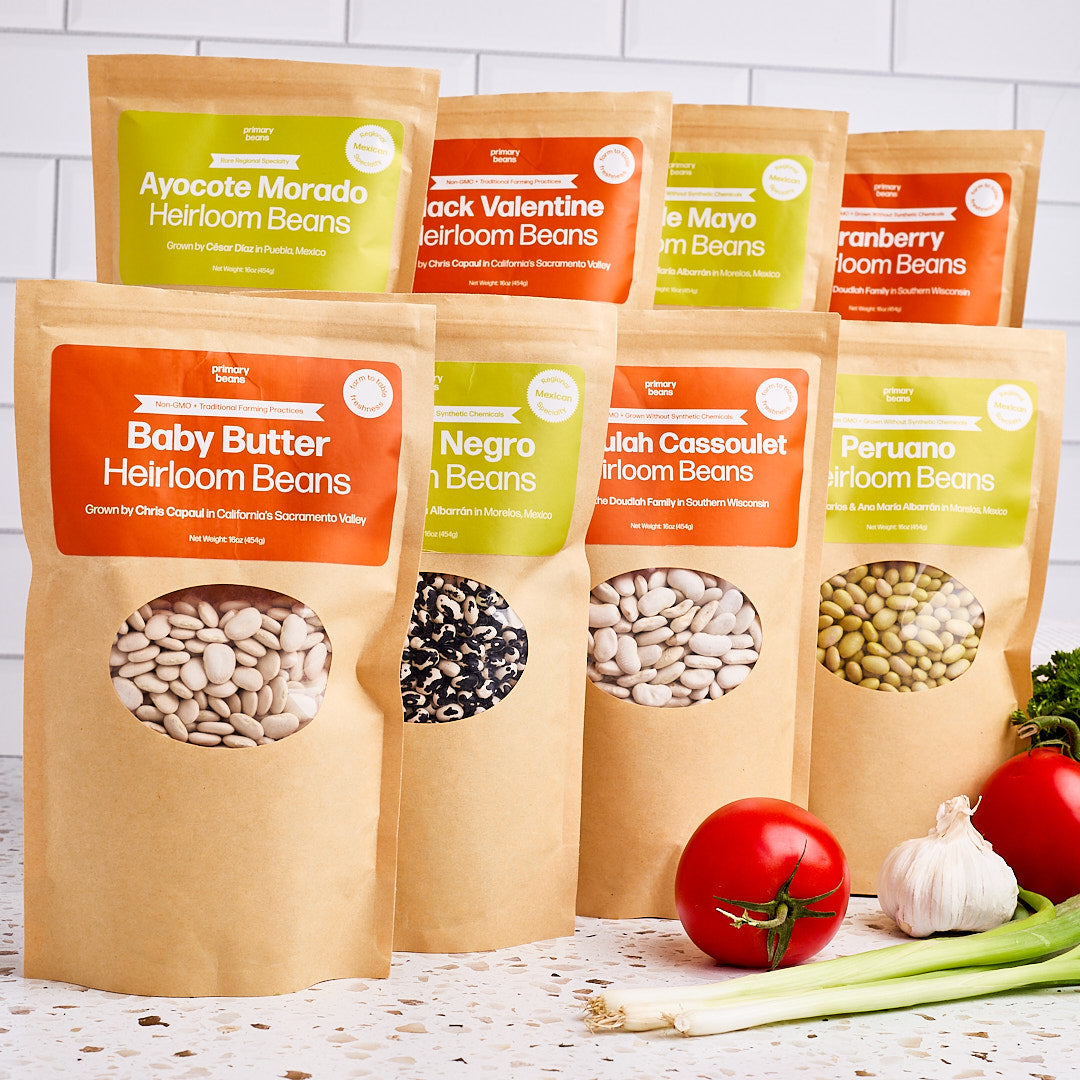
The heirloom bean varieties we sell at Foodocracy, Chaparro, Ayocote Morado, Flor de Mayo, Black Valentine, Anasazi, and others, have been grown, named, and shared by farming communities for generations. The Medianoche, a name we gave to a specific Ayocote variety and then placed in the public domain, belongs to everyone who grows it. None of them belong to any company, including ours.
They belong to the commons. That's exactly where we intend to keep them.
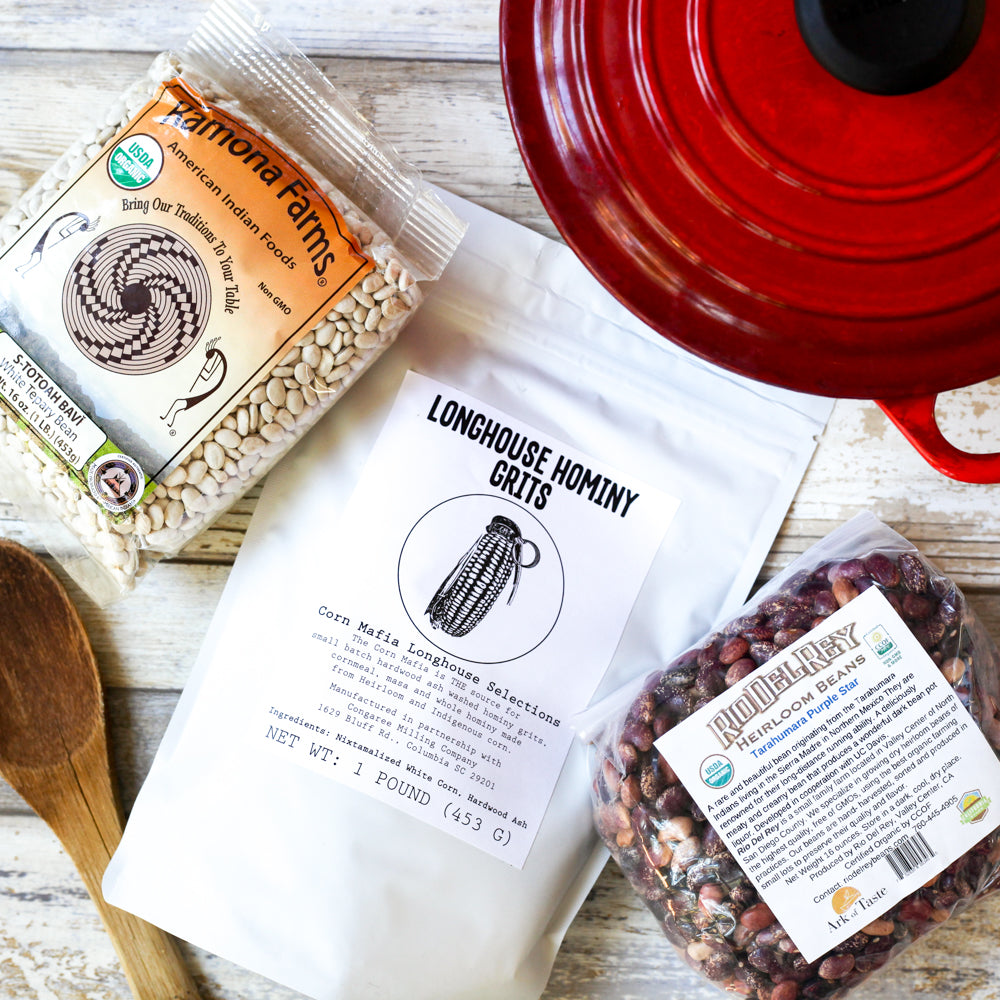
Foodocracy is a direct-to-consumer marketplace dedicated to connecting home cooks with small, independent farms growing heirloom beans, ancient grains, and rare pantry staples. Our Heirloom Bean + Grain Club ships monthly to over 450 households nationwide, supporting small farms that practice regenerative, transparent, and farmer-first agriculture.

The Heirloom Bean + Grain club
Learn More
Get impossible to find beans and grains shipped direct to your doorstep each month from small family farms.

Support small family farms
Shop Now
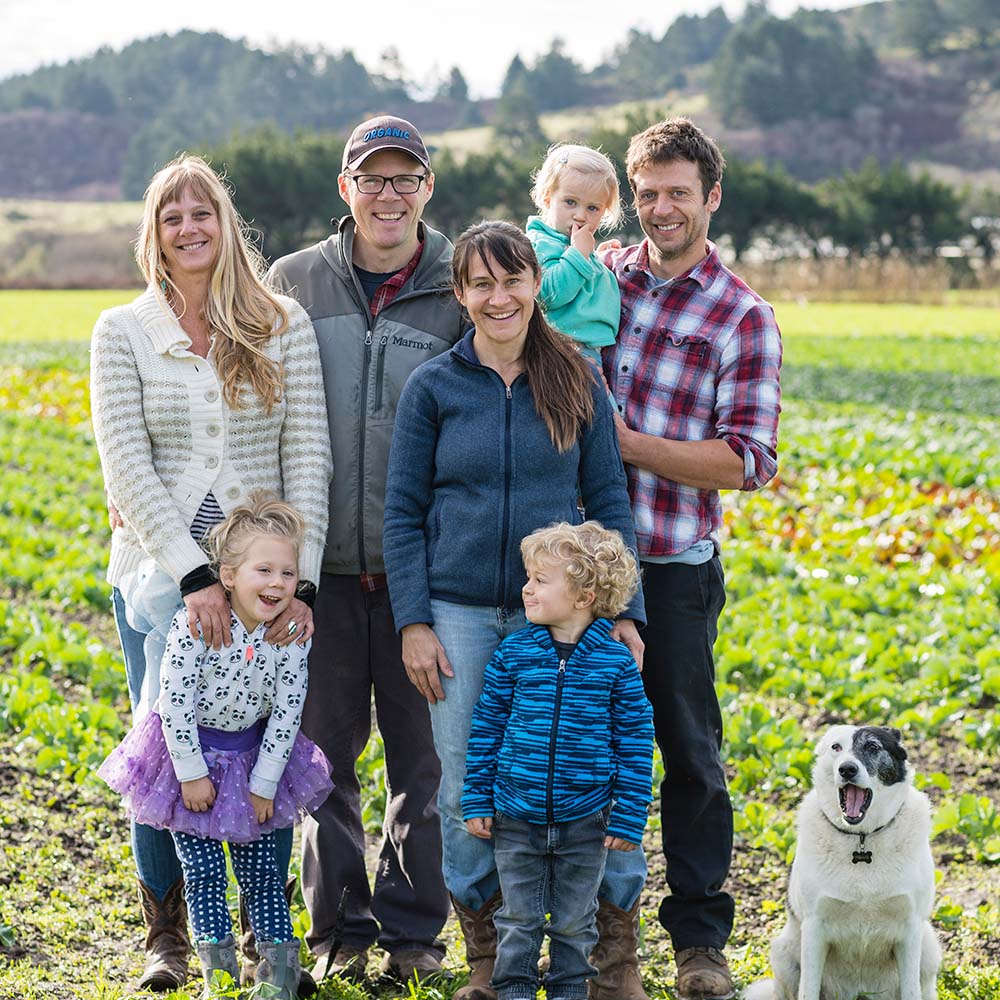
We support small, family owned farms across the nation. Did you know that farmers only make an average of 10 cents on every dollar you spend at the supermarket? Working directly with farms and not middle men ensures that more money goes back to the people actually growning your food.