



Meet the Medianoche: A Name, a Bean, and a Choice
The first time I saw a Medianoche bean, it was in a photograph.
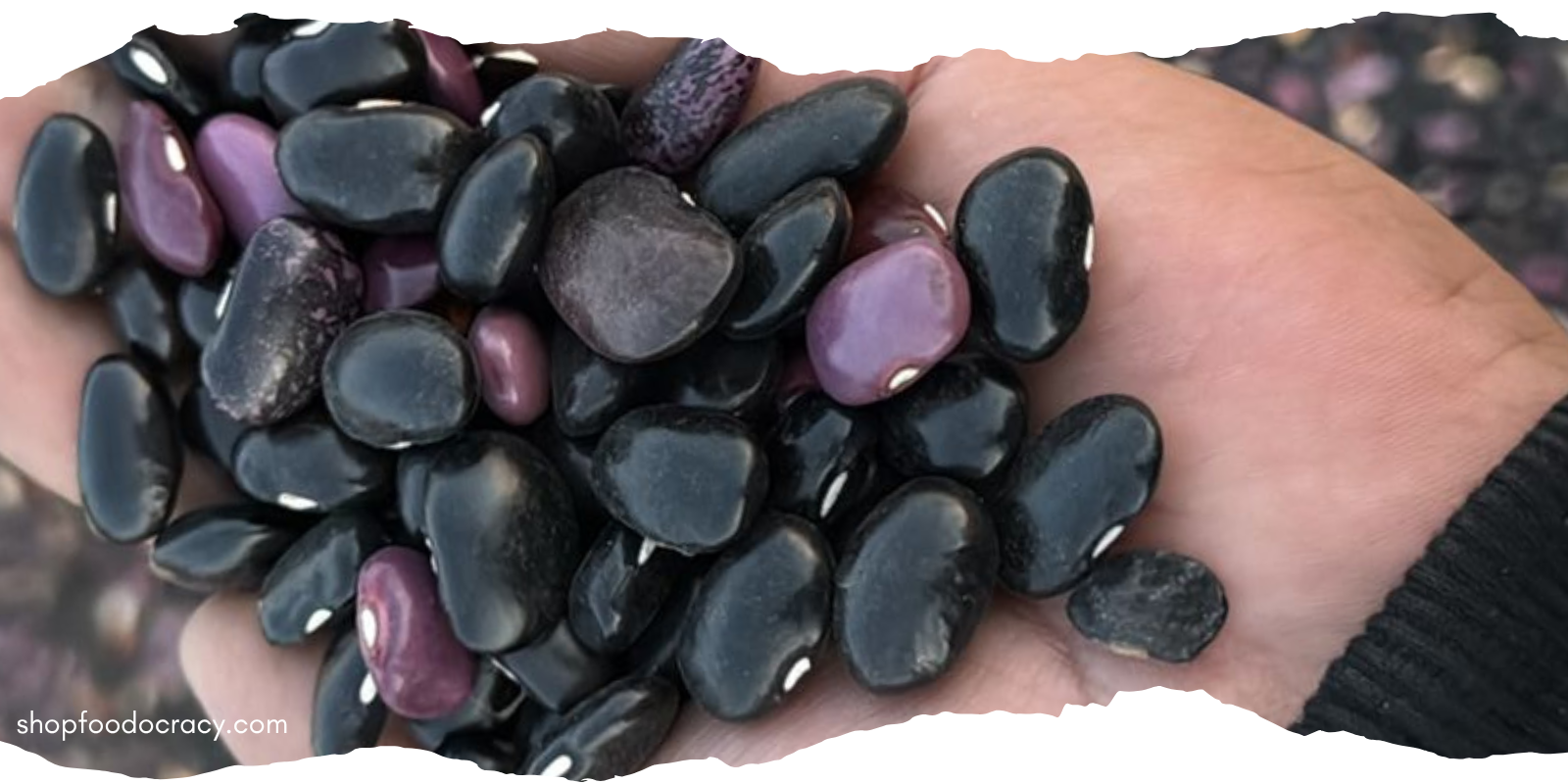
A handful of ayocotes, cupped in someone's palm in a Milpa field in the tiny village of San Pedro Temamatla. Deep black and rich purple, dotted here and there with a few white beans, like stars scattered across a dark sky. I stared at that image for a long time. The name came before I even knew much about the bean itself: Medianoche. Midnight.
I shared the name with our partners at La Comandanta, a Mexican mission-based company working directly with small family farms to rescue ancestral bean varieties at risk of disappearing. They work directly with the Joel Rivero family in San Pedro Temamatla, and they were instantly in love with it. Within weeks, the Rivero family was selling their harvest at markets under that name.
That was the moment the Medianoche entered the world. This post is the moment it enters the public record, deliberately, permanently, and freely.
What We're Doing and Why

At Foodocracy and Primary Beans, we spend a lot of time thinking about what it actually means to protect the farmers and food traditions we source from. Not just pay them fairly, though that's the floor, not the ceiling, but actively work to build markets that serve their long-term interests.
One of the questions that comes up in the specialty food world is intellectual property: who owns a name, a variety, a story? We're aware of trademark law. We understand what it would mean to file for protection on a name like Medianoche.
We chose not to.
The name Medianoche belongs to the public domain. As of the publication of this post, it is documented, timestamped, and free for anyone to use. No single company, including ours, can ever trademark it now. That's not an accident. That's the point.

The Bean and the Family Behind It
San Pedro Temamatla is a small village in the municipality of Chalchicomula de Sesma in the state of Puebla. The Joel Rivero family has been farming here for generations, growing this bean the old fashioned way, on a small family farm, without glyphosate, the way it has always been grown in this place.

What makes the Medianoche striking is not just how it looks, though it is genuinely beautiful: that mixture of deep black and rich purple beans with a scattering of white ones, as though someone had spilled the night sky into a bowl. But that beauty is not an accident, and it doesn't maintain itself.
Each season after the harvest, the Rivero family lays out their beans and begins the work of selecting next year's seed by hand. They're looking at color, at balance, if the black ran heavy this year, they'll pull more purple and white into the mix. If one color is fading, they bring it back. They lay it all out, mix it together, and that becomes the seed for the following season. It is a careful, ongoing calibration, done entirely by eye and by experience.

But farming is never entirely in the farmer's hands. The bees have a say too. Moving plant to plant across the field, they cross-pollinate as they go, and sometimes a seed planted to grow one color surprises everyone and comes up another. The growers call it the bees' doing, and they're probably right. It means that even with all the care and intention the Rivero family brings to their seed selection, the Medianoche retains a wildness, a character that belongs to this particular place, these particular fields, these particular pollinators.
The result is a bean that represents not just a variety but a farm and a village. That specific balance of black and purple and white, that constellation of color in every bag, is the Rivero family's work and nature's work together, maintained across generations so that what you cook with looks exactly like what grew in Puebla.
Like all ayocotes, the Medianoche is big and meaty with a creamy interior that holds its shape even through a long braise, the kind of bean that was built for the slow, satisfying cooking that turns a handful of dried legumes into the center of a meal. Even in a photograph, you can see the substance of a bean that was bred for feeding people, not for looking pretty on a menu.
The Problem We're Trying to Solve

Rare regional bean varieties are disappearing.
Not because they aren't worth growing, they are extraordinary. They're disappearing because the economics don't support the farmers who grow them. Growing a variety like the Medianoche by hand, with the kind of care and seed selection the Rivero family puts into it, takes time and skill that commodity markets don't compensate. So farmers move on. Or the next generation leaves for the city. Or the seeds sit in a jar on a shelf until one day there's no one left who knows what they are or how to maintain them.
This is why we work with La Comandanta. Their mission is straightforward: rescue ancestral bean varieties at risk of disappearing by creating sustainable income for the farmers who grow them. The idea is that the way to preserve these traditions is not to put them in a museum, it's to make them economically viable. That means finding markets willing to pay what these beans are actually worth, and building the story that helps consumers understand why.
The Medianoche is part of that work. We named it because a name makes a thing findable, marketable, and real to people who have never seen a field in Puebla. A name is a market. And a market, built right, is what keeps a farmer farming.
A Note on the Name and What We're Not Doing With It
We understand the impulse to protect something you've invested in, a sourcing relationship, a story, a brand. But we think there's a meaningful difference between protecting a brand and controlling a name.
The name Medianoche describes a bean variety grown by a family in Puebla. It was inspired by how the bean looks. It belongs, in the most fundamental sense, to the tradition that produced it, to the Rivero family, to the farmers and communities of the Chalchicomula region who have tended this land and these seeds across generations. Trademarking it would mean a company in the United States could prevent anyone else from using a Spanish word that describes something that existed long before we ever saw it.
That's not preservation. That's extraction with better marketing copy.
So here is our declaration, plainly stated: Primary Beans places the name Medianoche into the public domain as of the date of this post. Any farmer, any importer, any other small food business working with this variety may use this name freely. We are not the gatekeeper. We are one door.
We're publishing this because the act of publishing is itself the protection. This post is the public record.
An Invitation
The Medianoche is here. Every bag you buy goes directly toward building the market that keeps the Rivero family on their farm, that keeps La Comandanta's mission alive, and that keeps these seeds, and the knowledge of how to tend them, from disappearing.
But this post is also an invitation to something bigger than one bean.
If you're a farmer growing rare regional varieties that don't have a market: we want to hear from you. If you're a small food business thinking about how to build brands without extracting from the communities you source from: let's talk. If you're a consumer who has started wondering where your food comes from and who profits from that story: welcome. That's exactly the right question.
The Medianoche is a midnight bean from a small farm in Puebla. Its name is yours to use. Its story is just beginning.
The Medianoche is now available at Primary Beans. Shop it here and be part of the story.


The Heirloom Bean + Grain club
Learn More
Get impossible to find beans and grains shipped direct to your doorstep each month from small family farms.

Support small family farms
Shop Now
We support small, family owned farms across the nation. Did you know that farmers only make an average of 10 cents on every dollar you spend at the supermarket? Working directly with farms and not middle men ensures that more money goes back to the people actually growning your food.