



The Real History of Cinco de Mayo (And the Puebla Beans That Predate It by 4,000 Years)
Ask ten people at your local bar tonight what Cinco de Mayo is celebrating and nine of them, statistically speaking, won't know the answer. They'll guess Mexican Independence Day. They'd be wrong. Mexico's Independence Day is September 16th. What actually happened on May 5th, 1862 was something far more remarkable — and far less beer-soaked — than the holiday it spawned.
A Scrappy Victory Over an Empire
In 1861, Benito Juárez became Mexico's president following a brutal civil war. He was also Mexico's first indigenous president, which carries its own weight of symbolism. One of his first acts was suspending payments on Mexico's foreign debt, a desperate move to protect a struggling economy. France, ruled by Napoleon III, saw this as an invitation. He sent his army — one of the most formidable military forces in the world at the time, undefeated in nearly fifty years — marching toward Mexico City.

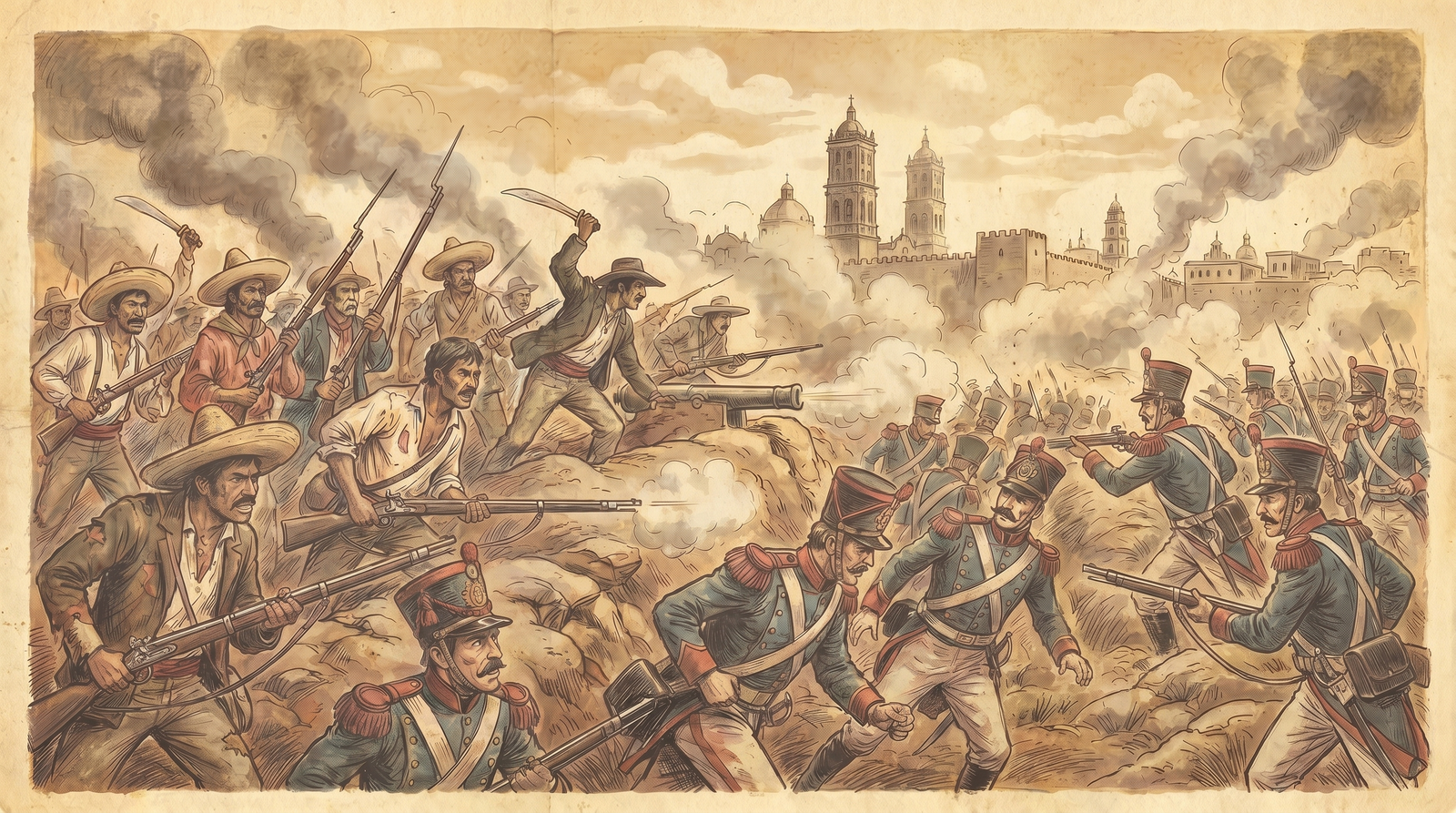
On May 5, 1862, outnumbered roughly two to one, Mexican forces led by General Ignacio Zaragoza met the French army at the city of Puebla, about 70 miles outside Mexico City, and beat them. Decisively. It was a wildly improbable victory that sent shockwaves of pride through the country and earned Mexico international respect. Four days later, Juárez declared Cinco de Mayo a national holiday.
Here's the part most people don't know: France came back the following year with reinforcements and won. Mexico City fell. Cinco de Mayo was never really a major national holiday in Mexico. In Puebla, yes — but across the country, it barely registers compared to Independence Day or Día de los Muertos. In Mexico today, Mother's Day is a bigger deal than Cinco de Mayo.
How It Crossed the Border
The holiday first took root in the United States among California's Mexican communities, who began celebrating it in 1863, the very year the French returned to finish the job. For them, the Battle of Puebla resonated as a story about an indigenous-led resistance against colonial power. It was political. It was personal. Through the 20th century, as Mexican immigration grew and the Chicano civil rights movement gained momentum in the 1940s and 50s, Cinco de Mayo became something of a cultural rallying point for Mexican Americans asserting their identity and belonging in the United States.
Then came the 1980s. And the beer companies.
Cinco de Drinko: A Marketing Origin Story
By the early 1980s, the Latino population in the United States was growing rapidly and corporations were paying attention. Beer companies in particular were eager to capture this market, and someone in a boardroom somewhere had a very lucrative idea: position Cinco de Mayo as the Mexican St. Patrick's Day. A holiday. An identity. A reason to buy a case.
Anheuser-Busch and Miller both created Hispanic marketing divisions specifically to pursue this strategy. They began sponsoring Cinco de Mayo events, starting with a three-day festival in Los Angeles in 1989. Coors reportedly invested over $60 million in marketing to Latino consumers through the decade. That same year, the regional importers of Corona launched a Cinco de Mayo ad campaign that, by most accounts, changed everything. Within a few years, Corona had become culturally synonymous with the holiday, spending roughly one dollar on Cinco de Mayo promotions for every case of beer sold.
By 2013, Nielsen reported $600 million worth of beer was sold in the United States for Cinco de Mayo — more than for the Super Bowl or St. Patrick's Day. By 2014, it had become the biggest drinking day of the year outside of the winter holidays. This despite the fact that surveys consistently show only about 10% of Americans can correctly explain what the holiday commemorates.
What Gets Lost
The real story of Cinco de Mayo is genuinely worth telling. It's about an indigenous president who refused to capitulate to one of the most powerful empires in the world. It's about outnumbered soldiers who drew on years of guerrilla warfare experience to defeat a European army that hadn't lost in half a century. It's about a community of Mexican Americans who used the anniversary of that victory to say: we are here, we belong, and we are not going away.
That story didn't disappear when the beer companies showed up. But it got buried under sombreros and Taco Tuesday specials and "Cinco de Drinko" t-shirts. Some Mexican Americans have embraced the holiday as a genuine celebration of their culture. Others feel deeply ambivalent about watching their heritage turned into a marketing vehicle — complete with caricatures that flatten a rich and complex culture into a costume.
The Revolution Didn't End in Puebla

Here's what the Cinco de Mayo beer commercials never mention: while the French army was marching on Puebla in 1862, the farmers of that region had been tending the same beans in the same fields for approximately six thousand years.
The indigenous communities of the Puebla highlands didn't just grow food. They cultivated biodiversity — selecting seeds season after season, maintaining rare varieties that existed nowhere else on earth, preserving flavors and colors and textures that industrial agriculture would eventually decide weren't worth the trouble. That knowledge, passed from hand to hand across hundreds of generations, is one of the great unsung achievements of human civilization.
Today that heritage faces a different kind of invasion. Not an army in blue and red uniforms, but something quieter and in many ways more dangerous: the slow erasure of indigenous food culture by corporate agriculture, by intellectual property law weaponized to extract value from communities that created it, by a global food system that rewards uniformity and punishes the kind of careful, small-scale, place-specific farming that produced these varieties in the first place.
The battle for Puebla's food sovereignty is still being fought. And this time the weapons are seed saving, market access, and who gets to own a name.
A Midnight Bean and a Choice

We recently started working with the Joel Rivero family in the tiny village of San Pedro Temamatla in the municipality of Chalchicomula de Sesma, Puebla, through our partners at La Comandanta, a Mexican mission-based company working directly with small family farms to rescue ancestral bean varieties at risk of disappearing. The Rivero family has been growing a remarkable Ayocote bean on their small family farm for generations — the old-fashioned way, without glyphosate, exactly as it has always been grown in this place.
When we first saw a photograph of their beans — deep black and rich purple, dotted with white, like stars scattered across a dark sky — the name came immediately: Medianoche. Midnight. The farmer had simply called them ayocote. They didn't have a market name. We gave them one, La Comandanta loved it, and within weeks the Rivero family was selling their harvest at local markets under that name.
Then we made a decision. We put the name Medianoche into the public record — documented, timestamped, and explicitly placed in the public domain. No single company, including ours, can ever trademark it now. The Rivero family can sell Medianoche beans to anyone, anywhere, forever, without asking our permission or anyone else's. That's not an oversight. That's a deliberate act, inspired by a simple belief: the names that describe indigenous food heritage should belong to the people who created that heritage, not to the corporations that discovered it.
Benito Juárez — Mexico's first indigenous president, the man whose suspension of foreign debt payments set the Battle of Puebla in motion — understood something that still holds true: that sovereignty is not just about territory. It's about who controls the resources, the stories, and the future of a people. The Rivero family's beans are part of that story. The name they sell them under should be too.
What You Can Do
The Medianoche is the star of our June Heirloom Bean + Grain Club shipment — and one of the most extraordinary things we have ever had the privilege of bringing to your kitchen. It is big and meaty with a creamy interior that holds its shape through a long braise, and it makes a broth that is dark, rich, and deeply savory. More than that, it is a living link to six thousand years of indigenous agricultural knowledge that a small farming family in Puebla is keeping alive, one careful harvest at a time.
Club members get access first. If you've been thinking about joining, this is the moment.
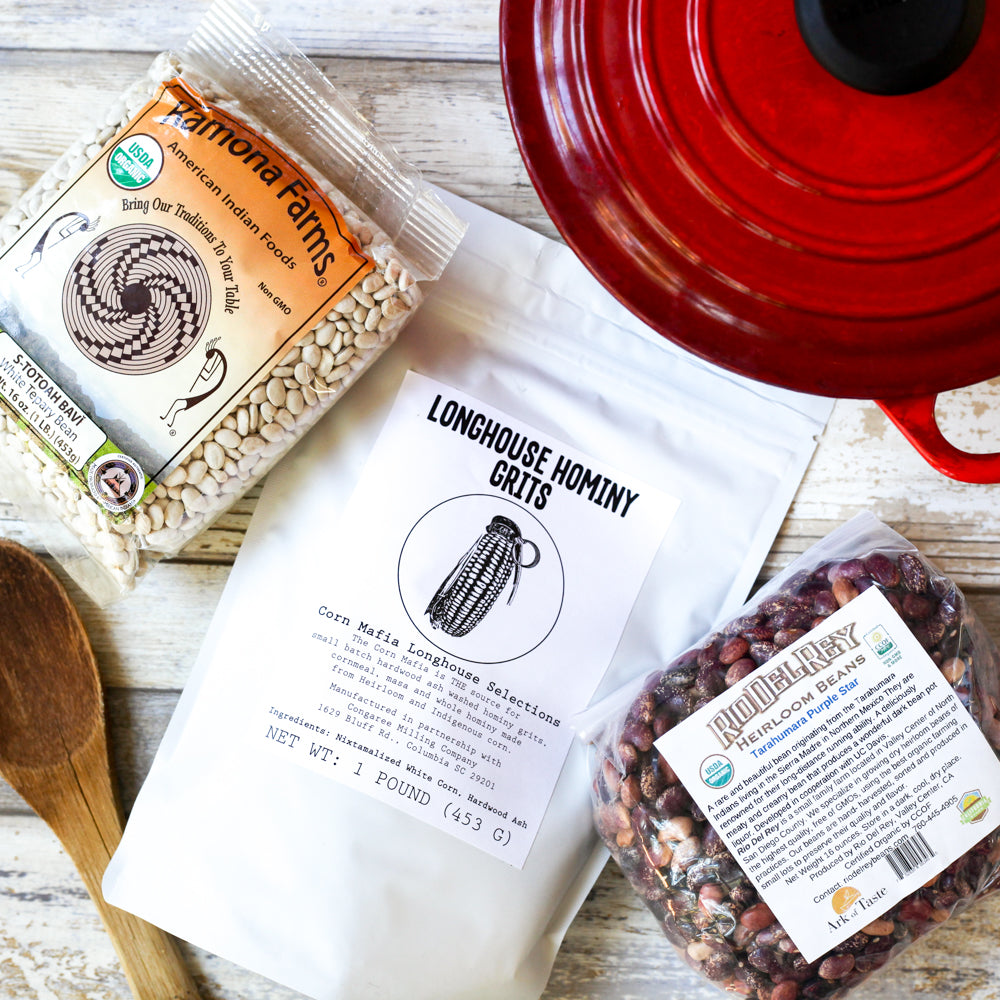

The Heirloom Bean + Grain club
Learn More
Get impossible to find beans and grains shipped direct to your doorstep each month from small family farms.
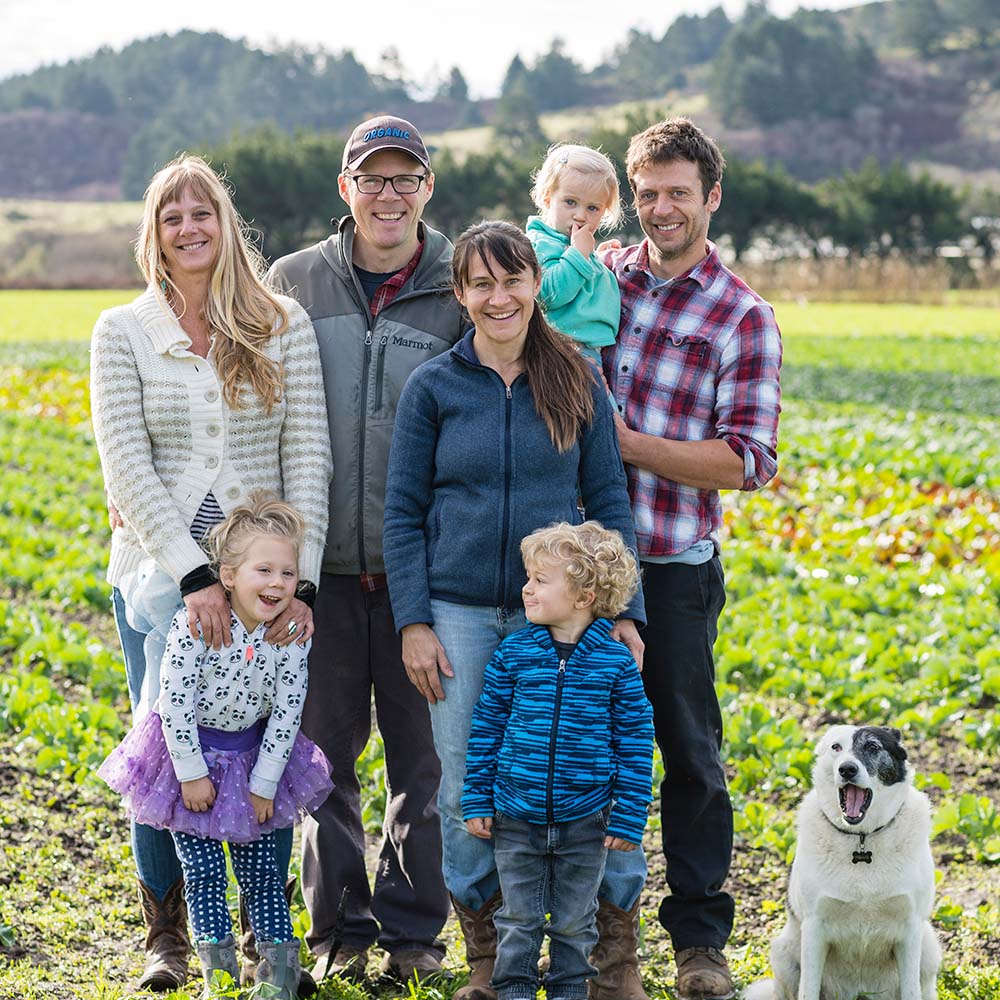

Support small family farms
Shop Now
We support small, family owned farms across the nation. Did you know that farmers only make an average of 10 cents on every dollar you spend at the supermarket? Working directly with farms and not middle men ensures that more money goes back to the people actually growning your food.