



November 2026 Heirloom Bean + Grain Club
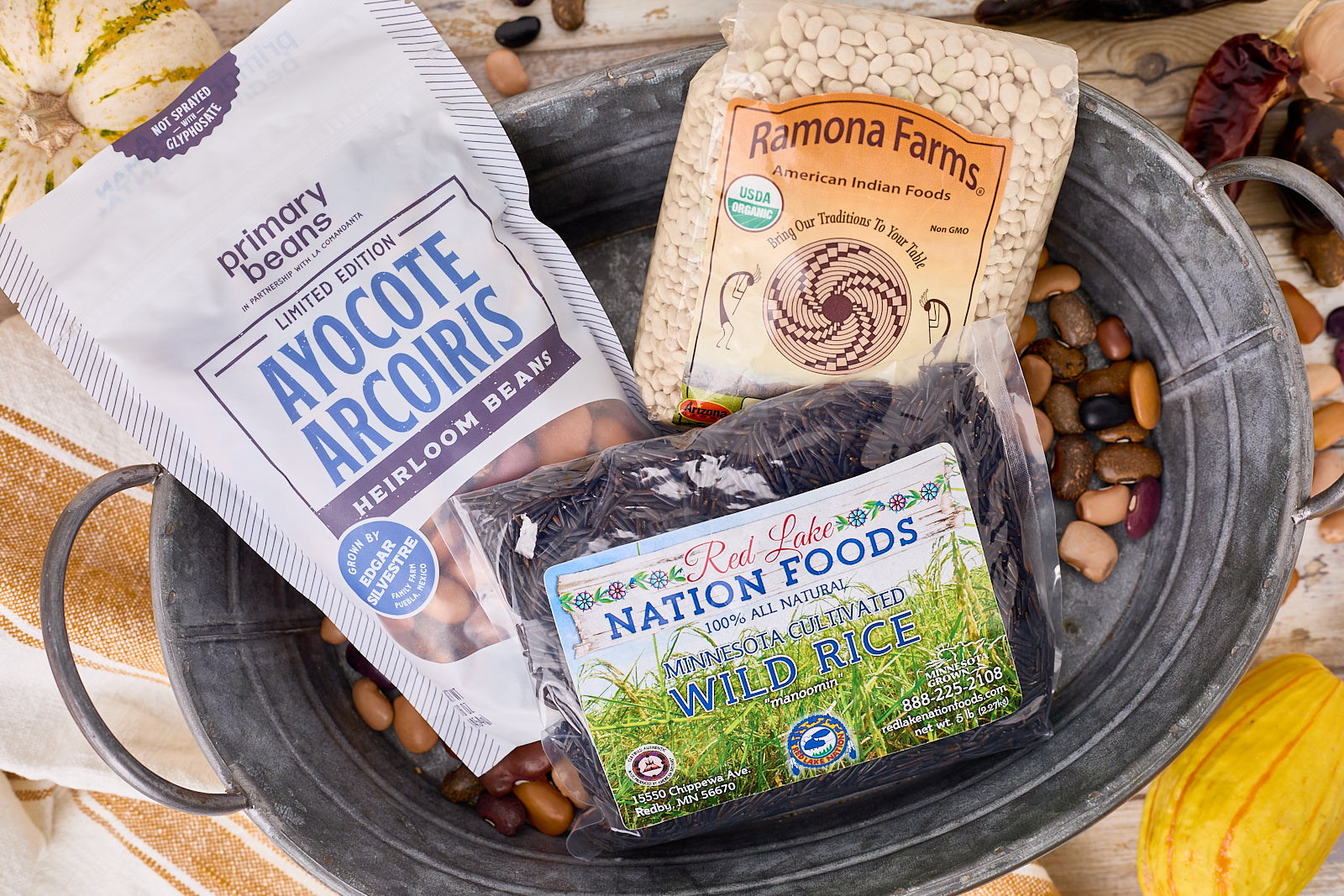
This month we’re honored to celebrate Indigenous heritage and to give thanks: to the farmers bringing us the bounty of their harvest, and to the cultures that stewarded this land long before us. November’s Bean + Grain Club features Ayocote Arcoiris, a rainbow of gorgeous heirloom beans grown with milpa farming practices, the Indigenous system many of us know as the Three Sisters. Joining them are Organic White Tepary Beans from Ramona Farms and wild rice from Red Lake Nation Foods, both Indigenous owned. However you celebrate Thanksgiving, we hope you’ll bring a few first foods to the table. We can’t think of a more delicious way to say thank you.
BEAN AND GRAIN BOX CONTAINS:
Ayocote Arcoiris, Organic White Tepary Beans, Wild Rice
THE BEAN ONLY CONTAINS:
Ayocote Arcoiris, Organic White Tepary Beans, Speckled Bayo Beans OR Bayo Beans

OUR CUSTOMER PORTAL
You can easily claim rewards, add to your next shipment and so much more! We made a video walking you through exactly how easy it is to add some goodies to your order and get cash back. WATCH THE VIDEO.
NEW TO THE CLUB? Welcome! You picked a great year to join. Some of our favorite small family farms are back, and we're welcoming new family farms growing exciting limited editions. It's shaping up to be a very special year, and club members get first dibs and exclusive access. We expect them to sell out quickly. Check out our blogposts with everything you need to know to get the most out of your membership in the Heirloom Bean + Grain Club.
How To Cook A Perfect Pot of Beans
The Definitive Guide To Cooking Beans

AYOCOTE ARCOIRIS
Arcoiris means “rainbow” in Spanish, and one look in the bag tells you why. Ayocotes are among the oldest domesticated plants in Mesoamerica. They were first cultivated 4,000 to 6,000 years ago in the Tehuacán Valley, the ancient highland that straddles Puebla and Oaxaca and is now a UNESCO World Heritage Site. In Nahuatl they’re called ayocotl. For thousands of years, Puebla farmers have saved the best seed from each harvest to replant, shaping more than 800 distinct varieties, each one belonging to its own village and its own family. If you fell for the Medianoche in June’s box, meet its cousin: big, meaty and creamy, with a rich broth so good it becomes the dish. It’s grown with milpa farming practices and never sprayed with glyphosate.
ABOUT THE FARMER
Edgar Montes Silvestre and his brother Pedro farm in the mountains near Atlixco, Puebla, in the shadow of the Popocatépetl volcano. Their valley is fed by snowmelt streams and rich volcanic soil, and their beautiful farm is teeming with abundant plants and animals, all living in harmony the way nature intended. Edgar learned Milpa practices from his grandfather: corn gives the climbing beans something to hold onto, the beans feed the soil with nitrogen, and the squash’s broad leaves shade the ground to hold in moisture and crowd out weeds. When Edgar went to college to study agriculture, hoping to learn how to farm Milpa more efficiently, he found it wasn’t taught at all. So he built that knowledge himself, and today other farmers in the region buy their seed from him. We work with Edgar and Pedro through our partnership with La Comandanta, a mission-based Mexican company dedicated to rescuing ancestral heirloom varieties at risk of disappearing.
WHAT TO DO WITH THEM
In Puebla, ayocotes are traditionally cooked low and slow with dried chiles and garlic, then served with roasted poblanos or a rich mole, flavors big enough to stand up to a bean this meaty. Because Arcoiris beans vary in size, skip the pressure cooker on this one. Soak them for 12–24 hours in salted water for more even cooking, then simmer them gently on the stovetop: 1–2 hours soaked, or 2–3 hours from dry. Start with a simple pot of Frijoles de la Olla, or go all in with Ayocote Beans in Mole Sauce. For your Thanksgiving table, our Ayocote Bean Bourguignon makes a plant-based main that steals the show. Frijoles con Salsa Macha brings smoky, crunchy heat to a simple bowl of beans. Got leftovers? Pile them into Ayocote Morado Tacos; the Arcoiris works beautifully in place of the Morado.
WHITE TEPARY BEANS
These organic heirloom beans are the original superfood of the Sonoran Desert, having sustained Native American people for countless generations. Highly acclaimed for its nutritional value, the stotoah bavi (white tepary bean) is noted for its unique and delicious naturally sweet yet savory flavor and creamy texture. White tepary beans make delicious hummus, soups, salads, dips and spreads.
Ramona Farms shares with us their traditional foods grown on the ancestral lands of the Akimel O'odham (Gila River Pima) tribe in Arizona's Sonoran Desert. An ingredient in the Slow Food Ark of Taste, the tepary bean is believed to be the world’s most drought tolerant bean, and higher in fiber and protein than most other beans with a low glycemic index and superior taste.

ABOUT THE FARMER
We are honored that Ramona is sharing with us the food traditions of her tribe, the Akimel O'odham (Gila River Pima) Community. Ramona's father, Francisco ‘Chiigo’ Smith, an O’odham farmer, grew many traditional crops on the Gila River Indian Reservation in Arizona. Her mother was an herbalist and traditional healer. Together they taught Ramona the value of their traditional foods and way of life. She continued the traditions with her own family, farming on this ancestral land with her husband.
In the late 1970’s, some community elders asked Ramona and her husband to grow the Bavi (tepary bean), which had nearly become extinct due to the lack of water that put many of the local subsistence farmers out of business. They discovered that her father had left a few seeds of the white and brown tepary beans in glass jars in a trunk in the old adobe house that she grew up in. They knew that it was to become their mission to ‘bring the bavi back’ to the community.
The tepary bean is part of the Slow Food Ark of Taste and its roots go back thousands of years in Native foodways. The remains of the tepary have been found in archeological sites in Mexico that are 5,000 years old and it has been grown in what is now California and Arizona for thousands of years. This incredibly hearty bean was a staple food source for Native American tribes who cultivated it to survive in the incredibly arid conditions.It is through Ramona's tireless efforts that we can now enjoy this delicious part of our American cultural heritage and honor the traditions of the Akimel O'odham people and their ancestors that have cared for the land for generations.
WHAT TO DO WITH THEM
These sweet little white beans are a favorite of ours for all sorts of dishes from soups to salads. Try our Tepary Bean and Roast Parsnip Soup on chilly winter evenings, add them to smashed avocado toast for a protein packed twist on an easy lunch, make Tepary Bean and Tuna Salad for sandwiches to go with your weeknight soup, and Tepary bean and Fennel Ragout makes great use of a fall farmers market haul. Of course your tepary bean experience would not be complete without an indigenous recipe by The Sioux Chef, Sean Sherman. We are head over heels for his tepary beans with chile agave glaze. I highly encourage you to pick up a copy (or two, they are great gifts) of his latest cookbook, Turtle Island: Foods and Traditions of the Indigenous Peoples of North America.

Chili Maple Roasted Squash with Puree Tepary Beans and Pima Corn
This recipe celebrates the Three Sisters of Indigenous agriculture with a modern culinary twist. Start by pouring boiling water over your whole kernel cob-roasted Pima corn (Huun Ga'i) and soaking for at least 2 hours. Cook your tepary beans until tender—either pressure-cooked with garlic, Caribbean bay leaf, and aromatics for 40 minutes, or simmered stovetop for 2-3 hours. While the beans cook, prepare your whole kernel cob-roasted Pima corn (Huun Ga'i) by simmering for about 30-60 minutes until tender but toothy. Roast thick slices of acorn squash tossed in a glaze of olive oil, maple syrup, and Calabrian chili flakes until caramelized and golden at the edges.
The final assembly brings it all together. Blend your cooked tepary beans with their cooking liquid into a smooth, creamy purée. Fry sage leaves until crispy, then use that fragrant oil to sauté your cooked Pima corn with garlic and the maple-chili mixture until glistening. To plate, spread the velvety bean purée as your base, stack the roasted squash slices in the center, spoon the sweet and savory corn over the top, and finish with those crispy sage leaves. It's a bowl that's as beautiful as it is satisfying—perfect for showcasing heirloom beans and traditional southwestern ingredients.
GET THE FULL RECIPE
NATIVE AMERICAN GROWN AND HARVESTED WILD RICE (BEAN + GRAIN VERSION)

This isn't just any rice—it's a treasured indigenous staple grown and harvested by the Red Lake Nation. Wild rice, manoomin in Ojibwe, isn't technically rice. It's the seed of a native aquatic grass, which makes it a true grain. Manoomin is often translated as "the good berry." It packs a punch with more protein, minerals, and B vitamins than regular rice. Plus, it's gluten-free and low in fat, making it a perfect addition to any healthy lifestyle.
Wild rice holds deep cultural significance for the Ojibwe (Chippewa) people, symbolizing sustenance, community, and tradition. September, known as the "ricing moon," marked a time when Ojibwe families would gather at lakeside camps to harvest this vital grain. The meticulous process of drying, parching, and separating the rice was a communal effort, culminating in a festival of thanksgiving in October where the first batch of the season was cooked and shared. Beyond its nutritional value, wild rice was also a key trade item, supporting the Ojibwe's economy and sustaining those who traveled by canoe to trade furs.
About Red Lake Nation Foods
Red Lake Nation Foods is a Native American-owned company dedicated to producing specialty products that honor and represent the cultural heritage of the Red Lake Nation. Located in northern Minnesota, within the Red Lake Indian Reservation, the company serves over 10,000 members across four districts: Red Lake, Redby, Ponemah, and Little Rock. The reservation’s history dates back to the fur trade era, with significant Ojibwe settlement and the establishment of a British Northwest Co. trading post in 1806. Today, Red Lake Nation Foods continues to uphold the traditions and values of the Ojibwe people.

Wild Rice Pilaf With Caramelized Shallots and Crispy Sage
This warm and earthy wild rice dish pairs beautifully with mushrooms, caramelized shallots, and aromatic sage, offering a rich blend of textures and flavors. Finished with toasted pine nuts and crispy fried sage leaves, it’s a simple yet elegant recipe that works as a hearty side or a satisfying vegetarian main. GET THE RECIPE.
How To Cook Wild Rice
- Use a 1:3 ratio of wild rice to liquid. For example, combine 1 cup of raw wild rice with 3 cups of water or broth.
- Bring the liquid to a boil in a medium-sized pot.
- Stir in the wild rice, then cover the pot with a lid.
- Simmer for 45-60 minutes.
- The wild rice is done when the kernels are tender but not mushy, and many have burst open to reveal a cream-colored interior. *Be careful not to overcook, as this can cause the split kernels to curl.
Cooked wild rice will keep in the refrigerator for two weeks. Uncooked wild rice will last for years. As always, we recommend storing uncooked grains in the refrigerator to retain freshness.
* Bean Only Bayo Substitution
We had intended to ship you the last of the Speckled Bayo in the bean only version this month but after we opened the doors to new members we found we did not have enough for the full club! So some of you will get the spectacular Bayo Beans (a huge fan favorite that we haven't featured yet in the club this year). Read more about both of these amazing beans below.
SPECKLED BAYO BEANS (Bean Only Version)

We are so excited to share this rare regional gem with you, fresh from the farm. An old favorite in pockets of Coastal California and Louisiana, the Speckled Bayo has been grown by the Capaul family in Northern California for generations, preserving this beloved bean for the next generation of farmers and bean lovers.
We love its naturally varying burgundy-and-cream skin tones and substantial size. It tastes similar to a kidney bean but with more of the earthiness of a pinto. Creamy yet holds its shape, with a flavor some describe as ham-like.
Once grown in family gardens and small farms across the region, the Speckled Bayo is now in danger of dying out. Customers tell us their grandparents grew it and they thought they'd never see it again. Thank you for being part of keeping this bean around for future generations!

WHAT TO DO WITH THEM
Speckled Bayo tastes like the delicious love child of a pinto and a kidney bean. It's an excellent upgrade from your typical kidney bean in chili or red beans and rice. Enjoy the farmer's family recipe for chili beans with them or our plant-based version of Red Beans and Rice.
COOKING TIME (from dry) Pressure Cooker 40 minutes, Stovetop 120 - 180 minutes
 ABOUT THE FARMER
The Sacramento Valley was once the heartbeat of heirloom bean production in the entire country. Chris Capaul’s family has been growing diverse beans and vegetables since 1915 – in fact, he still has the original horse-drawn bean cutter! While bean production has declined and farms have gotten bigger through consolidation, Chris stands out as an innovator – perfecting his rotations of vine-type baby butter beans and rice, and preserving Speckled Bayo beans, a rare variety his father once grew. His careful growing methods nurture the land and produce beans far richer in flavor. Read more about Chris in a Q&A with Lesley Sykes.
BAYO BEANS (Alternate Bean Only Version)
*you will get either Speckled Bayo OR Bayo in your box.
Firm on the outside and creamy on the inside, Bayo makes the richest refried beans. Plus, the full-bodied, golden broth it produces is unlike anything we’ve tasted.
Step into the rich culinary world of central Mexico with Bayo Beans, a cherished heirloom variety that holds a special place in the heart of Mexican cuisine. These beans, often mistaken for their cousin, the Mayacoba, are in fact a distinct heirloom varieity. While Pinto beans reign in the north and black beans in the south, it's the Bayo bean that captures the essence of central Mexican cooking. Revered by locals for its creamy texture and rich flavor, Bayo beans are a staple on tables across the region. While the exact origins of Bayo beans remain shrouded in mystery, their prominence in the region is undeniable.
 As part of our partnership with La Comandanta, we are delighted to offer this regional favorite grown by Carlos and Ana growing without synthetic chemicals or fertilizers in the rich soil of Morelos Mexico. The care that they are giving to the land can be tasted in each delicious bite. This is the epitome of traditional farming and preserving cultural traditions, resulting in the most delicious and healthy beans you could find.
Carlos and Ana María Albarrán are a husband and wife farming team, preserving regional heirloom specialties on their family farm in the heart of Morelos. This fertile basin, fed by rivers running down from the Trans-Mexican Volcanic Belt, has been home to indigenous Nahua farmers since long before the Spanish arrived, some historians believe this very region is where Mexico's first agricultural settlements took root nearly 3,500 years ago. It's also the birthplace of Emiliano Zapata, who fought and died for peasant farmers' right to own and steward their own land. That spirit lives on in farms like Carlos and Ana's, where they grow a rainbow of heirloom beans, vegetables, and herbs, preserving regional varieties that have been passed down through generations. The care they give to this remarkable land is something you can taste in every bite.
WHAT TO DO WITH THEM
With Bayo beans, cooking becomes an effortless endeavor, as they require no soaking and cook in half the time of Pintos. Whether enjoyed simply in their broth or transformed into mouthwatering frijoles refritos, Bayo beans promise a culinary experience that's as comforting as it is delicious. So, join us on a journey to savor the flavors of central Mexico with Bayo Beans, where every bite is a celebration of tradition and taste.

FRIJOLES DE OLLA
This classic bean dish is amazing on it's own and it's the basis of Frijoles Refritos (refried beans). You can do this in the pressure cooker to speed up time if you but the tender bayo beans love a slow simmer and only take about an hour on the stove.
Ingredients:
1 pound of Bayo beans
1/2 Onion
4-5 Cloves of Garlic Peeled and Lightly Smashed
1-2 Yahualica Peppers (chili de arbol) - optional
1 Avocado or Bay Leaf
2 Tablespoons Salt
Rinse and drain the beans and place in a dutch oven with the rest of the ingredients. Add enough water to cover the beans by several inches and bring to a boil. Reduce the heat to a simmer and cover. Check them every 15 minutes, giving a gentle shake of the pot and adding water as needed to keep them covered and make a delicious soupy broth. Simmer on low for 50 minutes and check for doneness. The skins should be in tack but they should be creamy in texture. Remove the bay leaf, onion and pepper and serve. Serve them as is or with chopped red onion, cilantro, avocado and limes.

The Heirloom Bean + Grain club
Learn More
Get impossible to find beans and grains shipped direct to your doorstep each month from small family farms.

Support small family farms
Shop Now
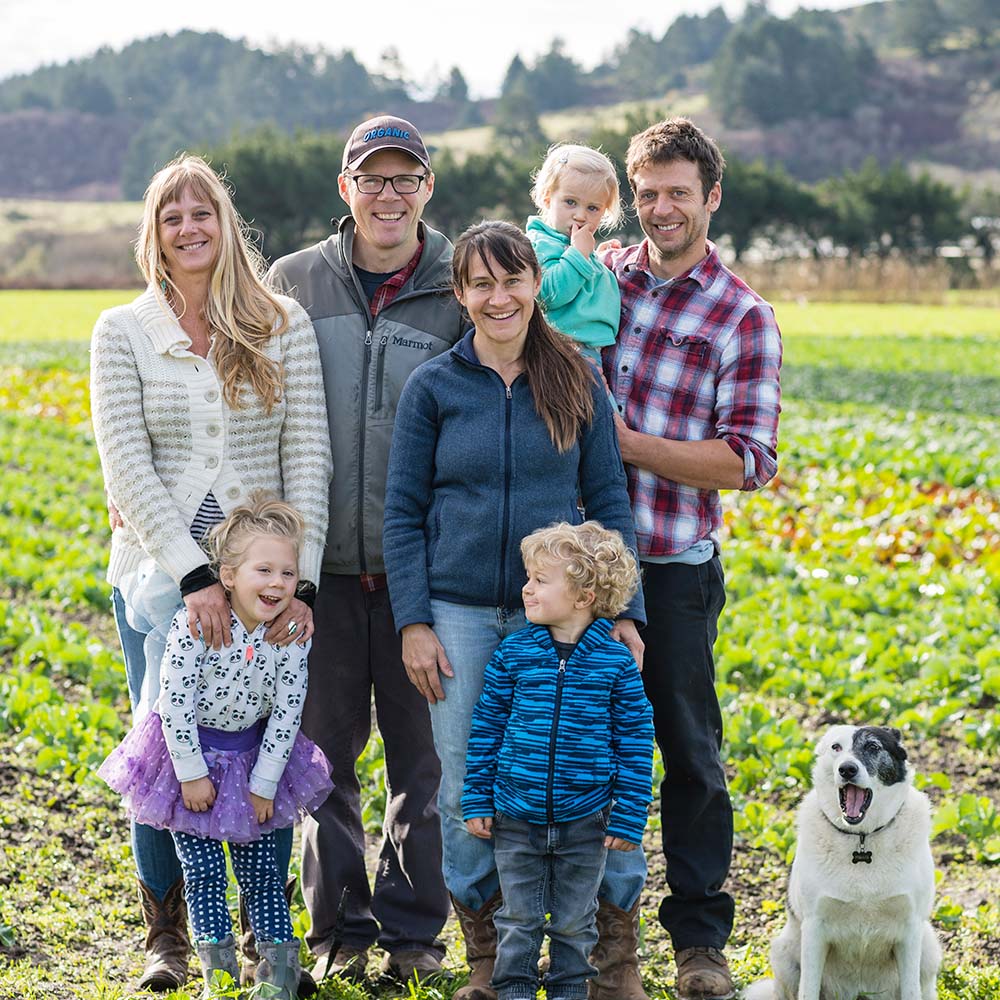
We support small, family owned farms across the nation. Did you know that farmers only make an average of 10 cents on every dollar you spend at the supermarket? Working directly with farms and not middle men ensures that more money goes back to the people actually growning your food.