



A Day In The Life Of A Bean Farmer
Primary Beans founder Lesley and I have stayed in touch since she passed the baton last year. Her Substack Eating Patterns continues the kind of thoughtful, behind-the-scenes storytelling that shaped Primary Beans from the beginning.
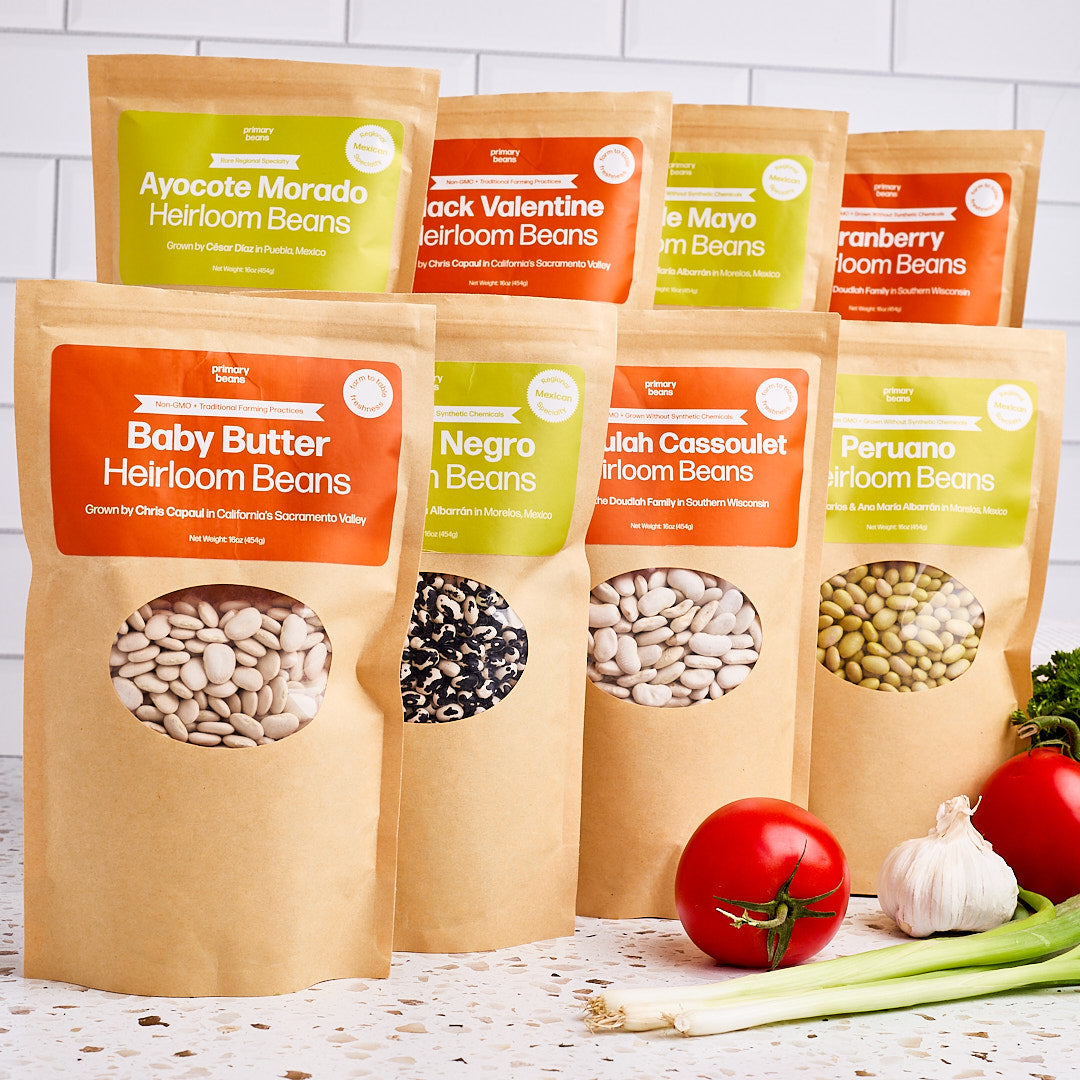
Her Day in the Life series pulls back the curtain on the people behind our food. In this conversation, she sits down with Chris Capaul, our Baby Butter Bean farmer, to talk about what farming actually looks like today - from navigating layers of bureaucracy to protecting land and staying afloat in an increasingly consolidated industry. I loved the article so much I asked her if we could re-post it here. I hope you find it as enlightening as I did.
A DAY IN THE LIFE OF A BEAN FARMER
Reposted from Eating Patterns
We tend to see the food industry in two extremes: a romanticized image of a smiling farmer, or a faceless industrial machine. Reality, of course, lives in the margins. So I’m testing out a new series that pulls back the curtain on the people who power our food system. These conversations aren’t glossy profiles – they’re meant to be honest and specific, so we can understand the challenges and the expertise required to get food onto grocery store shelves.
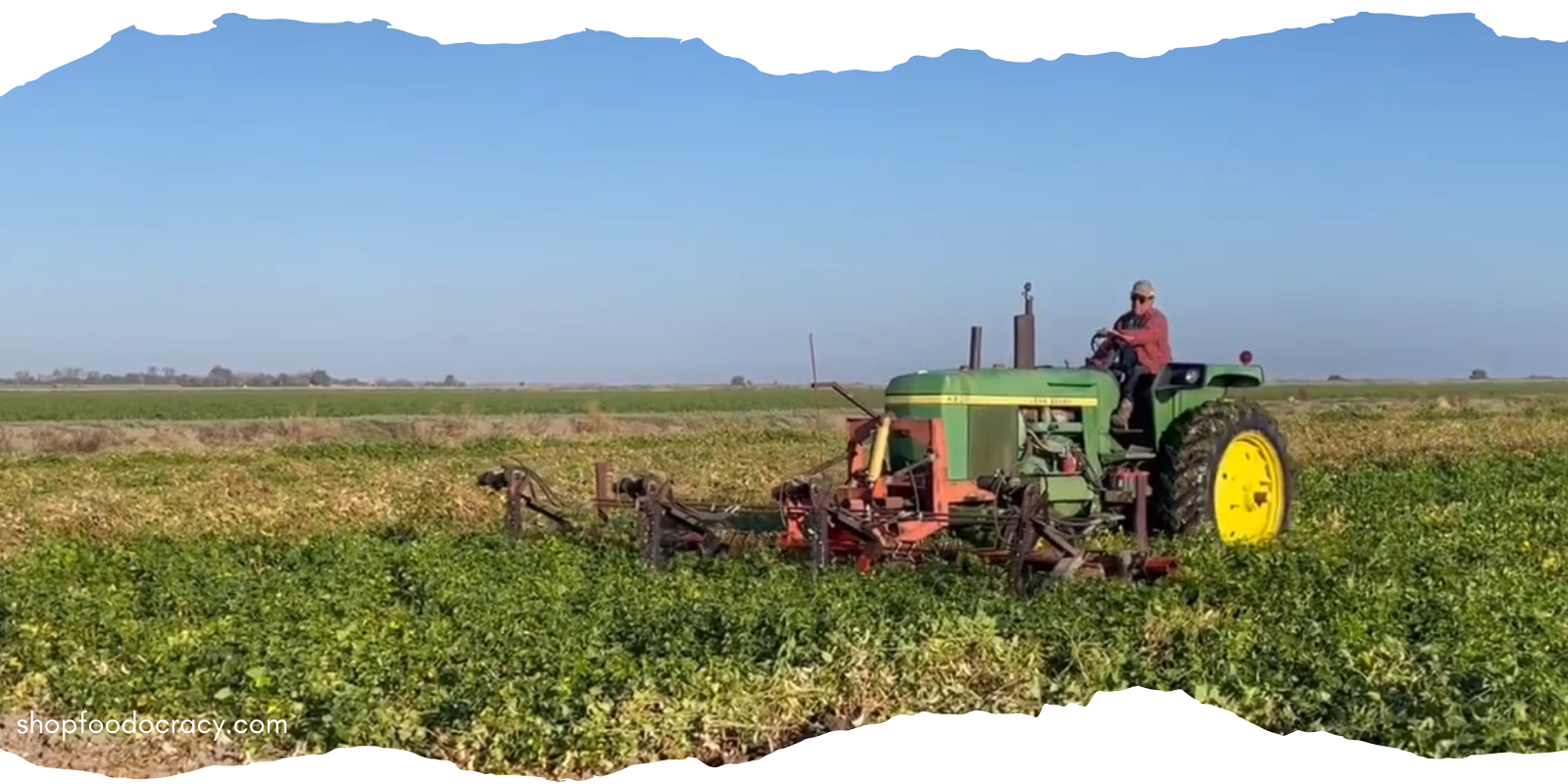
For this post, I spoke with Chris Capaul, a rice and bean farmer in California’s Sacramento Valley, whose family has been farming in the area since 1915. The behind-the-scenes skill and operational complexity farmers learn to manage – and the sheer grit the work demands – have always fascinated me. It’s why, for the better part of 15 years, I’ve built my career around staying close to growers. I met Chris during my bean days through a breeder at UC Davis. Once I got to know him – the care he took, the focus on flavor and crop rotations – I knew I wanted to welcome him into the Primary Beans family.

I loved reconnecting with Chris, and it was a powerful reminder that a farmer’s “workday” isn’t just about planting seeds and harvesting. It’s about navigating invisible layers of global bureaucracy, protecting land and lineage from consolidation, and coming up with new ways to stay viable in a system that often works against them.
*This interview was lightly edited for length and clarity.
Q: How did you get into this line of work, and how did you learn to do your job?
A: I was born into it. If I wanted to be with my dad, I had to work on the farm, so I went everywhere with him. I learned to drive when I was only four. I still have the pickup – a 1965 Ford. He’d sit me in the seat, put it in gear, and I thought all you did was steer. As long as you didn’t hit a tree, you were good. And I never hit a tree. My siblings and I all learned to drive that way. So I just grew into it.
In the summers, we hoed the beans, which we hated. Through high school, I worked for other farmers just to make money because we didn’t really get paid. We just did it. My brother – who farms with me – and I weren’t forced to do it. We wanted to do it.
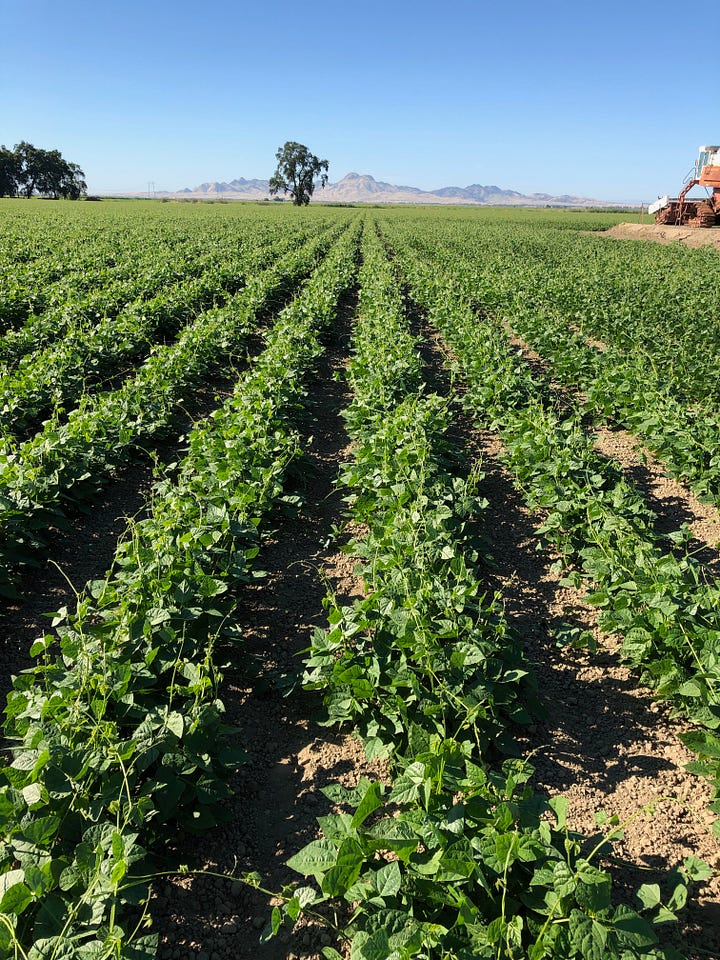
I went to college and got a business degree in land-use affairs, then came back home. My dad was older, and I figured I had to do this. It was the mid-eighties, and we weren’t doing very well. We really didn’t make any money. I said we’d give it five years, and in the sixth year, I made some money. So I decided to take on the farm and haven’t looked back.
 .
. 
Q: Can you walk me through a typical day? What shifts you into and out of work mode?
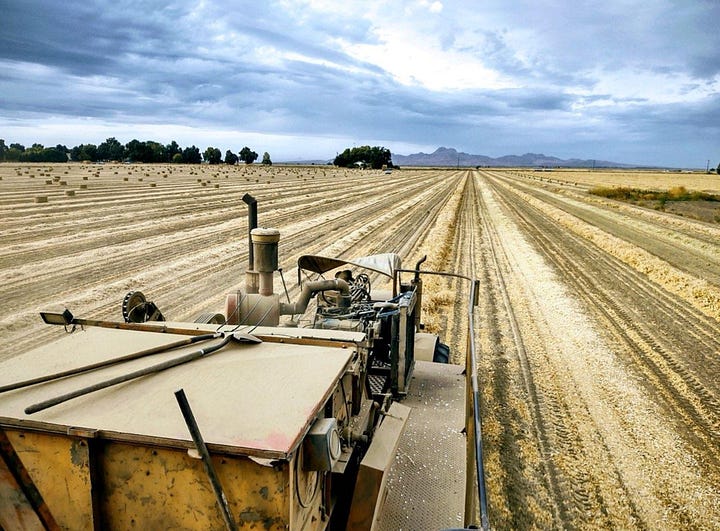
A: It depends on the season, of course. During the busy season in the spring and fall when we’re harvesting, I get up when the sun wakes me up, which is pretty early. I get up, have my coffee, and then I’m off.
Depending on what we’re doing, I organize the workers, get the tractors going, and make sure everything’s ready – maybe it’s planting or a chemical rig. I work all day. The guys go home, and I set up for the next day. If I finish early and it’s still light, I’m outside in the yard doing whatever until dark. That’s the busy season. It’s twelve to fourteen hours a day.
Other times, like now, it’s a lot of paperwork. We take care of the cows, clean up the shop, fix things that need fixing. We plan for the next season. I try to keep the guys busy through the winter, which is difficult sometimes, but there’s always cleanup to do. It never really shuts down. There are always things, you know?
Q: What type of paperwork? What part of your job takes the most time but is invisible to the consumer?

A: I do everything. I’m planning the budget, trying to figure out when money’s coming in, dealing with tax returns so I know what they’re going to say before we get there, making adjustments. There’s a lot of planning, and every year is different.
And then paying the bills, all the regulation stuff you have to take care of. I don’t have someone to do that, so I do it all. I get behind during harvest and planting because I don’t have time. I mean, I don’t want you to see my office – you wouldn’t believe the mess.
People think farming is easy, like we don’t do anything this time of year. But all the planning and bookwork and regulation I have to keep up on… people don’t realize. And it wears on you a lot, because you think you’re going to do something wrong and get fined because you didn’t do something right or didn’t know about it. Trying to keep up with all that is difficult. It’s all the behind-the-scenes stuff.
Q: Who is part of your operation, and who’s in the fields with you?
A: I have a best friend I’ve known since I was 12. He’s retired now, but he helps me an awful lot. I don’t know what I’d do without him.
I have two full-time workers. One has been with me for thirty years – he’s Mexican, about 54 now. Another has been with me for seven or eight years. And another one was with me for twenty-five years. He retired this year at 69 and went back to Mexico. And then there’s my brother and myself.
 Speckled Bayo drying in the field.
Q: Where do your beans and rice end up, and how does that global destination influence your business?
A: The baby limas – our main crop and my dad’s main crop – end up in Japan. Probably 95 percent. They’re used in a sweet, traditional dessert.
The whole market changed because of COVID more than tariffs. The Japanese economy shut down, so demand for confectionery dropped. I thought Japan would buy our beans because of the high quality and our chemical-use records, but they’re still buying cheaper beans from Myanmar for half the price. They want us to follow all their rules, but then it comes down to the bottom-line price.
The logistics work through importers. Japan is very rigid and strict in how it works. I’ve been there three times to meet with importers and paste manufacturers – that’s how important it is. They’re very innovative. They flavor lima beans as green tea, soda, and different fruit flavors.
For rice, I used to grow the standard medium-grain for the commercial market, but I got tired of that – growing a crop and not knowing what you’ll get for it until a year and a half later. So I contacted a local company that grows organic rice and asked if there was anything I could do. I’m not organic, but they started me out growing seed. Now I grow seed rice — Jasmine, basmati, that kind of thing — for organic growers. I agree to a lot of practices and it’s all inspected. I’m glad to have the stability of that contract.
The other colored beans I do – Peruano, Black Valentine, and Speckled Bayo – I sell them locally to restaurants and stores. Specialty beans aren’t grown much in California commercially anymore because it’s cheaper to grow them in other states. But if I can sell them local, then I can get a more direct price and eliminate the middleman. My dad grew these beans and it’s a tradition I’m trying to carry forward.
Q: How has the market for beans changed over time, and what does the future look like?
A: When my dad grew beans, there was an 800,000-bag market for baby limas in the U.S. Now it’s under 100,000 bags, and 90% goes to Japan. What happened? The U.S. doesn’t eat beans. People don’t cook beans. They’re not part of everyday diets.
California is the only state that can grow limas and black-eyed peas because of our climate. Other states took all the other beans and grow them much cheaper. I’m one of three bean growers left in my area, which used to be all beans. Now it’s tomatoes, rice, sunflowers, pine seed, wheat, corn.
I’m excited about research into new food innovations. We’re doing studies with UC Davis on taste – whether a bean is buttery or nutty – to know what varieties to grow. But what I want to stress to people is: eat local. And remember beans have high nutritional value.

Q: What does taking time off look like? How do you rest or vacation?
A: I used to travel a lot when I was younger – I went all over Europe, the Caribbean, Mexico – but I don’t like to travel now. I hate airports. I like my feet on the ground. I restore old cars and tractors. I’ve always done that. I have 16 cars from 1915 to ’98 – one from every era. My dad never got rid of anything. I have every car my parents owned since 1949 except two. They’re nice cars; most of them I can hop in and drive. I have good garages for them, so I enjoy that.
Lately, with the grandkids, I’ve started restoring my old Tonka trucks. I keep buying and collecting them, and I give them to my grandchildren. The other thing is I still water ski. I live along the river. My friends and I have a group text, and on Fridays at 4:30 we meet at the boat dock for a “safety meeting,” we call it, and go out on the boat and do a little water skiing.

Three generations on the farm.
Q: You’re transitioning the farm to a new generation. What brings you the most pride, and what are your goals for the farm’s future?
A: The goal every year is to do better – to get a better crop, better than the neighbor, better than you did before. Then sitting down and writing the numbers and saying, “Oh wow, I got two more sacks to the acre this year.” That’s what keeps us going and gives me pride.
My goal now is to wind things down in a way that keeps the operation going. I have three daughters and they don’t want to take it on. Sometimes I wonder if I did something wrong. And I don’t want it to go to a big corporation. I want it to go to someone who wants to farm. I have two men who work with me, and I want to make it so they can farm my land when I decide to quit – maybe in two or three years.
I’m trying to help the younger generation because it’s difficult for farmers to get started. The old farming community is gone. All the old guys who helped me a lot are gone. Big farmers have come in with a lot of land. Everybody sues everybody.
My feeling with these young guys is: I want to help them. They’re young, energetic, they keep me young, they have goals and dreams. I want them to be able to continue what I do – run a small family farm.
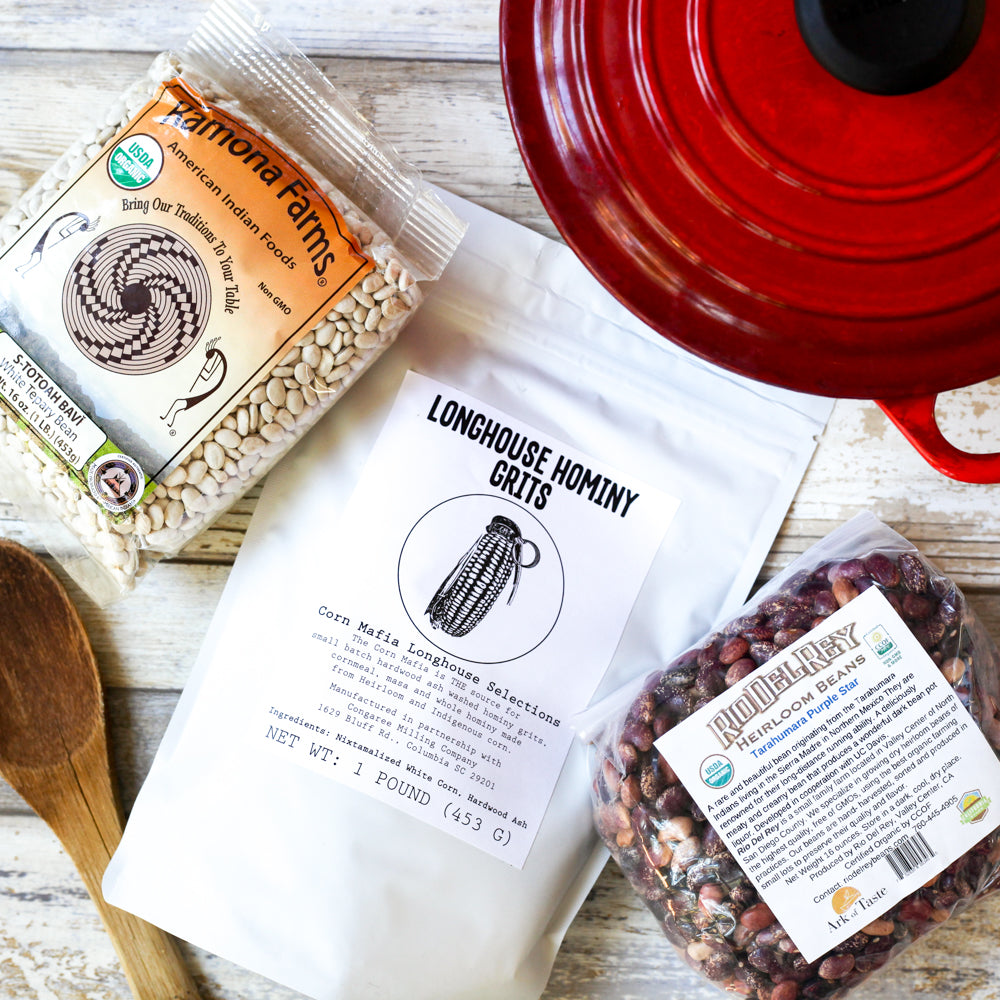

The Heirloom Bean + Grain club
Learn More
Get impossible to find beans and grains shipped direct to your doorstep each month from small family farms.
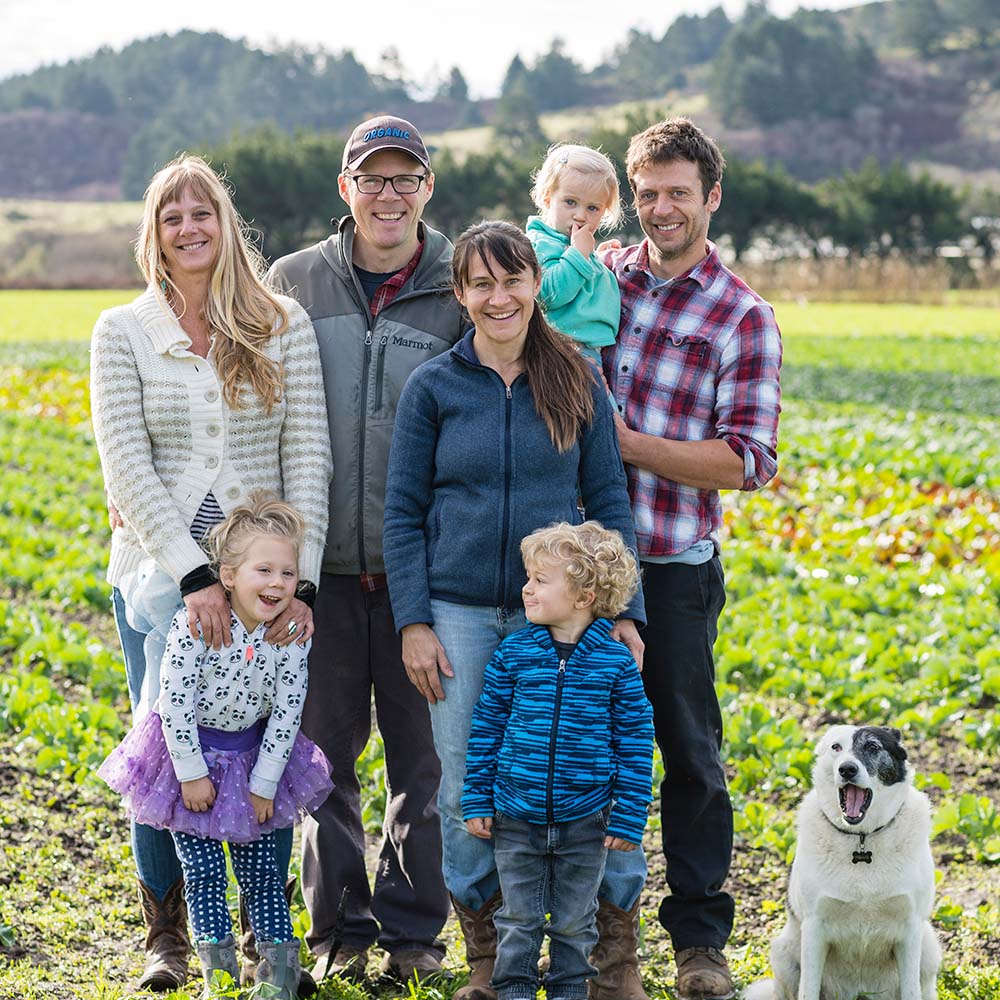

Support small family farms
Shop Now
We support small, family owned farms across the nation. Did you know that farmers only make an average of 10 cents on every dollar you spend at the supermarket? Working directly with farms and not middle men ensures that more money goes back to the people actually growning your food.