

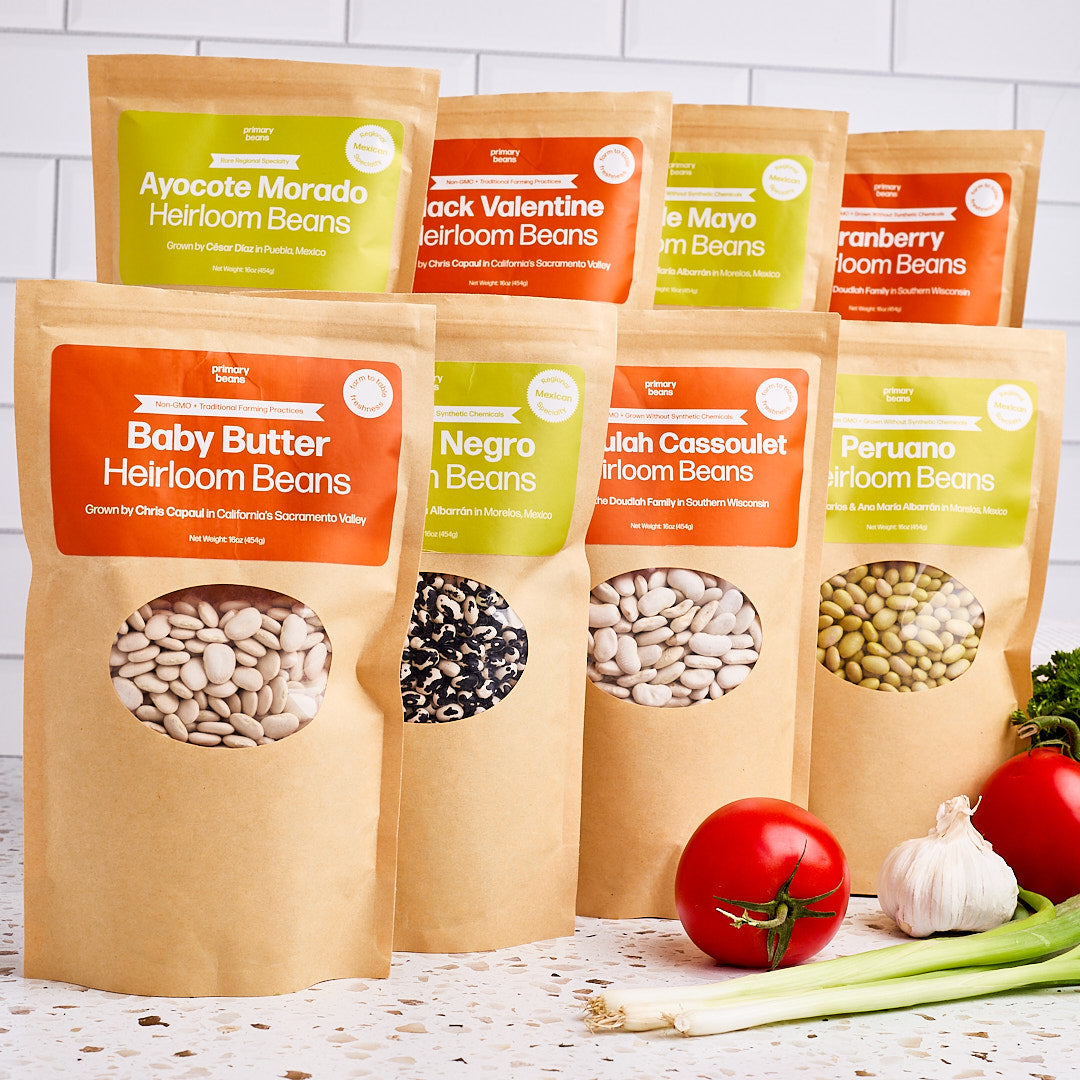


December 2026 Heirloom Bean + Grain Club
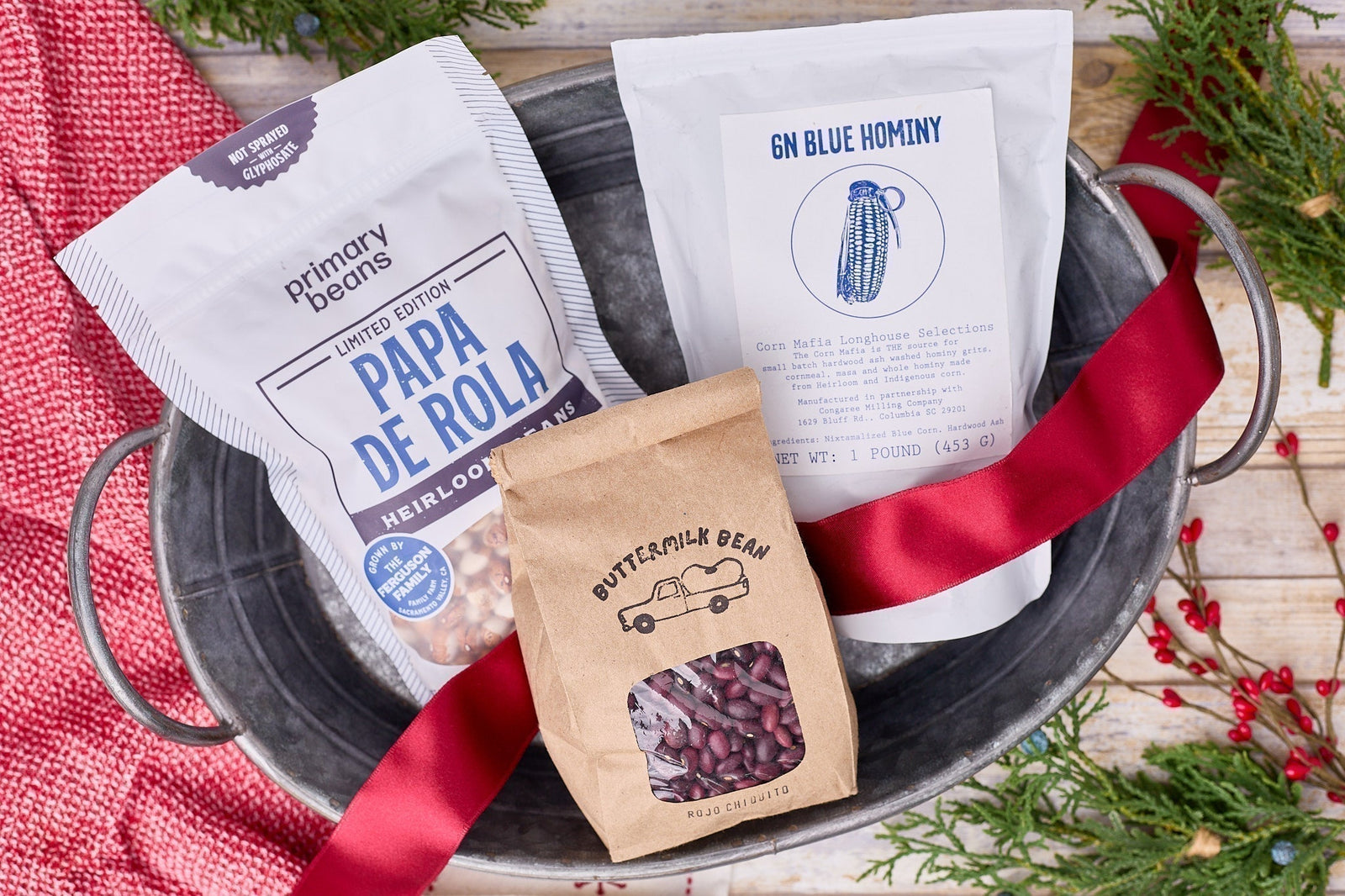
This December's heirloom bean and grain club box is one of the most special we've ever put together, marking the debut of our new partnership with Buttermilk Bean in New York's Finger Lakes region. We're thrilled to bring you more delicious heirloom varieties while supporting the small, family farms building a resilient regional staple crop economy rooted in traditional farming. Leading the box is Buttermilk Beans' Rojo Chiquito — "little red" in Spanish — a petite, black-turtle-sized bush bean cherished across Mexico and Central America for centuries, prized for its quick cooking time and its brilliant crimson hue that holds fast even after the pot comes off the stove. Alongside it, you'll find Papa de Rola from the Ferguson family's fields in California's Sacramento Valley, and a rare hominy from chef Dave "Smoke" McCluskey, made from the storied Six Nations Blue Heirloom Corn. It's a box that travels from the Finger Lakes to the Sacramento Valley and beyond, honoring the farmers and food cultures who have kept these varieties alive.
BEAN AND GRAIN BOX CONTAINS:
Rojo Chiquito Beans, Papa de Rola Beans, Six Nations Blue Hominy
THE BEAN ONLY CONTAINS:
Rojo Chiquito Beans, Papa de Rola Beans, Chaparro

OUR CUSTOMER PORTAL
You can easily claim rewards, add to your next shipment and so much more! We made a video walking you through exactly how easy it is to add some goodies to your order and get cash back. WATCH THE VIDEO.
GIFT SUBSCRIPTIONS
If someone has sent you a gift subscription to the Heirloom Bean and Grain Club you are in the right place. If you haven't already, check your email for a welcome email from info@shopfoodocracy. As a gift recipient you now have access to club exclusives. Make sure to
NEW TO THE CLUB? First of all, congratulations on scoring a spot. It's harder to get in this year because of low yields from small family farms like Blue House Farms. Check out our blogposts with everything you need to know to get the most out of your membership in the heirloom bean and grain club.
How To Cook A Perfect Pot of Beans
The Definitive Guide To Cooking Beans

ROJO CHIQUITO
Small red beans have been a cornerstone of Central American cooking for centuries — the heart of frijoles rojos, gallo pinto, and the brothy pots of red beans and rice found on tables across Mexico and Central America, grown season after season on small farms that saved and replanted their own seed. Rojo Chiquito carries that same lineage forward, the same way our Southwest Gold carries forward the best qualities of the heirloom Zuni Gold bean: a landrace variety's traits, preserved and given the resilience to grow somewhere entirely new.
Rojo Chiquito's Central American landrace ancestors simply couldn't handle the cooler, wetter growing conditions of the northern U.S. So WSU agronomist An Hang, working with USDA-ARS researchers Philip Miklas, Matt Silbernagel, and George Hosfield, spent years adapting the plant — breeding in resistance to curly top virus and bean common mosaic virus and an upright growth habit to keep it off wet ground — while carefully holding onto the flavor, appearance, and color retention its ancestors were prized for. Released in 2001 under a new name that honors its roots while being honest about its improved, adapted status (the same reasoning behind Southwest Gold's name rather than borrowing Zuni Gold's), Rojo Chiquito made it possible to grow this cherished bean somewhere its ancestors never could — including, today, on the small farms of New York's Finger Lakes region.
And where a bean is grown matters more than you might think. Research on common beans has found that growing environment alone — soil, climate, even which state a crop is raised in — can visibly shift traits like seed coat color; one study found beans grown in Michigan came out noticeably darker than the exact same variety grown in Nebraska. So every harvest carries something of the specific farm that grew it, heirloom parentage aside — which is exactly why we're so passionate about knowing who grew your food. On the plate, Rojo Chiquito cooks up into a deep red broth, staying firm and holding its shape, with a creamy, buttery texture and an earthy, faintly sweet flavor — small, quick-cooking, and endlessly versatile in gallo pinto, a brothy pot of red beans, chili, or a hearty vegetable soup.
WHAT TO MAKE WITH THEM
Red beans are deeply traditional in Honduras, where they're most often turned into refried beans — the heart of the country's most iconic street food, the baleada. This simple, beloved dish wraps refried red beans, sour cream, and cheese (sometimes with scrambled eggs or meat) inside a flour tortilla, and if you want to make it right, the flour tortilla is the whole game — it's much easier than you'd think, and this video walks you through it. For the baleada itself, The Recipe Island's Honduran Baleadas is a great place to start, written by a home cook cooking straight from her Roatán kitchen.
Beyond the baleada, Rojo Chiquito is just as at home in Roxana Jullapat's Gallo Pinto or our Vegan Red Beans and Rice — swap it in for whichever bean each recipe calls for and let its color and quick-cooking size do the rest.
ABOUT BUTTERMILK BEAN
 You might have read about Buttermilk Bean in the LA Times last spring, mentioned alongside us in some heirloom bean drama about our subscription clubs. We're teaming up with them for a better reason: to support more small, family farms and bring more bean joy into the world, because an independent, sustainable food system starts with small farms supporting each other. East Coasters, check out their own Bean Share.
Buttermilk Bean is farmer-run: a collective growing some of what they sell and sourcing the rest from neighboring farms committed to regenerative practices, all in service of building a resilient regional staple crop economy in New York's Finger Lakes.
Kristen Loria started Buttermilk Bean in 2021, growing dry beans, popcorn, and cover crops at Lo Rida Farm in Danby, NY. Farming since 2013, she trained on small Hudson Valley vegetable farms before discovering dry beans at Sparrowbush Farm in Livingston. With a master's in plant breeding, she specializes in dry beans as beautiful as they are delicious — heirlooms and entirely new varieties bred right on the farm, grown with regenerative practices.
PAPA DE ROLA
Papa de Rola's name translates to "Dove's Breast" — and one look tells you why. Each bean splits into two distinct halves: a clean, bright white on one side, and on the other, earthy beige feathered with deep maroon markings that echo the speckled plumage of the bird it's named for.
Like nearly every bean grown in Portugal today, Papa de Rola's story starts far from Portuguese soil. Phaseolus vulgaris, the common bean, is native to the Americas and only crossed the Atlantic after European contact with the New World. Once there, Portuguese farmers spent more than five centuries selecting and adapting these beans to their own soils, climates, and tables, breeding a remarkable diversity of regional heirlooms along the way — genetic research on Portugal's heirloom beans has found ancestry from both of the crop's original American gene pools, Andean and Mesoamerican, a living record of that long history of farmer selection. Papa de Rola is part of that story: a bean that made a home for itself an ocean away from where it began, and generations later, found its way back across the Atlantic to grow here in the U.S.
This heirloom bean is adored for its mild flavor and creamy texture, making it an excellent choice for soups and stews. They are a key ingredient in traditional dishes like Caldo de Feijão, a comforting Portuguese bean stew enjoyed during festive occasions and colder months.

WHAT TO DO WITH THEM
With a creamy delicate flavor Papa de Rola soaks up flavor. They are excellent in any soup or stew but a traditional Portuguese Bean Soup is the perfect vehicle for these Portuguese beans! Few dishes embody the soul of Portuguese cuisine like Caldo de Feijão. This rustic bean soup is simple yet deeply satisfying, offering a taste of the Mediterranean in every spoonful. Perfect for a cozy night or as a part of a hearty family meal, this soup will warm you from the inside out.
ABOUT THE FARMER
 Small Town Specialties is a family owned and operated business. In the early days, kids played at the wearhouse while mom and dad packaged orders. Today, the younger kids are often on the farm and help with irrigation, while their older daughter works with packaging at the warehouse. Allen and Kendral are passionate about bringing you Non GMO, and Gluten-free products directly from their farm. What started with just a handful of beans, years later has turned into a flourishing crop.
SIX NATIONS BLUE HOMINY
 Six Nations Blue Hominy is an extraordinary and rare ingredient, crafted from one of the most special heirloom corn varieties still in existence. Grown in limited quantities, this strain of Six Nations Blue has been carefully stewarded by generations of seed keepers and carries a profound cultural and historical significance.
Chef Dave Smoke McCluskey of Corn Mafia honors this legacy by transforming Six Nations Blue Corn into hominy using the traditional nixtamalization techniques of his Mohawk ancestors. Washed in hardwood ash, the hominy becomes more nutrient-rich, while its natural sweetness is enhanced with a delicate smokiness.
"It’s probably my most favorite of seeds, as I can feel something in it," says Chef Dave. "This may sound weird, but corn also has spirit. Some of us still believe such things anyway. This blue? She makes me happy."
The kernels of Six Nations Blue Corn are smaller and more compact than those of Fat Red or Becky Blanca, but they deliver an intensely rich and complex corn flavor that stands out in any dish. This variety embodies resilience, history, and the deep relationship between people and the land.
MOTHER CORN AND HER GUARDIANS
This rare corn originated within the Six Nations of the Grand River Reserve. The late Andrew Bomberry, a respected guardian of this ancestral seed, shared it with Steven McComber, a Mohawk farmer and seed saver, who honored its legacy by naming it Six Nations Blue to reflect its origins within the Haudenosaunee Confederacy.
McComber shared this seed with the late Iowne Anderson, a Cayuga woman and fierce advocate for Indigenous foodways. She devoted decades to preserving and cultivating these traditions as part of her work with the Iroquois Red Hats, Indian Agriculture Program of Ontario, and Six Nations Agricultural Society. Her deep connection to this corn ensured that its story would continue. This corn comes from the stock she lovingly cared for.
HOW TO COOK HOMINY
To cook Six Nations Blue Hominy, rinse it, soak overnight, then simmer on the stovetop for about an hour — or 30 minutes in a pressure cooker plus 15 minutes of natural steam release — until there's no hint of a chalky texture. Note: This will "pop" more than canned hominy varieites, giving you less distinct corn kernels and this is normal. One cup dry yields about 4 cups cooked. For the full walkthrough, including our notes on salting, soaking liquid, and reading Corn Mafia's nixtamalization dates, head to our How to Cook Dry Hominy guide.
Once cooked, treat hominy like sweet corn: stir it into soups, salads, chili, cornbread, or casseroles for a heartier bite and rich corn flavor. Try it in our Hominy and Heirloom Bean Salad, spooned over Hopi Blue Cornbread, or — our favorite — in a pot of Traditional Pozole Rojo.

ABOUT CORN MAFIA
Once upon a pandemic a Mohawk chef found a new calling and the results are irresistible. Chef Dave Smoke McCluskey, founder of Corn Mafia closed his restaurant to pursue his passion for the most important of all indigenous ingredients, corn. These corns or O:nenhste as they say in Mohawk, are sourced from landrace, Indigenous farmed or organic sources.
He fire roasts his hominy after washing it to give it a signature taste of the past. Some people think Indigenous foods are or were bland. These products are meant to act as a foil to such unadventurous thoughts. What’s old is new, what’s old will never leave us.

The Heirloom Bean + Grain club
Learn More
Get impossible to find beans and grains shipped direct to your doorstep each month from small family farms.

Support small family farms
Shop Now
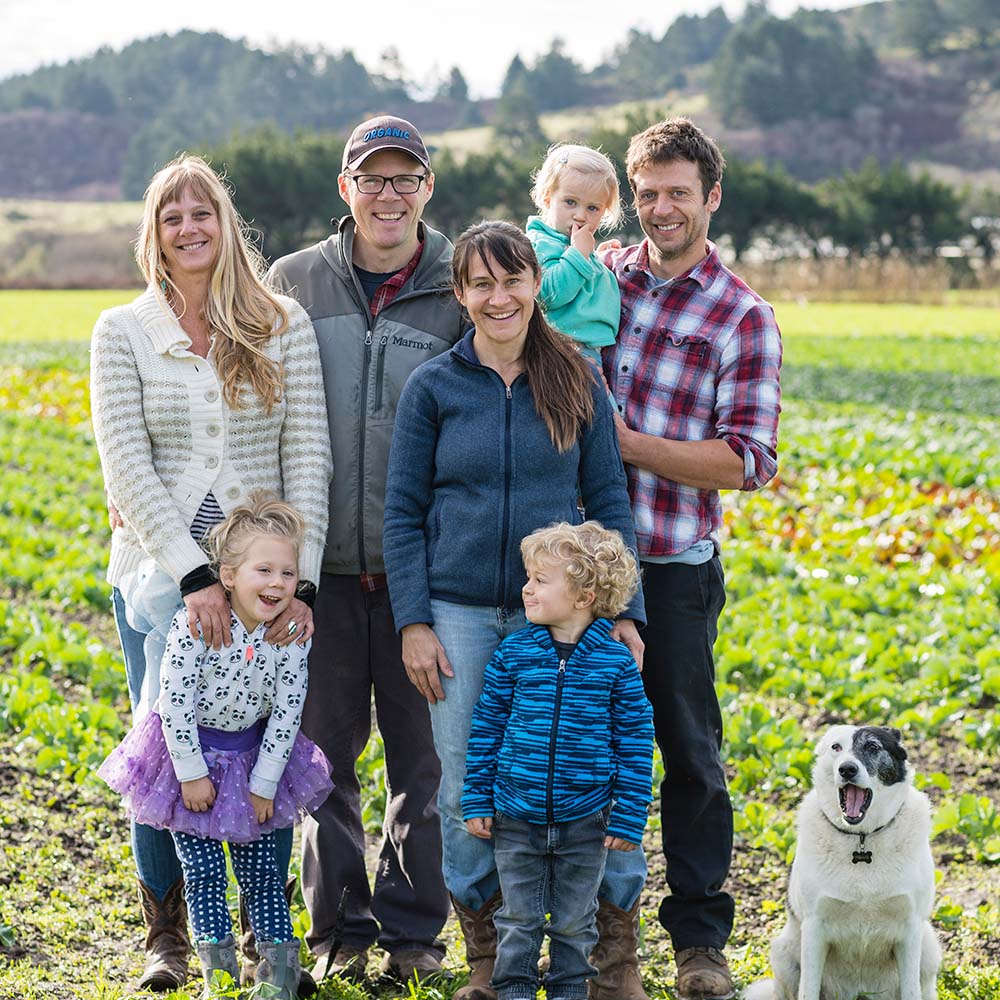
We support small, family owned farms across the nation. Did you know that farmers only make an average of 10 cents on every dollar you spend at the supermarket? Working directly with farms and not middle men ensures that more money goes back to the people actually growning your food.