



Flageolet Beans: History, Flavor & Why They're Worth Finding
The "Caviar of Beans" Has a Surprisingly Fascinating Origin Story
If you've ever encountered a flageolet at a French bistro, tucked alongside a roasted leg of lamb, silky and pale green and somehow tasting like the Platonic ideal of a bean, you may have wondered how something this good stayed off your radar for so long. You're not alone. The flageolet is arguably the most elegant bean in the world, and it has a story to match.
A Bean Born in France (With Roots in the Americas)
The flageolet (fla-zhoh-LAY, if you want to feel sophisticated at the dinner table) is a variety of Phaseolus vulgaris, the same species as your navy bean, your cannellini, your black bean. Like all common beans, its wild ancestors trace back to Mesoamerica and the Andes, where indigenous farmers domesticated beans thousands of years before a single baguette was ever baked. The French, to their great credit, took this American native and did something extraordinary with it.
In the 1800s, a French horticulturist named Gabriel Chevrier began selectively cultivating a dwarf bush bean in the town of Brétigny-sur-Orge, south of Paris. Between 1872 and 1878, he developed what would become the definitive flageolet variety: Chevrier Vert. The original name, "Nain Hâtif de Laon", roughly "Laon Early Dwarf", doesn't exactly roll off the tongue. The name flageolet stuck instead, most likely derived from the Old French word for "little flute," a nod to the shape of the pod. (There's also a theory it's a corruption of the Latin phaseolus, meaning "small boat." Either way: much better than Laon Early Dwarf.)
The Magic Is in the Harvest

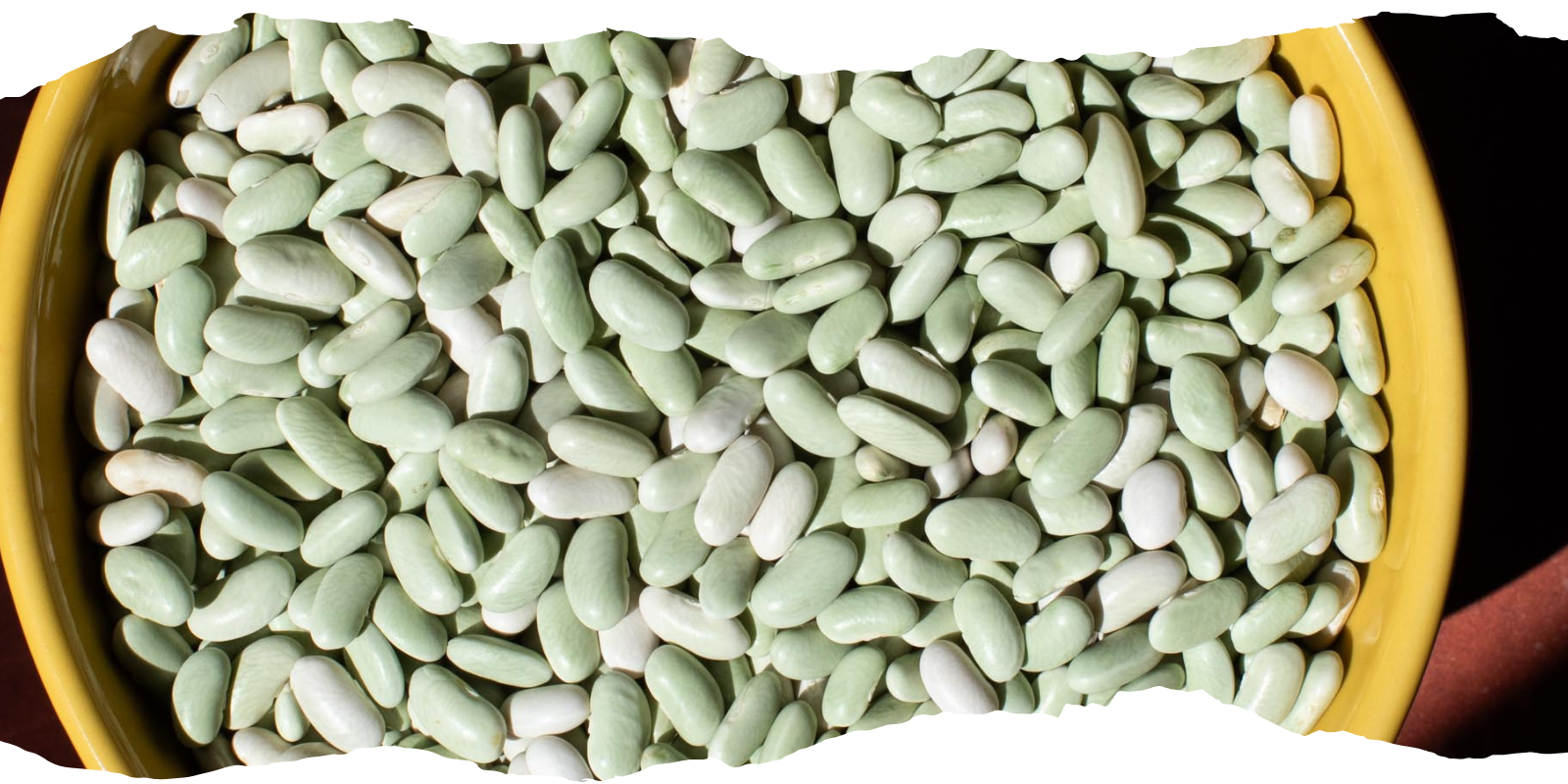
What makes a flageolet a flageolet isn't just genetics, it's technique. The beans are harvested before full maturity and then dried in the shade rather than in direct sunlight, which is what preserves that signature pale green color. Leave them too long or dry them in the sun, and you'll get an ordinary white bean. Do it right, and you get something that French chefs have been calling the "caviar of beans" for over a century. Why are they not all uniformly green? Because beans mature at different rates making it impossible to pick every single bean at the exact perfect moment, so some will be a little more white and some a little more green. I think of it as Mother Nature's way of teaching me not to be a perfectionist.
The flavor reflects the process: delicate, slightly nutty, with a creaminess that's almost buttery and a thin skin that practically dissolves. They hold their shape beautifully under heat, no turning to mush, which is why they've been the classic accompaniment to gigot d'agneau (roasted leg of lamb) in French cuisine for generations.
An Endangered Heirloom
Here's the part that should make every bean lover a little uneasy: the heirloom Chevrier Vert flageolet is officially considered endangered, including in France, where it was born. The problem is structural. The original plant is naturally prostrate, meaning it sprawls close to the ground. That makes it vulnerable to soil-borne diseases like anthracnose, and nearly impossible to harvest mechanically. Modern agriculture doesn't have much patience for a bean that requires hand-harvesting and shade-drying, so industrial producers have largely moved on to easier, higher-yielding varieties.
Very few growers in the world still cultivate the true heirloom. France has been working to bring the Chevrier Vert under a protected designation similar to the wine Appellation d'Origine Contrôlée, a "Label Rouge" classification, to protect the variety from being displaced entirely by inferior imitations grown abroad. It's a fight worth having.
Our Flageolet: Grown by an Organic Pioneer

When we source a bean this particular about its growing conditions, we need a farmer who's equally particular. Ours is Mike Heath, who farms in Magic Valley, Idaho, a region whose volcanic soils and high desert climate are surprisingly well-suited to flageolets.
Mike's path to organic farming is one of the more remarkable origin stories we've come across. He walked away from a 500-acre conventional operation, and after time spent as a missionary witnessing traditional farming communities abroad, came home with a fundamentally different relationship to the land. He has farmed organically and regeneratively ever since, and his work has gotten enough attention that he was featured in Michael Pollan's The Botany of Desire, a book that doesn't have a lot of patience for farming practices that prioritize yield over everything else.
His flageolets are grown without synthetic pesticides or fertilizers, which matters enormously for this variety, since conventional flageolet production often involves heavy chemical treatment to compensate for the plant's natural susceptibility to disease. When you're eating a bean this delicate, you want to taste the bean. Not the intervention.
How to Cook Flageolet Beans

Flageolets are on the more forgiving end of the heirloom bean spectrum, their thin skins mean they cook relatively quickly and don't require aggressive soaking. That said, we always recommend our standard approach: cook with a strip of kombu, add salt first (yes, first, the old advice to never salt the water is a myth), and bring the pot to a boil for five minutes before dropping to a simmer. Because flageolets are harvested young, they tend to be particularly creamy and tender, so check them earlier than you would a heartier variety like an ayocote.
FLAGEOLET HEIRLOOM BEAN RECIPES
The classic move is to finish them simply, good olive oil, a little flaky salt, maybe some fresh thyme, and serve alongside lamb. But they're equally wonderful in a light broth with garlic and herbs, or tossed cold into a salad with good vinegar and shallots. Their delicacy is the point. Don't bury them.

The Heirloom Bean + Grain club
Learn More
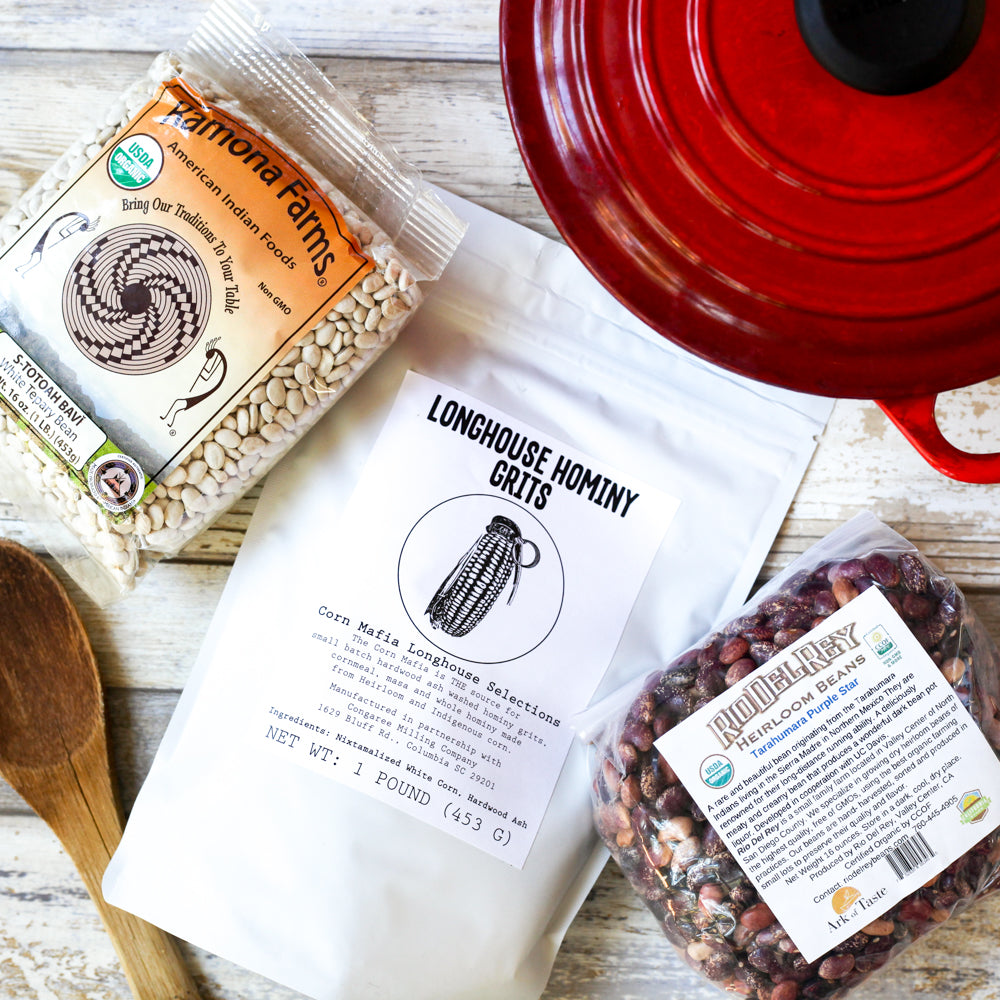
Get impossible to find beans and grains shipped direct to your doorstep each month from small family farms.

Support small family farms
Shop Now
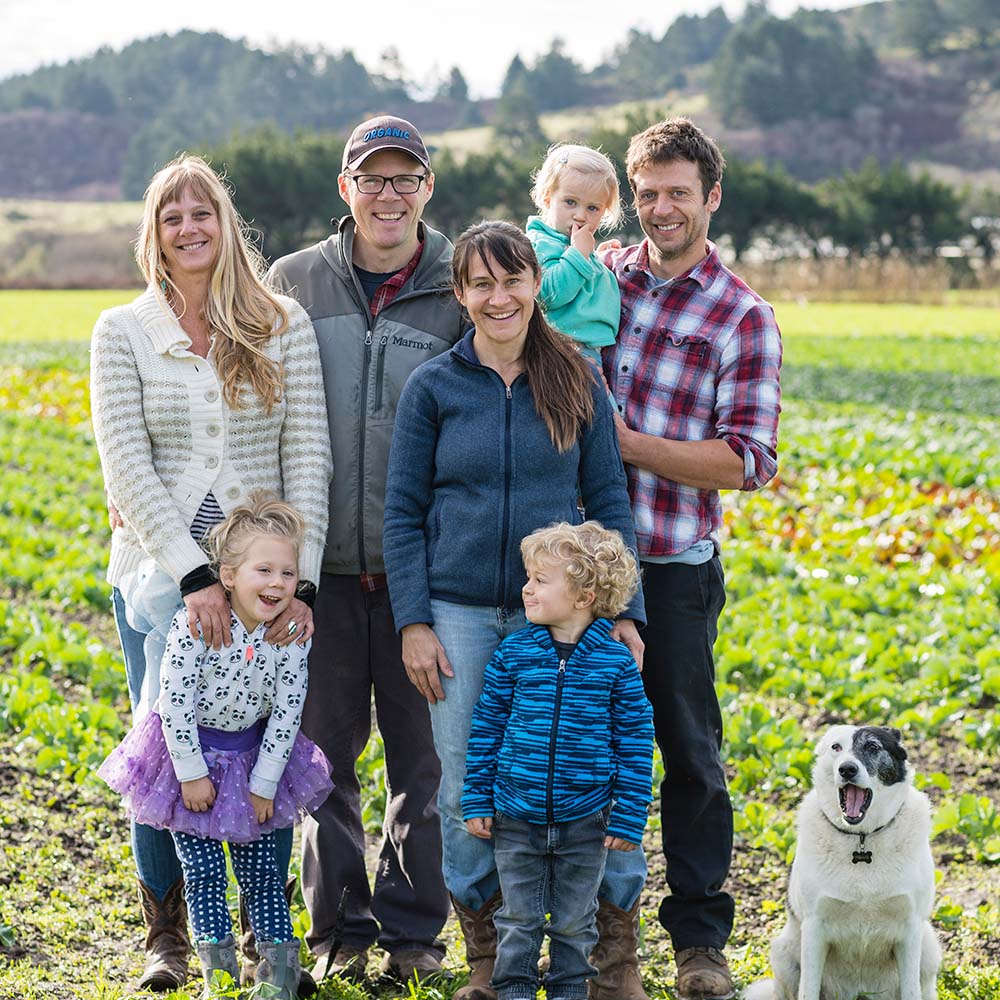
We support small, family owned farms across the nation. Did you know that farmers only make an average of 10 cents on every dollar you spend at the supermarket? Working directly with farms and not middle men ensures that more money goes back to the people actually growning your food.