



The Medianoche Has Landed
The Medianoche Has Landed — And Club Members Are First in Line
The Medianoche Has Landed
I am not exaggerating when I say this: the Medianoche has never been outside of Mexico before. The first batch to cross the border is going straight to our Heirloom Bean + Grain Club members in June.
You are about to be the first people outside of Mexico to taste it.
That's you — if you're already a member.
So What Is the Medianoche?
 For those who missed my earlier post about the naming, here's the short version: the Medianoche is an extraordinary ayocote variety grown by the Joel Rivero family in San Pedro Temamatla, a village in Chalchicomula de Sesma, Puebla. Joel and his stepfather learned the old ways of traditional farming and took on land that had sat empty, and what happened next is the kind of story I genuinely could not make up.
They planted a mix of seeds, different colors, something of an experiment, and the Medianoche took to that specific soil like it had been waiting there all along. Deep blacks, inky purples, scattered cream. Other farmers have tried to grow it. It hasn't worked out the same way. There is something about Joel and his stepfather, about the way they work that land, that makes this bean what it is. I don't have a scientific explanation for it. Neither do they, really. Sometimes that's just farming.
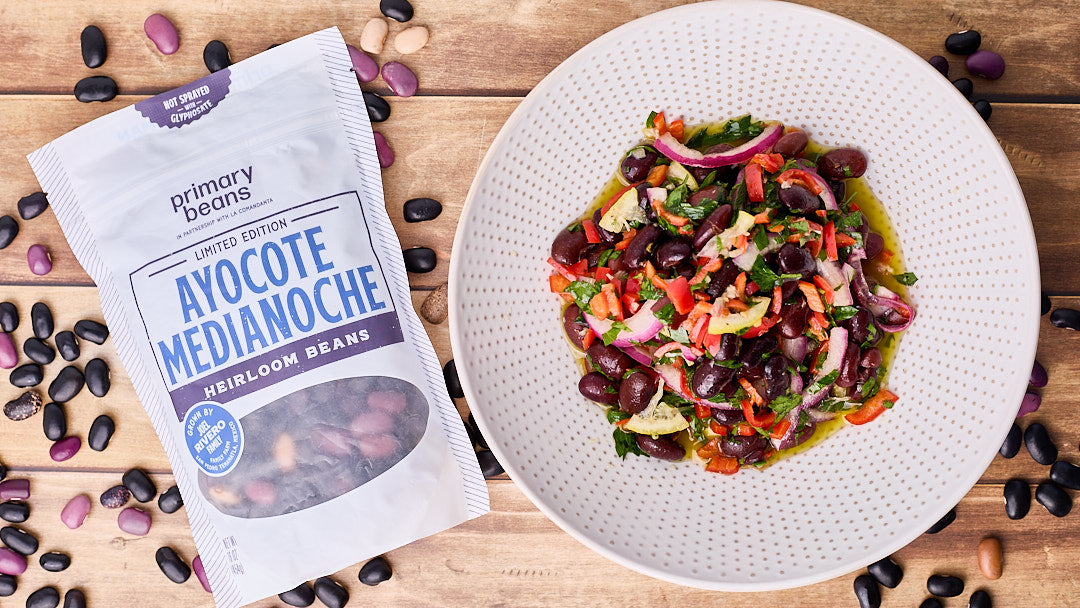
I named the bean from a photograph. Midnight felt like the only word to describe what I saw. Inky black mixed with purple and a sprinkling of white scattered like stars in a midnight sky.
What Makes It Worth the Wait
The Medianoche is an ayocote, and before I tell you about this specific bean, I want to tell you what that actually means, because it's one of my favorite stories in all of food history.
The ayocote is one of the oldest domesticated plants in Mesoamerica. It was first cultivated in the Tehuacán Valley, a stretch of ancient highland that straddles Puebla and Oaxaca, now a UNESCO World Heritage Site recognized for its role in the very origins of agriculture. We're talking about a bean that predates the Aztec Empire. Somewhere between 4,000 and 6,000 years ago, indigenous communities in the Mexican highlands were already selecting, saving, and cultivating this climbing legume, growing it at elevations above 6,500 feet in soil that the Sierra Nevada volcanoes had been building for millennia. The Aztecs called it ayocotl in Nahuatl. It survived colonization, civil war, the French invasion, and a century of industrial agriculture trying to replace everything with something cheaper and easier to grow at scale.
 Joel Rivero farms his land in Chalchicomula de Sesma, in the Sierra Nevada foothills of Puebla, the same volcanic highlands where the ayocote has been grown continuously for thousands of years. That soil has a kind of memory. Layers of volcanic ash and organic matter built up over centuries, mineral-rich, alive with the microbial activity that only comes from land that has never been poisoned. Joel and his stepfather use no synthetic fertilizers, no chemicals of any kind, just animal manure from the same region and the knowledge they sought out from elders in their community who still farm the traditional way. When Joel says the land works well for ayocotes, he's not being modest. He's describing a relationship between seed and soil that is older than written history.
Like all ayocotes, the Medianoche has a creamy interior, holds its shape through long braises, and is the kind of bean that turns a pot of something simple into an actual meal.
But what you notice first is what it looks like. Open the bag and you're looking at something that genuinely resembles the night sky, deep black beans and inky purple ones scattered with a few cream-colored surprises. No two handfuls look exactly the same. Every year after harvest, the Rivero family spreads out their beans and hand-selects the seed mix for the following season, balancing the colors by eye. For the current crop, they dialed back the black slightly and brought up the purple and cream. Bees cross-pollinating across the field add their own unpredictable input. Without that careful annual calibration, the variety would drift toward one dominant color and lose the whole effect.
This is the art of farming. And it's what you're tasting.
Our Partner, La comandanta
La Comandanta is a Mexican mission-based company working directly with small family farms to rescue ancestral bean varieties at risk of disappearing. Without buyers willing to pay fairly for rare, difficult-to-grow varieties, farmers face a choice between switching to commodity crops or leaving farming altogether. Building a real market for the Medianoche, starting right here, starting with you, is how it survives.
Join the Waitlist for the June Club Shipment
The June Heirloom Bean + Grain Club shipment features the Medianoche as the star. I only have as much as one family farm produced, so spots are limited. If you want to be among the very first people to cook with this bean outside of Mexico, join the waitlist now.
New to the club? The Heirloom Bean + Grain Club is my monthly shipment of rare and heirloom beans and grains, sourced directly from the small family farms that grow them. Each shipment comes with the full story of the variety, the farmer, and what to do with it in your kitchen.
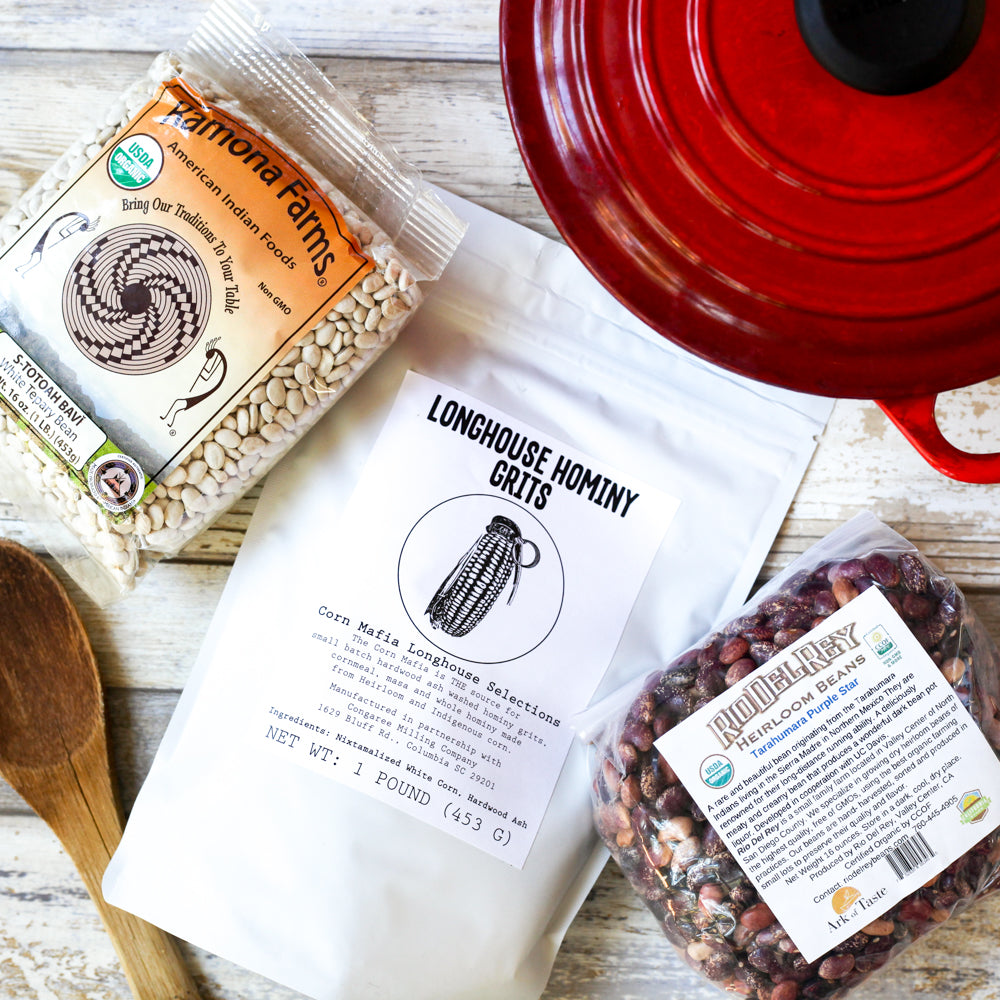

The Heirloom Bean + Grain club
Learn More
Get impossible to find beans and grains shipped direct to your doorstep each month from small family farms.
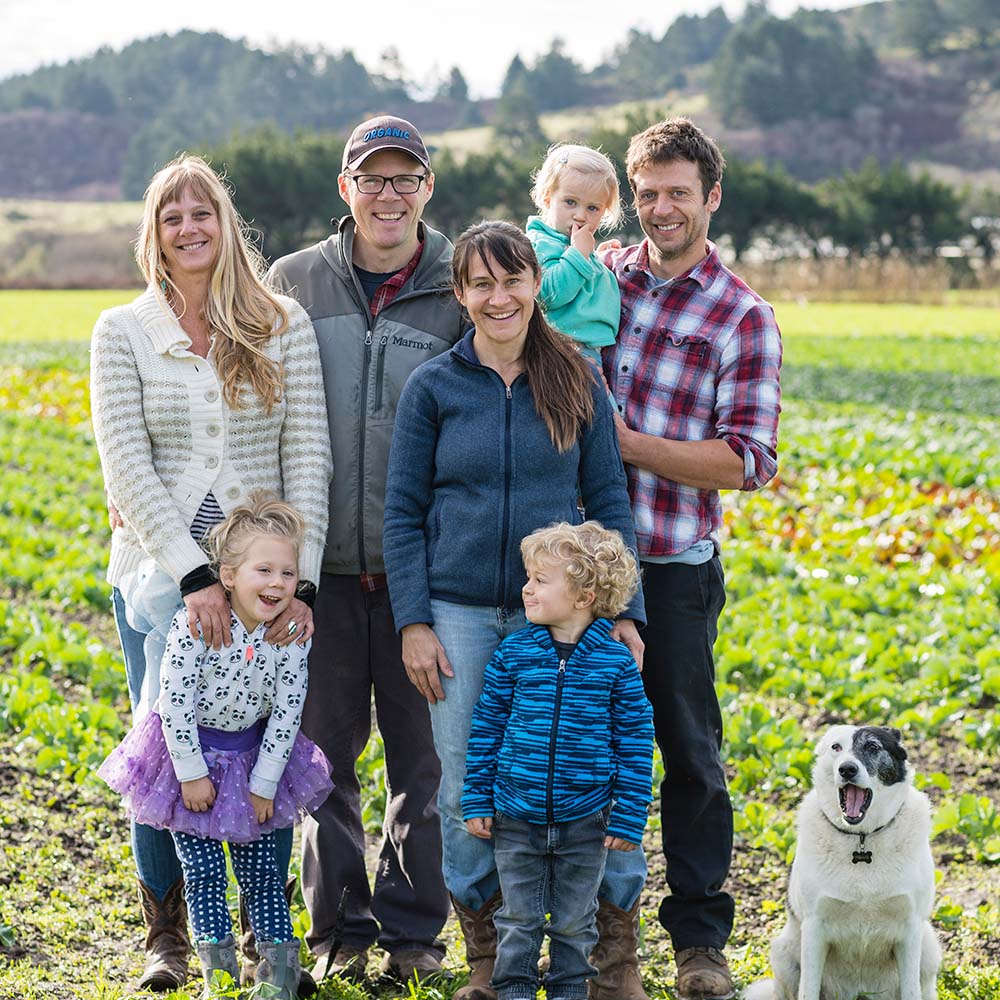

Support small family farms
Shop Now
We support small, family owned farms across the nation. Did you know that farmers only make an average of 10 cents on every dollar you spend at the supermarket? Working directly with farms and not middle men ensures that more money goes back to the people actually growning your food.