



Tom Kha Sopa De Frijol
Some recipes are born from cravings, others from necessity, and the best ones from love. This Flor de Mayo bean soup is all three. Recipe creator Andrea Aliseda (@andrea__aliseda) shares a deeply personal creation that bridges two of her most comforting soups: Mexican sopa de frijol and Thai tom kha. "There's simply nothing more comforting to me than a creamy sopa de frijol and a rich and bright tom kha soup," she explains. "Both have historically cured all my ailments, from heart to stomach, and felt like an especially apt soup to share during these difficult times."
The result is a soup that takes the best of both traditions, the creaminess and depth of Mexican bean soup, the bright citrus notes and aromatic herbs of Thai coconut soup, and creates something new and beautiful. It's anchored by Flor de Mayo beans, a variety with its own story of resilience and adaptation, making this soup feel even more meaningful.
A Bean Born from Resilience
Before we talk about the soup, let's talk about the bean. Flor de Mayo translates to "May flower," a tender name for a resilient variety. This bean originated out of necessity during a difficult period in agriculture in Guanajuato, Mexico. In the 1970s, the lowlands of Guanajuato were confronted with the Tobacco Mosaic virus, which caused a mosaic-like pattern on infected plants and devastated crops.
In response to this crisis, the National Institute of Beans (Instituto Nacional de Investigaciones Forestales, Agrícolas y Pecuarias) bred a new and more virus-tolerant species of bean in the early 1980s. The Flor de Mayo bean is that creation, bred for resilience, tolerant to challenges, and insistent on life. Its subtle yet deep flavor profile and starchy texture make it perfect for creamy, brothy preparations.
As Andrea notes, this makes it especially meaningful for this soup, which itself was created during difficult times and meant to comfort and nourish.

The genius of this recipe is how it honors both culinary traditions while creating something distinctly its own. From Mexican sopa de frijol, it takes creamy beans, a rich broth, and bright lime. From Thai tom kha, it borrows coconut milk, kaffir lime leaves, lemongrass, and fresh herbs like cilantro and Thai basil.
The Flor de Mayo beans provide the starchy, creamy base that makes this soup substantial and comforting. Coconut milk adds richness and a subtle sweetness that complements the beans beautifully. Kaffir lime leaves and lemongrass bring those distinctive Thai aromatics, citrusy, floral, and bright. Chiles de árbol add gentle heat. And the coconut crema drizzled on top brings everything together with tangy richness.
It's a soup that's both light and nourishing, bright and comforting, complex and approachable. Perfect for spring when you want something that feels fresh but still warming.
The Star: Flor de Mayo Beans
 Flor de Mayo beans are medium-sized with a beautiful tan color marked with pink speckles. They have a creamy, almost velvety texture when cooked and a rich, earthy flavor that's more complex than your average pinto bean. Their starchy quality makes them perfect for soups that are meant to be blended smooth, they create a luxurious, creamy texture without needing any dairy.
What makes these beans special for this soup is how they absorb and carry flavors. They soak up the aromatic broth, coconut milk, kaffir lime, lemongrass, garlic, while maintaining their distinctive taste. When blended, they create a soup base that's silky and satisfying, substantial enough to be a meal but light enough to feel fresh and spring-like.
Our Flor de Mayo beans come from Carlos and Ana María Albarrán in the heart of Morelos, Mexico. Their small organic farm is one of the rare few still practicing the Milpa system, where corn, beans, squash, and chiles grow together. This ancient method builds healthy soils, supports biodiversity, and creates food that nourishes both body and spirit. Learn more about Carlos and Ana María.
Building the Flavors
This soup is all about layering aromatics and building flavor gradually. You start by blooming chiles de árbol in warm olive oil (or you can add them later for milder heat). Mushroom powder and black pepper add umami and depth. Butter and garlic create a fragrant base.
The cooked beans get stirred into this aromatic oil, coating them with all those flavors. Then the aromatics come in: kaffir lime leaves (rubbed between your hands to release their oils), lemongrass, reserved bean broth, and a full can of coconut milk. Everything simmers together, allowing the flavors to infuse the liquid.
Fresh cilantro gets added near the end and simmers briefly before blending. This is different from adding it as a garnish, simmering it mellows its flavor while still adding that herbaceous quality throughout the soup.
After removing the whole aromatics (chiles, kaffir leaves, bay leaf, lemongrass), everything gets blended until silky smooth. The result is a soup that's creamy, aromatic, and deeply flavorful.
The Coconut Crema
The coconut crema is a simple but brilliant touch, just unsweetened cultured coconut yogurt whisked with lemon juice. It adds tanginess and richness when drizzled on top, creating beautiful swirls and adding another layer of flavor. If you can't find cultured coconut yogurt, regular coconut yogurt will work, or you could even use a dairy-based crema or sour cream if you're not keeping it vegan.
Serving
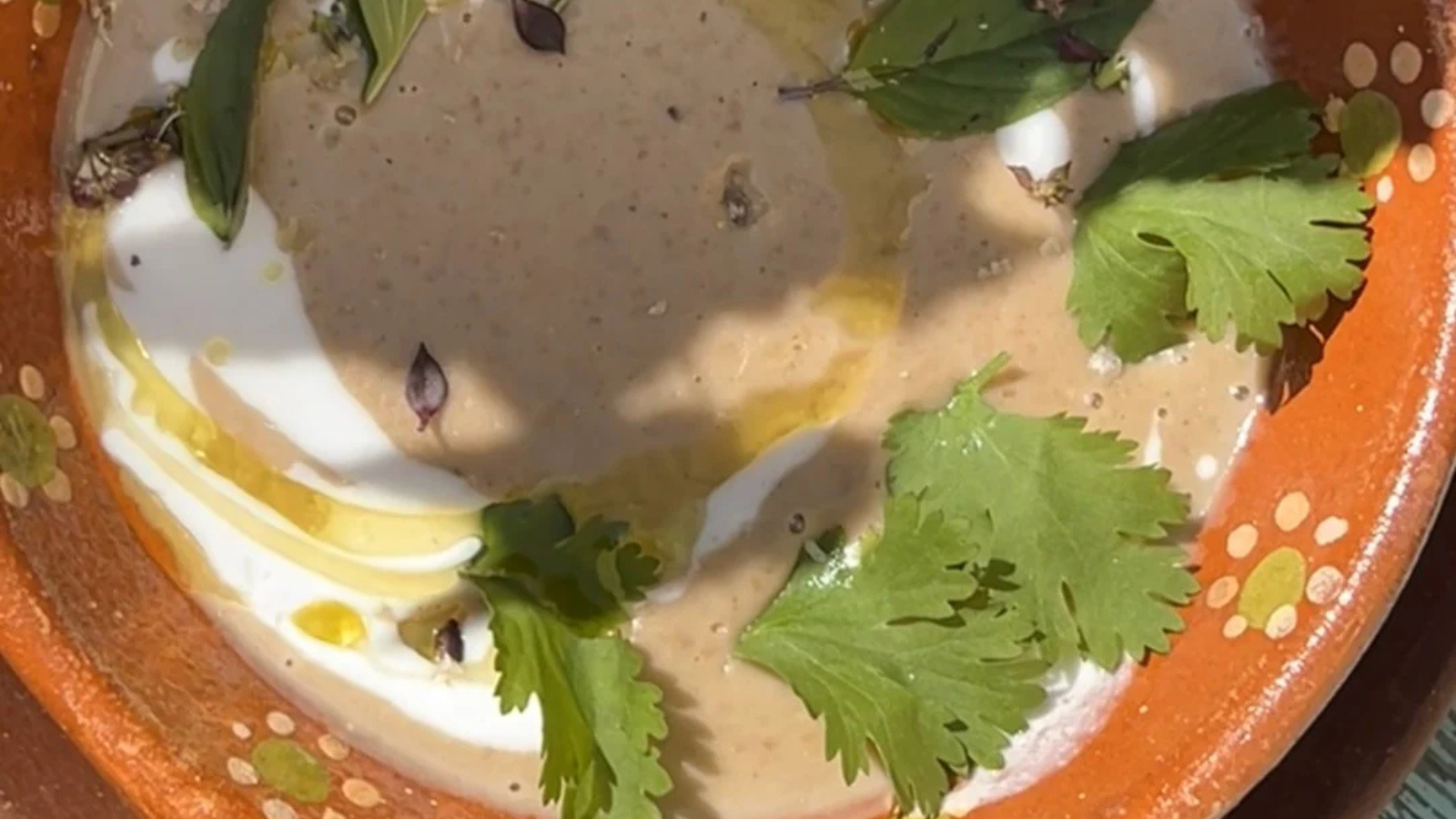
This soup is meant to be served hot in bowls, garnished generously. Fresh cilantro and Thai basil leaves get scattered on top, adding color and fresh herbal notes. A squeeze of lime adds brightness. A drizzle of good olive oil adds richness. And a pinch of flaky sea salt on top adds that perfect finishing touch.
Serve it with warm slices of bread or fresh flour tortillas for a light and nourishing lunch or as an appetizer before a larger meal. The bread or tortillas are essential for soaking up every last drop of that delicious, aromatic broth.
A Soup with Meaning
What makes this recipe special isn't just how it tastes, though it's absolutely delicious. It's the stories it carries. The story of Flor de Mayo beans, bred for resilience during difficult times. The story of two beloved soups from different traditions coming together. The story of comfort food that nourishes both body and spirit.
Andrea created this soup during challenging times, drawing on the foods that have always brought her comfort. The result is something that can do the same for others, a bowl of warmth, brightness, and hope.
This is the kind of soup that feeds more than just hunger. It feeds the soul.
*A Note On Our Recipes:
Every recipe here was developed and tested using farm-fresh beans from Foodocracy and Primary Beans. Older beans, anything past a year in your pantry or beans from other sources may need more coaxing. Give them a soak and add extra cooking time, and they'll get there eventually.



The Heirloom Bean + Grain club
Learn More
Get impossible to find beans and grains shipped direct to your doorstep each month from small family farms.


Support small family farms
Shop Now
We support small, family owned farms across the nation. Did you know that farmers only make an average of 10 cents on every dollar you spend at the supermarket? Working directly with farms and not middle men ensures that more money goes back to the people actually growning your food.
Tom Kha Sopa De Frijol
Fusion
Soup
There's simply nothing more comforting to me than a creamy sopa de frijol and a rich and bright tom kha soup. Both have historically cured all my ailments, from heart to stomach, and felt like an especially apt soup to share during these difficult times. As we anchor into the freshness of spring's citrus season, and enter all things coconut for the summer, the marriage of the two soups felt meant to be, while showcasing the light spring quality of the Flor de Mayo bean.
Though this bean has a tender name, May flower, it's resilient, tolerant, and insists on life. It originated out of a need for beans during a difficult period in agriculture in Guanajuato, Mexico. Its subtle yet deep flavor profile and starchy texture makes for a delicious pot of brothy beans with crema, a fatty glug of olive oil, and a hefty squeeze of lime. Inspired by these flavors, this soup takes its lime-y flavor from Thai kaffir lime leaves and lemongrass, and its creaminess from rich coconut milk.
Enjoy with warm slices of bread or fresh tortillas de harina for a light and nourishing lunch or appetizer. – Andrea Aliseda, @andrea__aliseda
Featured bean: Flor de Mayo
Other beans to try: Bayo, Ojo de Cabra

Ingredients
- 3 cups cooked Flor de Mayo beans, strained with broth reserved
- 2 tbsp olive oil
- 2 chiles de árbol, deseeded
- 1 bay leaf
- ½ tsp mushroom powder
- ⅛ tsp black pepper
- 1 tbsp butter
- 3 garlic cloves, minced
- 1 13.5-oz can coconut milk, full fat
- 3 kaffir lime leaves
- 1 1-inch piece of lemon grass
- 1 tsp sea salt, plus more to taste
- ⅛ of a bunch of fresh cilantro, plus more for serving
- ¼ bunch Thai basil, for serving
- Lime, for serving
- Flaky sea salt, for serving
For the coconut crema
- ⅓ cup unsweetened cultured coconut yogurt
- 2 tsp lemon juice
Directions
Prepare the soup: To a medium-sized saucepan on medium heat, add olive oil. Once oil is warm, add chiles de árbol and bay leaf. (Note: this will activate their flavor more and bring out its spiciness. For a milder and fruitier result, add chile de árbol when instructed to add kaffir leaves.)
Build the base: Add mushroom powder and black pepper next, stirring quickly. Then add butter and garlic. Stir everything together until fragrant, about 2 minutes. Once garlic is golden, add strained beans to the saucepan and stir to coat everything together, about 2 minutes until it starts to bubble up.
Add aromatics: Rub kaffir leaves with your hands to release the aromas and add them to beans, as well as the lemongrass (if you withheld the chile de árbol, add it here now), then add the ½ cup of reserved bean broth and whole can of coconut milk. Stir together and put on high heat.
Simmer: Add salt and stir. Once the soup has come to a boil, add cilantro and lightly submerge. Then, bring the heat down to medium and allow it to simmer for about 7 minutes. The kaffir leaves should be a paler green, and the broth a light mushroom brown. Taste to adjust salt if needed. Turn off the heat and remove chiles, kaffir leaves, bay leaf, and lemongrass. Allow mixture to cool for about 5 minutes before blending.
Make coconut crema: Add coconut yogurt and lemon juice to a small mixing bowl. Mix together with a whisk, and set in the fridge if not using immediately.
Finish soup and assemble: Pluck out leaves of cilantro and Thai basil and set aside for serving. Next, blend the soup together until smooth, and serve hot. Drizzle in the coconut crema, olive oil, and a squeeze of lime, then sprinkle with fresh cilantro and Thai basil and a pinch of flaky sea salt. Enjoy with warm slices of bread or fresh tortillas.