



Frijoles Colorados
When Catherine on our team spent the entire month of December in Miami, she became obsessed with frijoles colorados, a hearty bean stew from Cuba. Recipes vary, but the fundamentals are the same: red beans flavored with a few different smoky meats and sazón, the Latin American spice mixture, combined with veggies like squash and potatoes. You can play with the different levels of meat or veggies to best fit what you're craving.
What Are Frijoles Colorados?

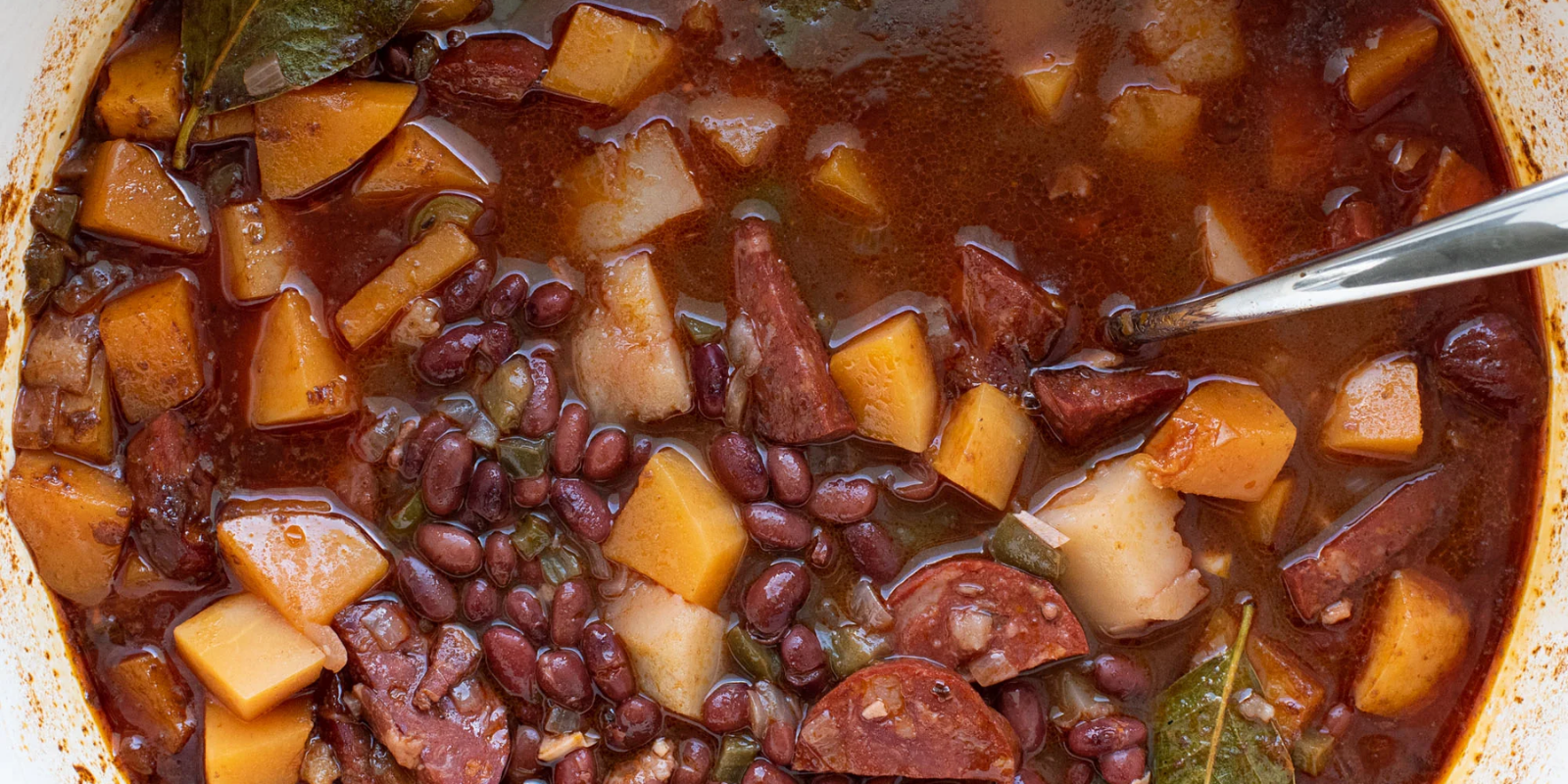
Frijoles colorados, literally "red beans", are a hearty Cuban bean stew that's comfort food at its finest. Unlike simple cooked beans, frijoles colorados are layered with multiple smoky meats (ham hock, bacon, chorizo), aromatic vegetables, warming spices (sazón), and substantial additions like squash and potatoes.
The result is something between a thick stew and soupy beans, rich, deeply flavored, satisfying, and traditionally served over white rice. It's the kind of food that sustains you, that feels like home, that makes you understand why Catherine became obsessed after a month in Miami.
The Star: Sangre de Toro Beans
Let's talk about Sangre de Toro beans, "bull's blood" beans named for their deep burgundy color. These stunning beans are large, meaty, and incredibly flavorful, perfect for hearty stews where beans need to hold up to long cooking and assertive flavors.
What makes Sangre de Toro beans ideal for frijoles colorados is their robust texture that maintains integrity through extended simmering with meats and vegetables, their meaty quality that stands up to smoky ham hock and chorizo without being overwhelmed, and their earthy flavor that complements the complex spices and smoky meats beautifully.
When cooked with ham hock from the beginning, then simmered with bacon-rendered sofrito and chorizo, these beans absorb incredible depth of flavor while staying intact and satisfying.
The Smoky Meats
Multiple meats create the characteristic depth and complexity of frijoles colorados:
- Smoked ham hock: Cooks with the beans from the beginning, infusing the cooking liquid with deep, smoky pork flavor. The meat gets removed from the bone and added back later.
- Bacon: Rendered to provide fat for sautéing the aromatics, plus crispy bacon pieces that add texture and smoky flavor.
- Spanish chorizo: Sliced and added toward the end, providing spicy, garlicky, smoky sausage flavor. Note this is Spanish chorizo (dried, cured sausage), not fresh Mexican chorizo.
Together, these meats create layers of porky, smoky flavor that define Cuban frijoles colorados. You can adjust the amounts based on preference, but the combination of different smoked/cured meats is traditional and creates complexity that a single meat can't achieve.
The Cooking Process: Stage One
The beans cook with the ham hock first, dried beans, smoked ham hock, salt, pepper, and enough water to cover by about 1½ inches. This simmers for 1 hour, allowing the beans to begin softening while the ham hock infuses the cooking liquid with smoky flavor.
After an hour, remove the ham hock, cut the meat from the bone, and set it aside to add back later. The bone has done its job of flavoring the liquid, and the meat will be tender and ready to eat.
The Sofrito/Seasoning Stage
While the beans simmer with the ham hock, you prepare the seasoning mixture, essentially a Cuban sofrito with additional flavorings:
Bacon gets pan-fried until rendering its fat and becoming crispy. Diced onion and green bell pepper sauté in that bacon fat for 2-3 minutes, then minced garlic goes in for 30 seconds.
Then the distinctive flavorings: tomato sauce, dry cooking wine, white vinegar, sazón, and bay leaves. Everything cooks together for 2-3 minutes to meld, then this entire flavorful mixture gets stirred into the simmering beans.
This sofrito provides the aromatic, savory, slightly tangy base that characterizes Cuban bean cooking.
About Sazón
Sazón is a Latin American spice blend that typically includes cumin, coriander, garlic powder, and annatto (which provides the distinctive orange-red color). It's used throughout Caribbean and Latin American cooking to add savory depth and color.
Brands like Loisa or Burlap & Barrel make quality sazón, or you can make your own. The sazón is what gives frijoles colorados their characteristic flavor and warm color.
The Final Simmer
After adding the sofrito mixture, the beans continue simmering for another 30-60 minutes until nearly tender, stirring occasionally and adding water as needed to keep them submerged.
Then the final additions go in: sliced Spanish chorizo, the reserved ham hock meat, cubed butternut squash, and cubed potatoes. Everything simmers uncovered for about 20 minutes until the vegetables soften.
These final additions provide substance and variety, the squash adds subtle sweetness, the potatoes add starchiness that thickens the broth, the chorizo adds spicy richness, and the ham hock meat provides tender, smoky pork throughout.
The Layered Approach
What makes frijoles colorados so flavorful is the layered approach: beans cook with ham hock first, absorbing smoky flavor; then sofrito with bacon and aromatics gets added; then chorizo and vegetables go in at the end. Each stage builds on the previous one, creating depth and complexity.
This isn't a one-pot-dump-everything-in recipe. It requires stages and attention, but the result is worth it, beans with genuine depth rather than everything tasting the same.
Serving with Rice
Frijoles colorados are traditionally served over long-grain white rice. The rice soaks up the flavorful bean liquid, and the combination of beans, meat, vegetables, and rice creates a complete, satisfying meal.
The rice should be fluffy and plain, letting the complex flavors of the frijoles colorados shine. Some people mix everything together on the plate, others keep them separate and eat bites of each, both approaches work.
Catherine's Miami Obsession
What makes this recipe special is its origin story, Catherine spending December in Miami and becoming obsessed with frijoles colorados. That obsession is understandable. When you taste well-made frijoles colorados, rich with smoky meats, complex spices, tender vegetables, hearty beans, you understand why it's a staple of Cuban cuisine.
It's the kind of food that makes you want to recreate it at home, to chase that flavor and comfort you discovered.
Customization
As the recipe notes, "you can play with the different levels of meat or veggies to best fit what you're craving." Want more meat? Add extra chorizo or bacon. Want more vegetables? Add more squash and potatoes, or include carrots, plantains, or yuca.
The fundamentals, red beans, smoky meats, sazón, sofrito, remain constant, but the proportions can vary based on preference and what you have available.
Make-Ahead and Leftovers
Like most bean stews, frijoles colorados are even better the next day. The flavors continue to develop and deepen as the stew sits. Make a big batch, enjoy some fresh, and refrigerate or freeze the rest.
Reheat gently on the stovetop, adding water or broth if it's gotten too thick. Serve with fresh rice and you have an easy, delicious meal ready in minutes.
Cuban Comfort Food
Frijoles colorados represent Cuban comfort food at its best, hearty, flavorful, sustaining, the kind of food that brings families together around the table. It's not fancy or complicated in concept, but the layered cooking technique and quality ingredients create something genuinely delicious.
For people unfamiliar with Cuban cuisine, this is an excellent introduction, approachable ingredients, straightforward techniques, and deeply satisfying results.
*A Note On Our Recipes:
Every recipe here was developed and tested using farm-fresh beans from Foodocracy and Primary Beans. Older beans, anything past a year in your pantry or beans from other sources may need more coaxing. Give them a soak and add extra cooking time, and they'll get there eventually.

Related Recipes



The Heirloom Bean + Grain club
Learn More
Get impossible to find beans and grains shipped direct to your doorstep each month from small family farms.

Support small family farms
Shop Now
We support small, family owned farms across the nation. Did you know that farmers only make an average of 10 cents on every dollar you spend at the supermarket? Working directly with farms and not middle men ensures that more money goes back to the people actually growning your food.
Frijoles Colorados
Cuban
Main Course
When Catherine on our team spent the entire month of December in Miami, she became obsessed with frijoles colorados, a hearty bean stew from Cuba. Recipes vary, but the fundamentals are the same: red beans flavored with a few different smoky meats and sazón, combined with veggies like squash and potatoes. You can play with the different levels of meat or veggies to best fit what you're craving.
Featured bean: Sangre de Toro
Other beans to try: Negro, Chaparro

Ingredients
- 1 lb Sangre de Toro beans, uncooked
- 1 smoked ham hock
- 4 slices bacon, diced
- 1 small yellow onion, diced
- ½ green bell pepper, diced
- 4 garlic cloves, minced
- 4 tbsp tomato sauce
- 2 oz dry cooking wine
- 2 tbsp white vinegar
- 2½ tsp sazón, such as Loisa or Burlap & Barrel (or you can try making your own)
- 3 bay leaves
- 1 link Spanish chorizo, sliced
- 1 small butternut squash peeled, seeded, and cubed
- 2 Russet potatoes, peeled and cubed
- Long-grain white rice, for serving
Directions
Cook beans with the ham hock: In a large Dutch oven (or heavy-bottomed pot), combine dried beans, smoked ham hock, 1½ tsp salt, and a good grind of pepper. Add enough water to cover beans by about 1½ inches. Simmer for 1 hour, then remove ham hock. Cut the meat from the bone and set aside to add back in later.
Prepare the seasoning: Meanwhile, heat a skillet over medium high heat and add bacon. Pan fry for 5 minutes. Add onion and pepper and sauté for 2-3 minutes, then add garlic and cook for 30 seconds longer. Add tomato sauce, wine, vinegar, sazón, and bay leaves. Cook for 2-3 minutes longer, then add the mixture to the beans in the Dutch oven and stir to incorporate. Continue simmering, stirring occasionally, until beans are nearly tender, 30-60 minutes. Add more water as needed to keep the beans submerged.
Finish and serve: Add chorizo, ham hock meat, squash, and potatoes to the Dutch oven and simmer, uncovered and stirring occasionally, until veggies have softened, about 20 minutes. Taste and adjust seasoning as necessary. Enjoy with white rice.