


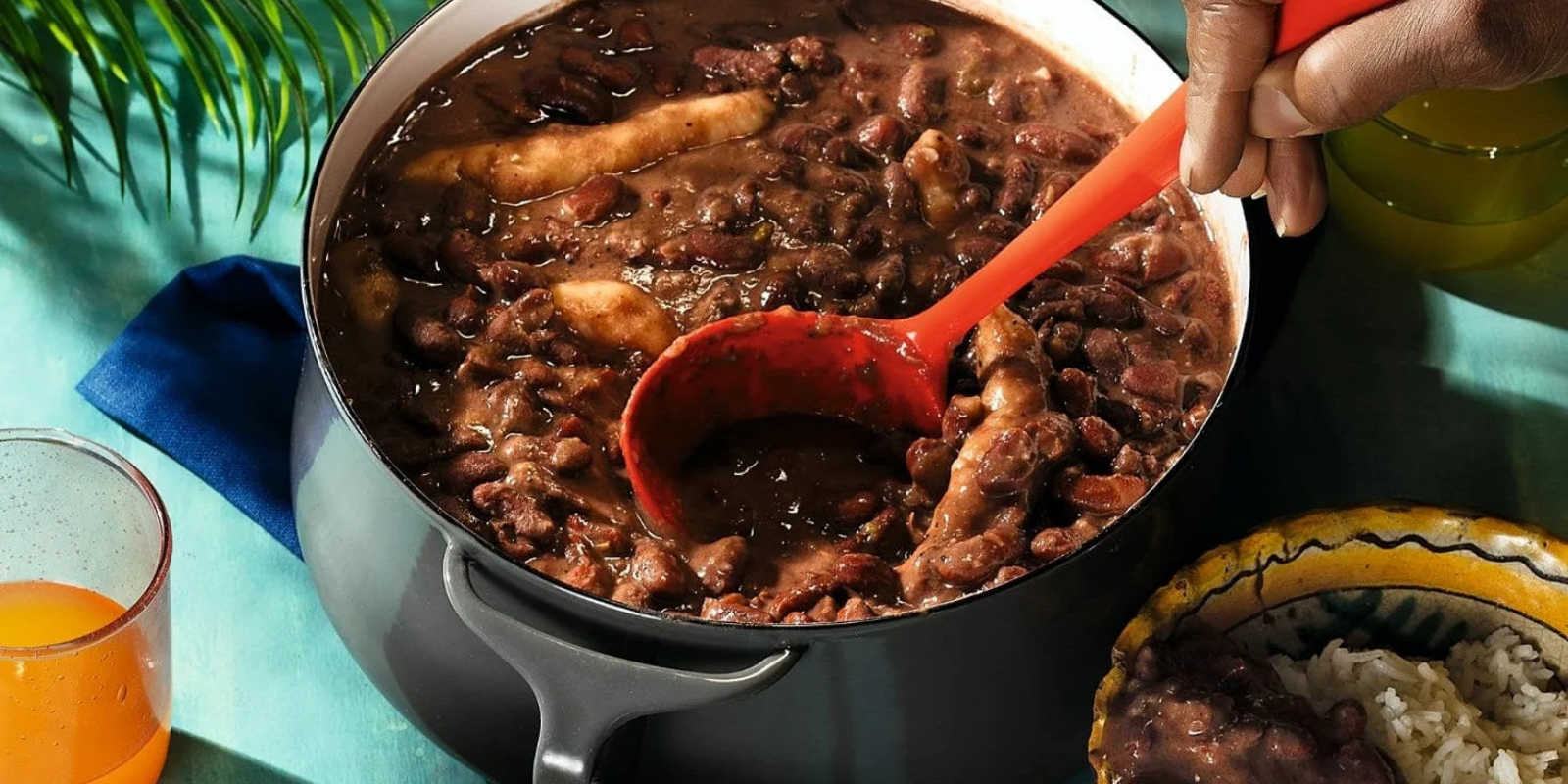

Lesley Enston's Jamaican Stew Peas
The name for this dish might be confusing as these are kidney beans, despite being called peas in Jamaica. My half-Jamaican cousin once walked into a Trinidadian restaurant and ordered stew peas. The woman behind the counter stared at her and responded, "You mean stew beans?" Kidney beans are one of the most preferred beans across the islands. There could be several reasons for this. They cook relatively quickly without soaking and that ability to break down easily also leads to less gas (bonus!). They add their sugars to the cooking liquid, which makes it thick and tasty. On the flip side, they are one of the least nutritious of the commonly used legumes and are relatively difficult to grow. Flavor wins, I suppose.
This dish often includes meat such as salt beef, salt pork, pig tail, or other offal. And yes, that is delicious. But I grew up eating so little meat, I find a great deal of comfort and joy in just the beans and the decadent creaminess of the coconut milk, which is just how my Jamaican auntie Rosie Mae made it. This is a dish that really gives you a look into someone's kitchen, and you'll find it simmering on Jamaican stoves from Kingston, Jamaica, to Flatbush, Brooklyn. The spinners, flour dumplings given the name because they spin and sink as they cook, are optional (unless you're Jamaican), but they do help thicken the stew. This dish freezes beautifully and is an exciting thing to find when you're desperately searching the freezer for a meal.
Serves 6-8
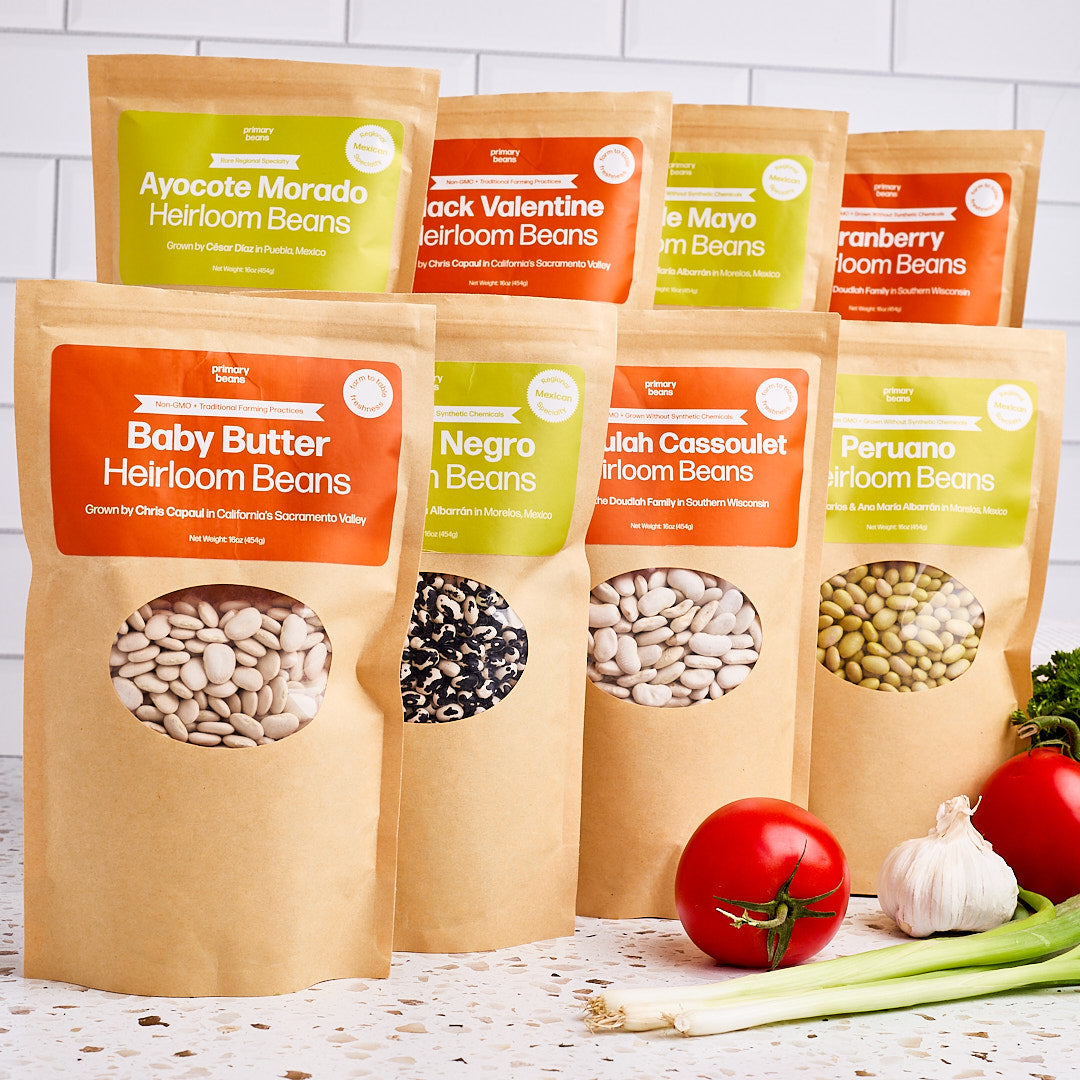
Note from Primary Beans: While the recipe calls for dried kidney beans or other red beans, we recommend using our kidney-shaped Speckled Bayo or earthy Chaparro, each giving the dish a delightful twist.
What Are Stew Peas?

Despite the name, stew peas are made with kidney beans, not peas. As Lesley explains through the anecdote about her cousin, this naming confusion is real, what Jamaicans call "peas," Trinidadians call "beans." In Jamaica, kidney beans (and other beans) are referred to as "peas," hence "stew peas."
This is "a dish that really gives you a look into someone's kitchen," as Lesley notes, something "you'll find simmering on Jamaican stoves from Kingston, Jamaica, to Flatbush, Brooklyn." It's foundational Jamaican comfort food with as many variations as there are Jamaican cooks.
Why Kidney Beans?
Lesley provides fascinating context about why kidney beans are "one of the most preferred beans across the islands":
- They cook relatively quickly without soaking
- Their ability to break down easily leads to less gas
- They add sugars to the cooking liquid, making it thick and tasty
She notes the irony: "On the flip side, they are one of the least nutritious of the commonly used legumes and are relatively difficult to grow. Flavor wins, I suppose."
This honest assessment, flavor over nutrition, practical cooking qualities over growing ease, reflects how food traditions develop based on what works in the kitchen.
The Primary Beans Alternatives
Primary Beans suggests using Speckled Bayo (kidney-shaped, firm texture) or Chaparro (earthy black beans) instead of kidney beans, "each giving the dish a delightful twist."
This substitution honors the dish's character while using different bean varieties. Speckled Bayo's kidney shape makes it visually similar, while Chaparro's rich flavor creates a different but equally delicious version.
The Meat-Free Version
While stew peas "often includes meat such as salt beef, salt pork, pig tail, or other offal" (and Lesley acknowledges "yes, that is delicious"), she presents the vegetarian version she grew up with.
As she explains, "I grew up eating so little meat, I find a great deal of comfort and joy in just the beans and the decadent creaminess of the coconut milk, which is just how my Jamaican auntie Rosie Mae made it."
This personal connection, her auntie Rosie Mae's version, makes this recipe more than just instructions. It's a family tradition passed down.
The Coconut Milk
The "decadent creaminess of the coconut milk" is essential. The recipe calls for one 13.5-ounce can (or 2 cups homemade). This provides richness and subtle sweetness that balances the earthy beans and aromatic spices.
Coconut milk is fundamental to Caribbean cooking, appearing in countless dishes across the islands.
The Aromatic Foundation
The beans cook with thoughtful aromatics that create authentic Jamaican flavor:
- Smashed garlic cloves (3, added at the start): Release flavor gradually during long cooking
- Crushed allspice berries: Warm, complex spice essential to Jamaican cooking
- Minced garlic (3 cloves, added later): Fresh, pungent flavor
- Diced yellow onion: Sweetness and depth
- Sliced scallions: Sharp onion flavor and color
- Fresh thyme leaves: Herbal, aromatic
- Whole Scotch bonnet pepper: Fruity heat without overwhelming spiciness
The Cooking Method
Combine beans, water, coconut milk, smashed garlic, and crushed allspice in a large, heavy-bottomed pot. Bring to a boil over medium-high heat, then reduce to low, cover, and simmer undisturbed for 1 to 1.5 hours until beans are nearly tender.
Add minced garlic, onion, scallions, thyme, whole Scotch bonnet, and salt. Stir, cover, and simmer 20 minutes more until the stew begins to thicken.
This two-stage cooking, long simmering for tenderness, then adding fresh aromatics, creates layers of flavor.
The Scotch Bonnet
Using a whole Scotch bonnet pepper (rather than chopped) infuses the stew with fruity, aromatic heat without making it overwhelmingly spicy. The pepper can be removed before serving, or left in for those who want extra heat.
Scotch bonnets are traditional in Jamaican cooking, fruity, floral, and very hot. Handle carefully and wash hands thoroughly after touching.
The Spinners
Spinners are flour dumplings "given the name because they spin and sink as they cook." Lesley notes they're "optional (unless you're Jamaican)", a humorous acknowledgment that for Jamaicans, they're essential, not optional.
The spinners also "help thicken the stew," adding body and making it more substantial.
To make: Mix flour and salt, add water gradually until a stiff dough forms, rest 10 minutes, then pinch off small pieces and roll into cigar shapes between your hands.
Add to the pot, push under the liquid surface, cover, and steam for 15 minutes until cooked through.
The Thickening
As the beans cook, they break down slightly and release their starches, thickening the cooking liquid. This natural thickening (enhanced by optional spinners) creates that characteristic thick, rich consistency.
Lesley notes that kidney beans "add their sugars to the cooking liquid, which makes it thick and tasty", this is what you want.
Serving
Serve "alone or over rice." Both options work beautifully, alone as a thick stew with the spinners providing substance, or over white rice where the rice soaks up the rich coconut-bean gravy.
Taste for salt before serving, "beans can handle a lot of seasoning, so you may want to add up to a full teaspoon more."
The Freezer Treasure
Lesley notes this "freezes beautifully and is an exciting thing to find when you're desperately searching the freezer for a meal."
This observation captures the value of batch cooking comfort food, future you will be grateful for the meal waiting in the freezer.
Store leftovers in the fridge for 3-4 days or freeze for up to 4 months.
The Belly Full Cookbook
This recipe is reprinted from "Belly Full: Exploring Caribbean Cuisine Through 11 Fundamental Ingredients and Over 100 Recipes" by Lesley Enston, published by Ten Speed Press.
The cookbook's approach, exploring Caribbean cooking through fundamental ingredients, places this stew peas recipe in the broader context of Caribbean food culture and ingredient knowledge.
The Kingston to Flatbush Connection
Lesley's note that you'll find this "simmering on Jamaican stoves from Kingston, Jamaica, to Flatbush, Brooklyn" acknowledges the Caribbean diaspora. Food traditions travel with people, maintaining cultural connection even when geography changes.
Flatbush, Brooklyn has a large Caribbean community, and stew peas simmering on stoves there connects back to Jamaica while creating new food memories in a new place.
A Look Into Someone's Kitchen
The description of this as "a dish that really gives you a look into someone's kitchen" is profound. How someone makes stew peas, with meat or without, with spinners or not, how much thyme, how hot the pepper, reveals personal history, family tradition, and individual taste.
Learning to make it means entering into that tradition and making your own version that reflects your kitchen and your story.
Comfort and Joy
Lesley's phrase "comfort and joy in just the beans and the decadent creaminess of the coconut milk" perfectly captures what this dish provides. It's not fancy or complicated, but it's deeply satisfying and emotionally nourishing, true comfort food.
*A Note On Our Recipes:
Every recipe here was developed and tested using farm-fresh beans from Foodocracy and Primary Beans. Older beans, anything past a year in your pantry or beans from other sources may need more coaxing. Give them a soak and add extra cooking time, and they'll get there eventually.

Related Recipes



The Heirloom Bean + Grain club
Learn More
Get impossible to find beans and grains shipped direct to your doorstep each month from small family farms.


Support small family farms
Shop Now
We support small, family owned farms across the nation. Did you know that farmers only make an average of 10 cents on every dollar you spend at the supermarket? Working directly with farms and not middle men ensures that more money goes back to the people actually growning your food.
Lesley Enston's Jamaican Stew Peas
Jamaican
Main Course
This is a dish that really gives you a look into someone's kitchen, and you'll find it simmering on Jamaican stoves from Kingston, Jamaica, to Flatbush, Brooklyn. The spinners, flour dumplings given the name because they spin and sink as they cook, are optional (unless you're Jamaican), but they do help thicken the stew. This dish freezes beautifully and is an exciting thing to find when you're desperately searching the freezer for a meal.

Ingredients
Beans
- 1 pound dried kidney beans or other red beans
- 6 cups water
- 1 (13.5-ounce) can coconut milk, or 2 cups homemade coconut milk
- 6 garlic cloves: 3 smashed and peeled, 3 minced
- 1 teaspoon allspice berries, crushed
- 1 yellow onion, diced
- 5 scallions, thinly sliced
- 2 teaspoons fresh thyme leaves
- 1 Scotch bonnet pepper
- 2 teaspoons kosher salt, plus more as needed
Spinners (optional)
- 1 cup all-purpose flour
- ½ teaspoon kosher salt
- ¼ to ½ cup water
- White rice, for serving
Directions
Make the beans: In a large, heavy-bottomed pot, combine the beans, water, coconut milk, smashed garlic cloves, and the allspice berries and bring to a boil over medium-high heat. Reduce the heat to low, cover, and simmer, undisturbed, for 1 to 1½ hours, until the beans are nearly tender.
Add the minced garlic, the onion, scallions, thyme, Scotch bonnet, and salt. Stir to combine, cover, and simmer for 20 minutes more, until the stew begins to thicken.
Meanwhile, make the spinners, if desired: In a medium bowl, mix the flour and salt together. Add the water, 1 tablespoon at a time, mixing until a stiff dough forms. Let the dough rest for 10 minutes. Pinch off a scant tablespoon of dough and roll it between your hands, creating a cigar shape. Place the spinner on a plate, and repeat with the remaining dough.
Add the spinners to the pot with the beans and gently push them under the surface of the liquid. Cover the pot and cook for an additional 15 minutes to steam the spinners; cut one open to make sure it's cooked through if you aren't sure. Remove the pot from the heat.
Taste for salt (beans can handle a lot of seasoning, so you may want to add up to a full teaspoon more). Serve alone or over rice. Store leftovers in an airtight container in the fridge for 3 to 4 days or in the freezer for up to 4 months.