



Beans With Italian-Style Salsa Verde
Last December, we teamed up with our friends at Scopus Vineyard to bring you our holiday-edition Timeless Table set, featuring our Classic Flat White and Flageolet beans, their just-harvested olive oil, and a printed card with a cherished family recipe. The set sold out within days, but now we're thrilled to share that recipe, beans with Italian-style salsa verde, for everyone to enjoy!
Beans topped with a vibrant salsa verde is a great springtime meal: simple, fresh, and endlessly versatile. The extra sauce is a dream spooned over grilled meats, seafood, veggies, or just more beans. Feel free to follow the recipe exactly or swap in whatever herbs are on hand or thriving in your garden. And don't forget the crusty bread for dunking!
Why This Recipe Works

What makes this dish so satisfying is the contrast between the creamy, gently flavored beans and the bright, punchy salsa verde. The beans are cooked simply with aromatics, leek, garlic, lemon peel, bay leaf, chili flakes, creating a flavorful but mild base. Then they're topped with salsa verde bursting with fresh herbs, lemon, garlic, and good olive oil.
The result is a dish that's both comforting and exciting, substantial and fresh. It works beautifully as a light main course with bread and salad, or as a side dish for grilled meats or fish. And because you can make the beans and salsa verde ahead, it's perfect for entertaining.
The Stars: Cassoulet and Flageolet Beans

This recipe works beautifully with either Cassoulet (Classic Flat White) or Flageolet beans, or you can use a combination of both for variety.
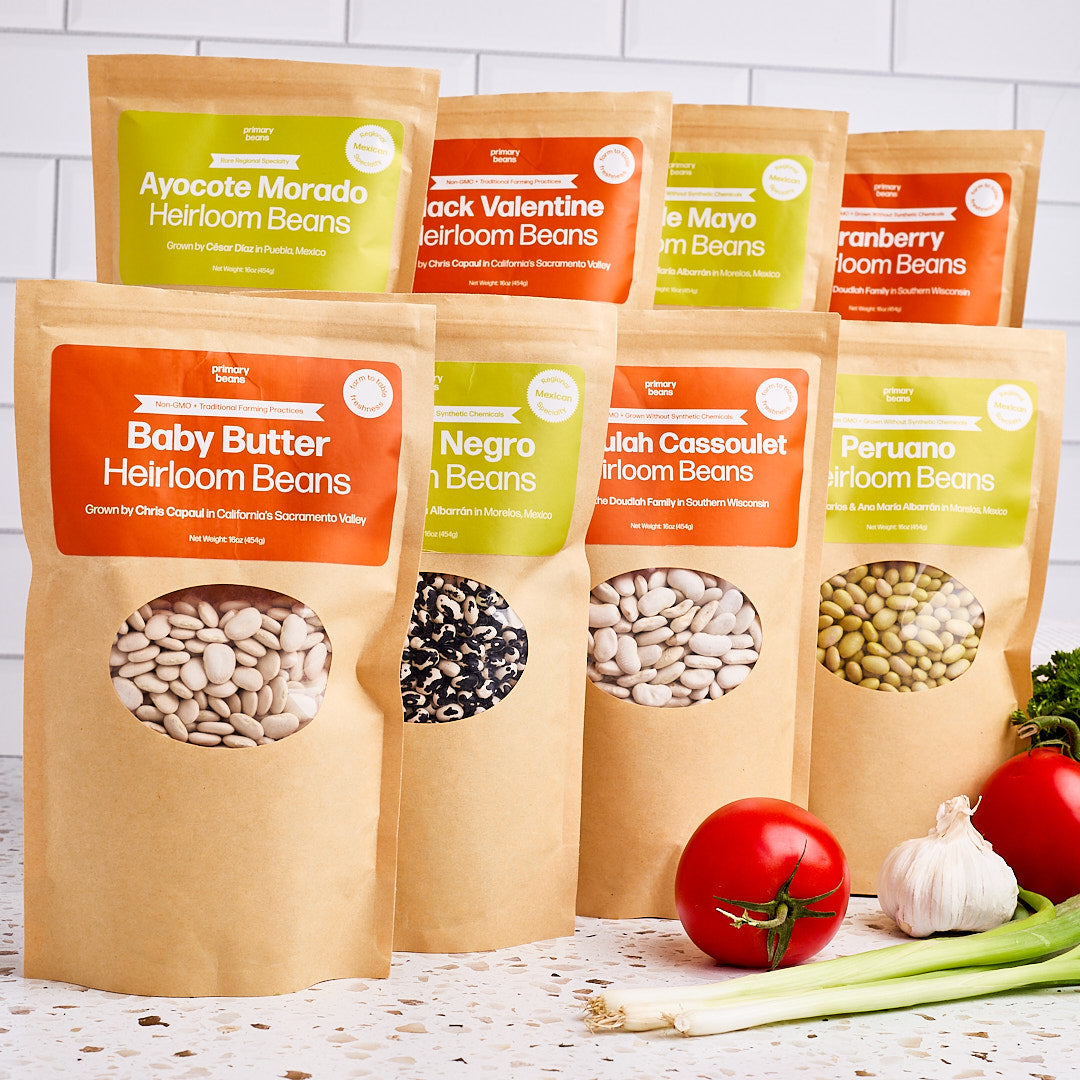
Cassoulet beans (also known as Cannulah™ or Classic Flat Whites™) are large, creamy white beans that French cooks have treasured for generations. A favorite of French cooks, these beans hold their large shape beautifully and soak up all the flavor around them. They're part of the Classic Flat White™ project, bred from the exact same seed famously grown in France and Spain. When cooked with aromatics and topped with salsa verde, they become incredibly tender while maintaining their shape, giving you satisfying, substantial bites.

Flageolet beans are the pale green gems of French cuisine, prized for their creamy texture and subtle, nutty flavor. These delicate heirloom beans are native to the Americas but were developed into the elegant beans we love today by French growers. Their thin skins give way to velvety interiors that absorb flavors brilliantly. The distinctive mint-green color varies naturally from bean to bean, and after cooking, they transform to a gentle tan color while maintaining their renowned subtle flavor.
Both beans work beautifully in this recipe, or you can cook them together for visual and textural variety.
Our Cassoulet beans come from Mark Doudlah at Doudlah Farms in Wisconsin, where they're grown using regenerative organic practices and planted harmoniously with sunflowers in a living trellis system, just like in France. Our Flageolet beans come from Fifth Crow Farms, a small family operation practicing regenerative agriculture where cover crops and crop rotation are a way of life. Both farms represent the highest standards of sustainable, ethical farming.
About Italian Salsa Verde
Italian salsa verde is quite different from Mexican salsa verde (which is made with tomatillos). This version is an herb-forward sauce made with fresh parsley, cilantro (or basil, if you prefer), lemon, garlic, and lots of good olive oil. Some versions include capers and anchovies for extra umami and brininess, both are optional here but highly recommended.
What makes great salsa verde is fresh herbs, good olive oil, and proper balance. The garlic gets mashed into a paste and mellowed in vinegar and lemon juice. The herbs are finely chopped and mixed with salt, which helps release their oils. The olive oil is whisked in gradually to create an emulsified sauce that's smooth and cohesive rather than separated and oily.
The result is a sauce that's bright, herbaceous, garlicky, and utterly delicious, the kind of thing you want to spoon over everything.
The Importance of Good Olive Oil
This recipe was developed in collaboration with Scopus Vineyard, and their peppery extra virgin olive oil is featured both in cooking the beans and in the salsa verde. The quality of your olive oil really matters here since it's such a prominent ingredient.
Look for a peppery, fruity olive oil with good body and character. It should have some bitterness and a peppery finish, those are signs of quality and freshness. Save your mild, neutral olive oil for other uses. This dish deserves the good stuff.
Cooking the Beans
The beans are cooked thoughtfully, not just boiled in plain water. You start by sautéing leeks in olive oil until soft and sweet, then add garlic, lemon peel, chili flakes, and bay leaf. These aromatics infuse the oil, which then flavors the beans as they cook.
The beans get stirred into this aromatic base, then covered with water and simmered gently until completely tender. The cooking liquid becomes a flavorful broth that you'll serve with the beans, it's too delicious to discard.
This method creates beans that are tender, creamy, and subtly flavored, the perfect canvas for that vibrant salsa verde.
Making the Salsa Verde
The salsa verde comes together quickly but benefits from a few key techniques. The garlic paste sits in the vinegar and lemon juice for five minutes, which mellows its bite. The herbs get finely chopped and mixed with salt, which helps release their essential oils. Then the olive oil is whisked in gradually, creating an emulsified sauce.
You want the herbs finely chopped but not pulverized, some texture is good. And don't be shy with the olive oil. This should be a generous, luscious sauce, not a chunky relish.
Serving
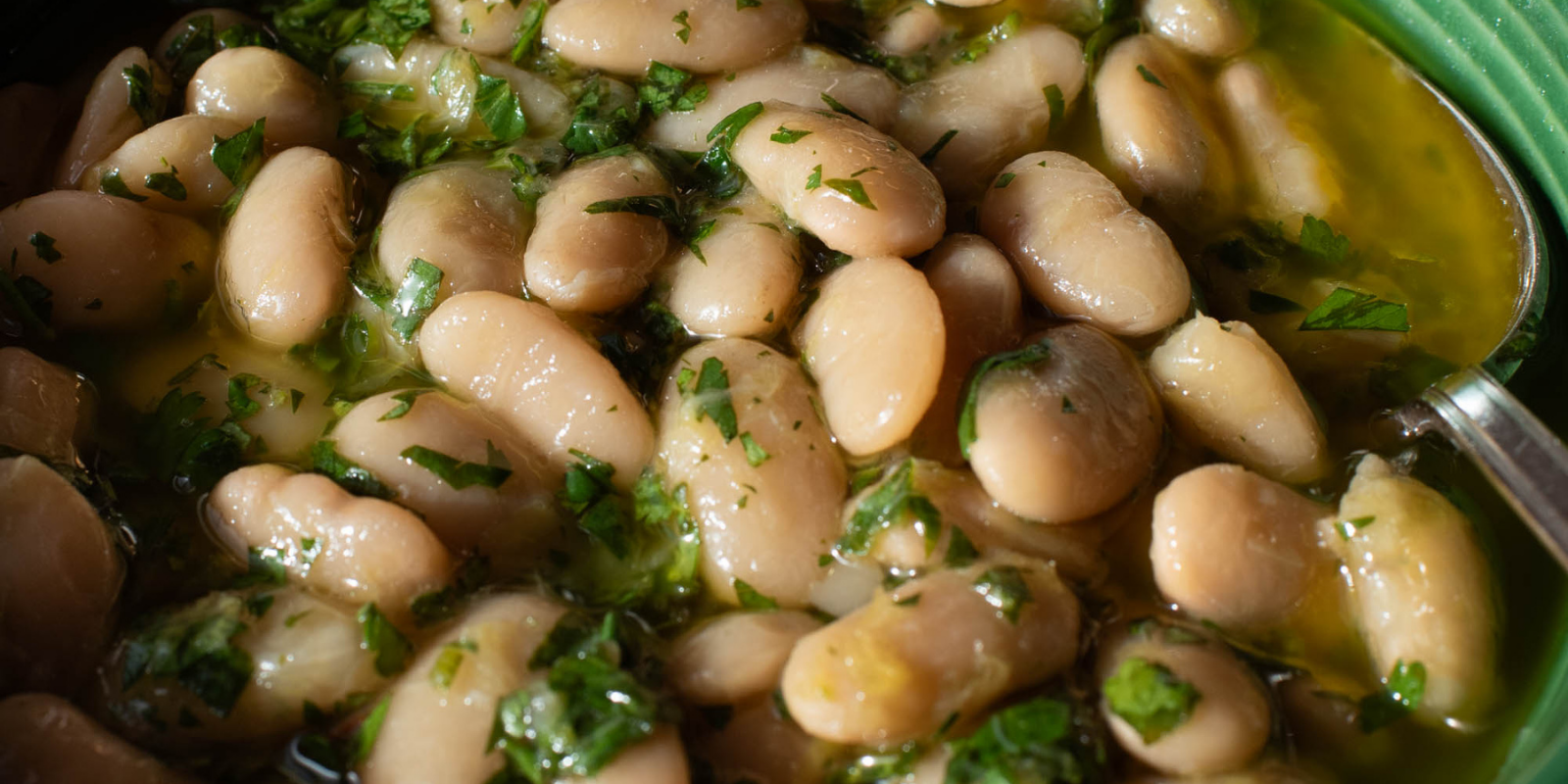
The presentation is simple but beautiful. Ladle warm beans with some of their flavorful broth into serving bowls. Generously spoon salsa verde on top, don't be stingy. The bright green sauce against the pale beans is visually stunning, and every spoonful should have both elements.
Serve with plenty of crusty bread for dunking. The bread is essential for soaking up the bean broth mixed with salsa verde, that's where all the magic happens.
Versatility
What makes this recipe so valuable is how versatile it is. The salsa verde is endlessly adaptable, swap cilantro for basil, add mint or oregano, include the capers and anchovies or leave them out. Use whatever fresh herbs are thriving in your garden or look good at the market.
And the leftover salsa verde (you'll have extra) is wonderful on grilled chicken, fish, vegetables, eggs, or just tossed with pasta. It keeps in the fridge for several days and makes everything it touches taste better.
A Recipe Worth Treasuring
This recipe came from a cherished family recipe shared as part of a special collaboration, and it's easy to see why it's treasured. It's simple enough to make regularly but special enough to serve to guests. It celebrates high-quality ingredients, good beans, good olive oil, fresh herbs, and treats them with respect.
It's the kind of recipe that becomes part of your repertoire, that you make over and over, that you share with friends and family. Just like it was shared with us.
*A Note On Our Recipes:
Every recipe here was developed and tested using farm-fresh beans from Foodocracy and Primary Beans. Older beans, anything past a year in your pantry or beans from other sources may need more coaxing. Give them a soak and add extra cooking time, and they'll get there eventually.

Related Recipes



The Heirloom Bean + Grain club
Learn More
Get impossible to find beans and grains shipped direct to your doorstep each month from small family farms.


Support small family farms
Shop Now
We support small, family owned farms across the nation. Did you know that farmers only make an average of 10 cents on every dollar you spend at the supermarket? Working directly with farms and not middle men ensures that more money goes back to the people actually growning your food.
Beans With Italian-Style Salsa Verde
Italian
Main Course
Last December, we teamed up with our friends at Scopus Vineyard to bring you our holiday-edition Timeless Table set. The set sold out within days, but now we're thrilled to share that recipe—beans with Italian-style salsa verde—for everyone to enjoy!
Featured beans: Cassoulet and Flageolet

Ingredients
- 1 lb Primary Beans Cassoulet or Flageolet
- 2 tbsp peppery olive oil such as Scopus Extra Virgin Olive Oil
- 1 leek, white & light green parts, washed well and finely chopped
- 3 cloves garlic, sliced
- 1 strip of lemon peel
- ½ tsp red chili flakes
- 1 bay leaf
- Coarse salt & black pepper, to taste
- Warm crusty bread, for serving
Salsa verde
- 1 clove garlic, smashed into a paste with the back of a spoon
- 1 tsp red wine vinegar
- Zest and juice of 1 lemon
- 1 cup parsley leaves, finely chopped
- ½ cup cilantro leaves, finely chopped
- 1 tbsp capers, drained and minced (optional)
- 1-2 anchovies packed in oil, chopped into a paste (optional)
- ¾ cup peppery olive oil such as Scopus Extra Virgin Olive Oil
Directions
Cook beans: In a large pot, heat olive oil over medium heat. Add leek and sauté for 5-7 minutes until soft. Stir in garlic, lemon peel, chili flakes, and bay leaf, and sauté for another 1-2 minutes until fragrant. Add 1½ tsp salt and beans, stirring well. Pour in enough water to cover beans by 1 inch. Bring to a gentle boil, then lower to a slow simmer. Cook until beans are completely tender, adding more water as necessary to keep beans submerged. Season with salt and pepper to taste. Remove bay leaf and lemon peel. Keep warm.
Prepare salsa verde: In a medium mixing bowl, combine garlic paste with red wine vinegar, lemon juice, and zest and let sit for 5 minutes. Add parsley, cilantro, and a big pinch of salt and mix well. Whisk in olive oil gradually, creating a smooth and emulsified sauce. Season with more salt to taste.
Serve and enjoy: Ladle warm beans with some broth into serving bowls, and generously spoon salsa verde on top. Serve with crusty bread.