


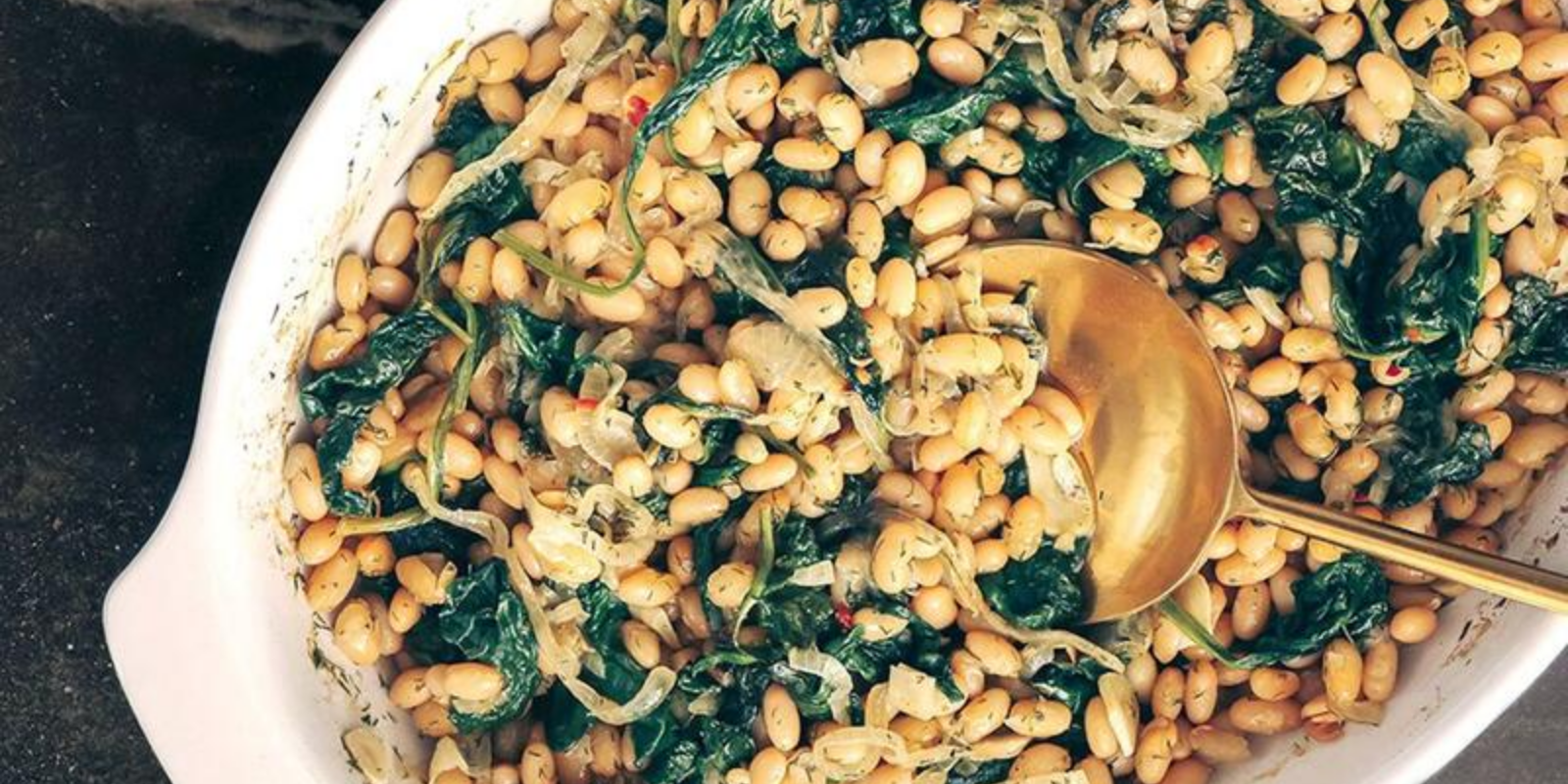

Baked Beans With Greens, Dill, And Yogurt
For those of you who love one-dish dinners that don't compromise on complexity of flavor, this one's for you. Inspired by Greece's way with beans, this recipe uses a traditional technique: you cook down aromatics and greens right in the oven before adding the beans and their broth. Two bunches of greens may seem like a lot, but they will wilt down. We absolutely love what dill does to this dish as it cooks. This is a recipe you'll come back to again and again.
Why This Recipe Works

What makes Greek bean cookery so special is the layering of flavors that happens through patient cooking. This isn't a throw-everything-in-a-pot kind of recipe. Instead, you build flavors in stages: first caramelizing onions and garlic in the oven, then wilting greens in bean broth, and finally adding the beans with fresh dill to let everything meld together.
The result is beans that are coated in a thick, flavorful broth infused with caramelized onions, wilted greens, and aromatic dill. It's the kind of dish that tastes like it required far more work than it actually did, complex, deeply satisfying, and absolutely delicious served warm (not hot) with a dollop of Greek yogurt, a squeeze of lemon, and a drizzle of good olive oil.
The Star: Alubia Beans
Let's talk about Alubia beans, Spanish white beans with a delicate, creamy texture and mild flavor. These medium-sized beans are prized in Spanish cooking for their ability to become wonderfully tender while maintaining their shape. They have a thin skin that practically melts during cooking and a creamy interior that soaks up flavors beautifully.
What makes Alubia beans perfect for this Greek-inspired dish is how they absorb the flavorful broth while staying intact. As they bake with the caramelized onions, wilted greens, and fresh dill, they become infused with all those wonderful flavors. Each bean becomes tender and creamy, coated in that thick, aromatic broth that makes this dish so special.
When cooked with olive oil, garlic, bay leaf, and salt, Alubia beans produce a flavorful broth that becomes the base for the entire dish. That broth, added in stages as you build the layers, carries all those flavors and ties everything together.
The Greek Technique
This recipe follows a traditional Greek approach to cooking beans that's worth understanding. Instead of sautéing everything on the stovetop, you use the oven to gently caramelize the aromatics and cook down the greens. This method develops deep, complex flavors without requiring constant attention.
You start by baking thinly sliced onions and garlic with red chile flakes until they're lightly caramelized and sweet. Then greens go in with some bean broth, wilting down in the oven's heat. Finally, the cooked beans, fresh dill, and more broth join the party, and everything bakes together until the beans are coated in a thick, flavorful sauce.
The key is checking periodically to make sure there's enough liquid so the greens don't dry out, but not so much that the dish becomes watery. You want that perfect consistency where the beans are coated in a thick broth but not swimming in it.
About the Greens
Two bunches of greens may seem like a lot, but don't worry, they'll wilt down considerably. Swiss chard is traditional and wonderful here, with its slightly earthy flavor and tender texture. Spinach works beautifully too and wilts down even more quickly than chard.
The greens add color, nutrition, and a pleasant vegetal quality that balances the richness of the beans and olive oil. As they cook with the bean broth, they become tender and flavorful, almost melting into the dish. They're not just an add-on, they're an integral part of what makes this recipe special.
The Dill Factor
Fresh dill is absolutely essential to this dish. As it bakes with the beans and greens, it infuses everything with its distinctive anise-like, slightly sweet flavor. It's aromatic without being overpowering, and it adds a freshness that keeps the dish from feeling too heavy.
Don't substitute dried dill, you need the bright, vibrant flavor of fresh. Use both the leaves and tender stems, coarsely chopped. The dill is added toward the end of cooking, which preserves its flavor while still allowing it to meld with everything else.
Serving Greek-Style
This dish is meant to be served warm, not hot. Letting it cool slightly allows the flavors to settle and the broth to thicken a bit more. Serve it in shallow bowls with a generous dollop of full-fat Greek yogurt on top (the tanginess cuts through the richness beautifully), a squeeze of fresh lemon juice for brightness, and a drizzle of your best olive oil.
The yogurt, lemon, and olive oil aren't just garnishes, they're essential to the dish. Each adds a layer of flavor and richness that makes every bite even better.
What to Serve With It
This is a complete meal on its own, but it's wonderful with crusty bread for soaking up that delicious broth. A simple salad on the side, heirloom tomatoes, feta, red onion, and kalamata olives dressed with olive oil and lemon, makes it feel like a proper Greek feast.
It's the kind of meal that works for casual weeknight dinners or for entertaining. You can make it ahead and reheat it gently, or serve it at room temperature, which is actually very traditional in Greek cooking.
A Recipe to Return To
What makes this recipe special is how it becomes a staple. It's the kind of dish you make when you want something nourishing and satisfying but don't want to spend all evening in the kitchen. It's the kind of recipe you scribble notes on, adjusting to your taste over time, a little more dill, an extra drizzle of olive oil, maybe some lemon zest stirred in at the end.
It's simple in concept but rich in flavor, traditional in technique but adaptable to what you have on hand. And most importantly, it's absolutely delicious, the kind of one-dish dinner that makes beans the star they deserve to be.
*A Note On Our Recipes:
Every recipe here was developed and tested using farm-fresh beans from Foodocracy and Primary Beans. Older beans, anything past a year in your pantry or beans from other sources may need more coaxing. Give them a soak and add extra cooking time, and they'll get there eventually.

Related Recipes



The Heirloom Bean + Grain club
Learn More
Get impossible to find beans and grains shipped direct to your doorstep each month from small family farms.


Support small family farms
Shop Now
We support small, family owned farms across the nation. Did you know that farmers only make an average of 10 cents on every dollar you spend at the supermarket? Working directly with farms and not middle men ensures that more money goes back to the people actually growning your food.
Baked Beans With Greens, Dill, And Yogurt
Greek
Main Course
For those who love one-dish dinners that don't compromise on complexity of flavor, this one's for you. Inspired by Greece's way with beans, this recipe uses a traditional technique.
Featured bean: Alubia
Other beans to try: Cassoulet, Flageolet, Ayocote Blanco

Ingredients
- ½ lb dried Alubia beans (makes about 3½ cups cooked), flavored with 2 tbsp olive oil, 2 garlic cloves, 1 bay leaf, ¾ tsp coarse salt
- 4 tbsp olive oil, divided
- 1 large white or yellow onion, thinly sliced
- 5 garlic cloves, thinly sliced
- ¼ tsp red chile flakes
- 2 bunches Swiss chard or spinach, thick stems removed and coarsely chopped (well-rinsed)
- Coarse salt and freshly ground pepper
- ½ bunch dill, leaves and tender stems only, coarsely chopped
- Bay leaf
- For serving: full-fat Greek yogurt, lemon juice, good olive oil
Directions
Prepare the beans: Cook beans according to our guide in the cooking vessel of your choice. Once cooked, strain the beans, reserving broth.
Bake the aromatics: Preheat the oven to 375 degrees. Scatter onions, garlic, and red chile flakes across baking dish or oven proof pot. Drizzle with 2 tbsp olive oil. Bake until onions are lightly caramelized, about 10-15 minutes.
Bake the greens: Once cooked, add greens, 1 cup of bean broth, a generous pinch of salt, and a few grinds of pepper. Stir well to coat and bake until greens are wilted, about 15 minutes for chard, and less time for spinach.
Assemble: Add beans, dill, and bay leaf to the mixture, with about 1 cup of bean broth. Stir well to coat and drizzle with remaining 2 tbsp olive oil. Bake for 30 minutes, checking every 10-15 minutes to make sure there is enough liquid so that greens don't dry out. When done, beans should be coated in a thick broth but not watery. Bake a little longer if necessary. Serve warm (not hot) with Greek yogurt, lemon, and good olive oil.