



Ayocote: The Ancient Bean That Predates The Aztec Empire
The Ancient Bean That Has Been Growing in Puebla for 6,000 Years
Long before the Aztec Empire rose, long before the Spanish arrived, long before the French army marched on Puebla in 1862 in one of the most lopsided military upsets in history — there was a bean.

The Ayocote has been growing in the highlands of central Mexico for somewhere between 4,000 and 6,000 years. Among the oldest domesticated plants of Mesoamerica, researchers believe Ayocote beans were first cultivated in the Tehuacán Valley — a stretch of ancient, arid highland that straddles the states of Puebla and Oaxaca — a place so significant to the origins of agriculture that it was designated a UNESCO World Heritage Site in 2018. The people who first tended these beans were not yet building empires. They were learning to farm.
In Nahuatl, the indigenous language later spoken by the Aztecs, this bean was called ayocotl. It is a climbing legume with pre-Hispanic origins, grown by indigenous communities of the Mexican plateau at elevations of over 2,000 meters above sea level. Slow Food Foundation Over millennia it spread across the highlands, adapting to different climates and soils and developing into hundreds of distinct varieties. Mexico's genetic resource bank today preserves over 800 known varieties of Ayocote alone.
A Bean the Aztecs Revered
Among the pre-Columbian civilizations, beans were considered a gift from the gods, often included in rituals and offerings related to rain and fertility. The ancient Maya held beans in such high regard that their foundational book, the Popol Vuh, states that the first men were given corn, beans, peppers and squash as their staple food. Mexico News Daily These were not side dishes. They were the architecture of civilization — the crops that made settled life possible, that fed populations through drought and war and everything else history threw at them.
The Ayocote in particular thrived in the highlands around Puebla, where volcanic soil, cool nights, and high altitude created conditions it loved. It grew large and meaty, with a rich, almost savory broth when cooked low and slow. Generations of farmers saved the best seeds each harvest and replanted them the following season, slowly selecting for the qualities they valued most. That process — patient, careful, cumulative — is how you get a bean this good.

Six Thousand Years of Continuity
The Spanish arrived in the early 1500s. They brought new crops, new animals, and centuries of disruption. The French invaded in 1862. Industrial agriculture arrived in the 20th century with hybrid seeds and chemical inputs designed to make farming faster and cheaper. Through all of it, the Ayocote kept growing in Puebla.
That continuity is not an accident. It is the result of farmers who understood what they had and chose, generation after generation, to keep growing it the old way. Not because they were resistant to change, but because these beans — in this particular soil, at this particular altitude — were worth protecting.
A Bean That Belongs to Its Place
What makes the Ayocote family so remarkable is precisely how rooted it is. Unlike commodity crops bred for uniformity and shelf life, Ayocote varieties have evolved in place — shaped by specific microclimates, specific soils, specific farming families. The result is that an Ayocote grown in one mountain village can taste meaningfully different from one grown twenty miles away. The color changes. The texture shifts. The broth has its own personality.
This is what food people mean when they talk about terroir — the idea that what grows in a place carries the character of that place. Ayocote beans are one of the most vivid expressions of that principle you will find anywhere in the world. Each variety is essentially a living record of the landscape and the community that produced it, a seed passed from grandparent to parent to child across hundreds of generations of farmers who never wrote any of it down because they didn't need to. The knowledge lived in the seed itself.
What You're Actually Eating
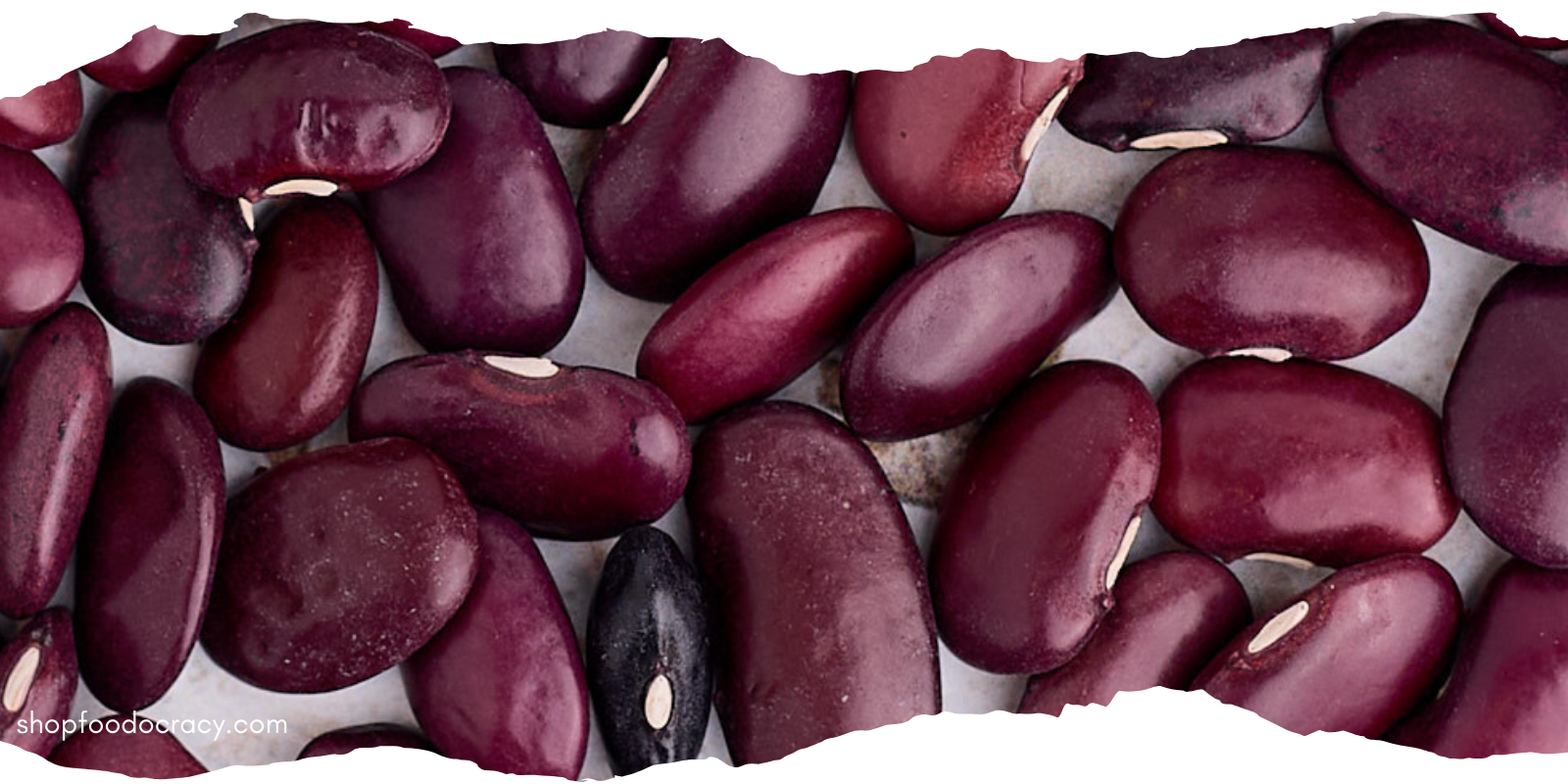
The Ayocote is a big bean — firm on the outside, smooth and creamy within when cooked properly. It makes an extraordinary broth, dark and rich and savory in a way that needs almost no help. These beans were traditionally enjoyed with roasted poblanos and chile-laden moles for a reason — they can hold their own against big, complex flavors and still be the most interesting thing in the bowl.
Cook them low and slow. Don't rush it. They took 6,000 years to get to your kitchen — they deserve an afternoon on the stove.
Our Ayocote Collection

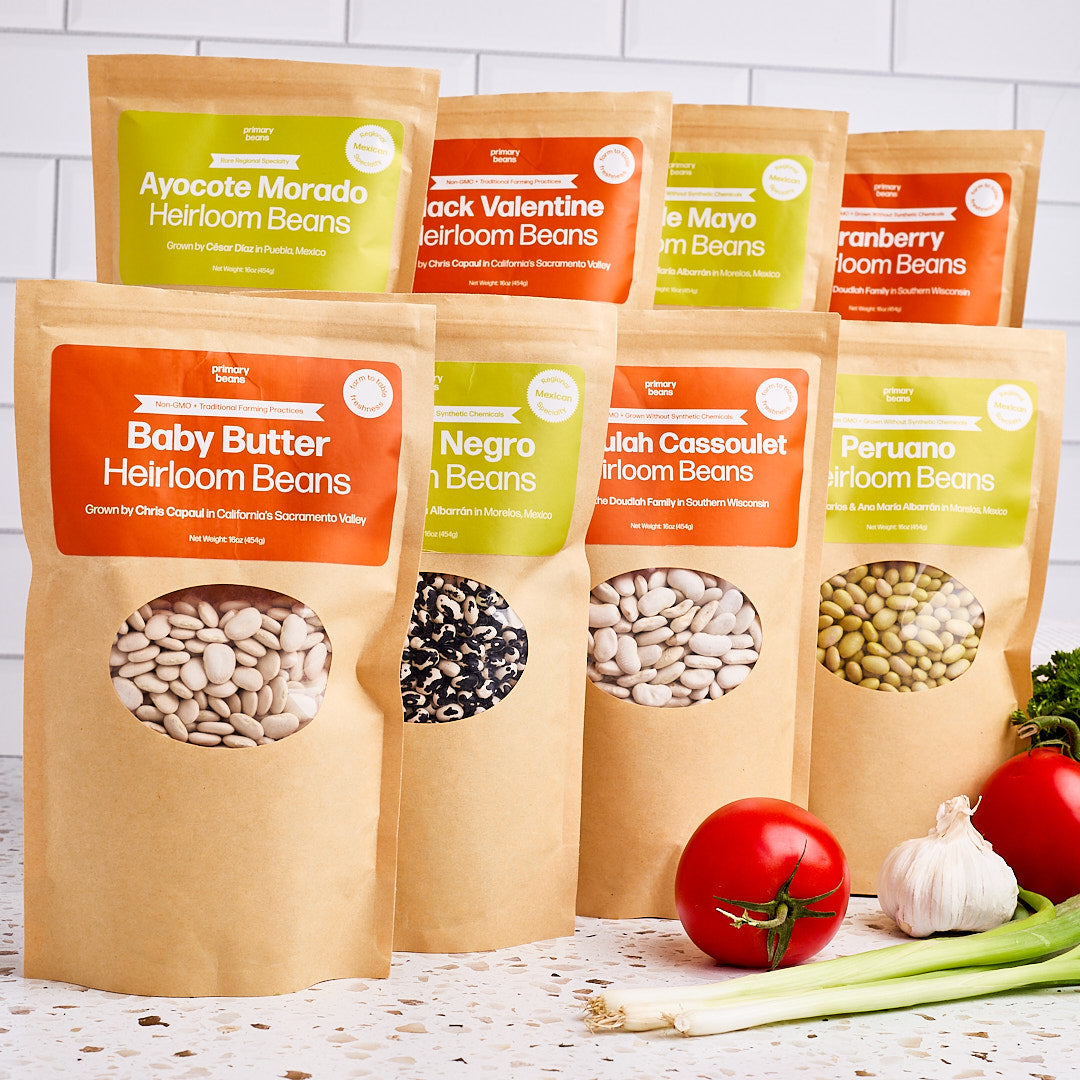
We currently carry the Ayocote Morado, grown by César Díaz and his family at Grupo Agrícola San Juan in San Rafael Tlanalapan, high in northern Puebla. César farms the way his parents and grandparents did — horses pull the plow, weeds are pulled by hand, and fields are rotated with poblano chiles, corn, and onions to keep the soil healthy between seasons. The result is a deep purple bean with a firm bite, a creamy interior, and a broth that will make you rethink everything you thought you knew about beans.
And we're just getting started. We have additional regional Ayocote varieties coming soon — each one grown in a tiny village in the Puebla highlands, each with its own distinct color, flavor profile, and story. These are not variations on a theme. They are separate chapters in a very long book, grown by specific families in specific places, with specific traditions that have been passed down and kept alive for generations precisely because they are worth keeping. We'll introduce each one when the time is right.
In the meantime, the Morado is waiting. SHOP NOW

The Heirloom Bean + Grain club
Learn More
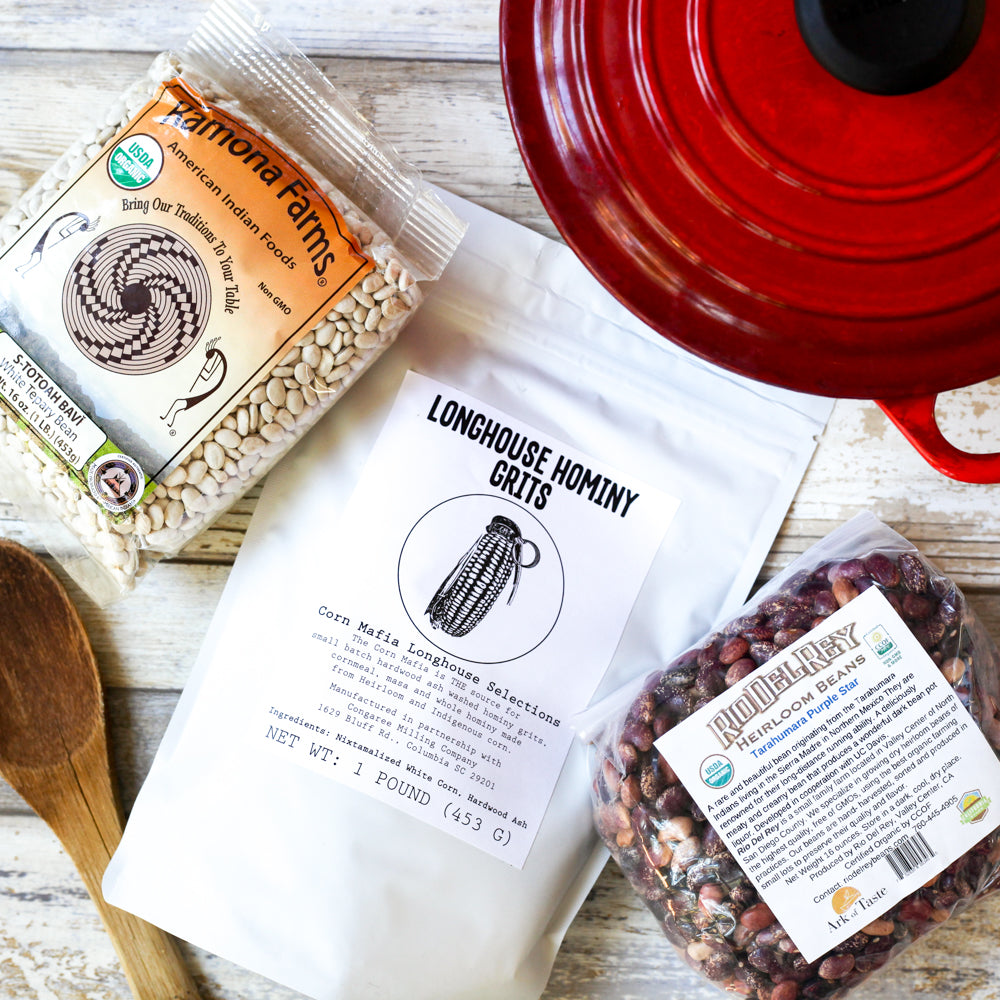
Get impossible to find beans and grains shipped direct to your doorstep each month from small family farms.

Support small family farms
Shop Now
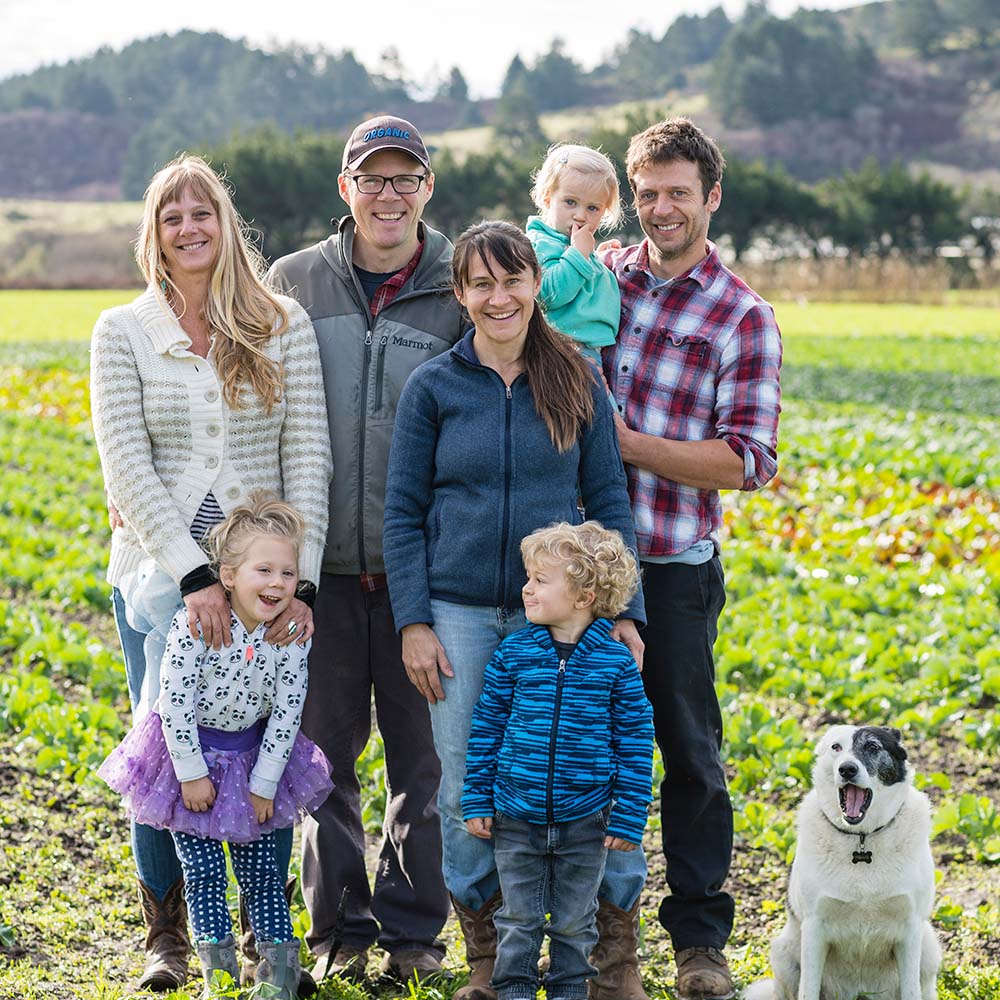
We support small, family owned farms across the nation. Did you know that farmers only make an average of 10 cents on every dollar you spend at the supermarket? Working directly with farms and not middle men ensures that more money goes back to the people actually growning your food.