



February 2026 Heirloom Bean and Grain Club
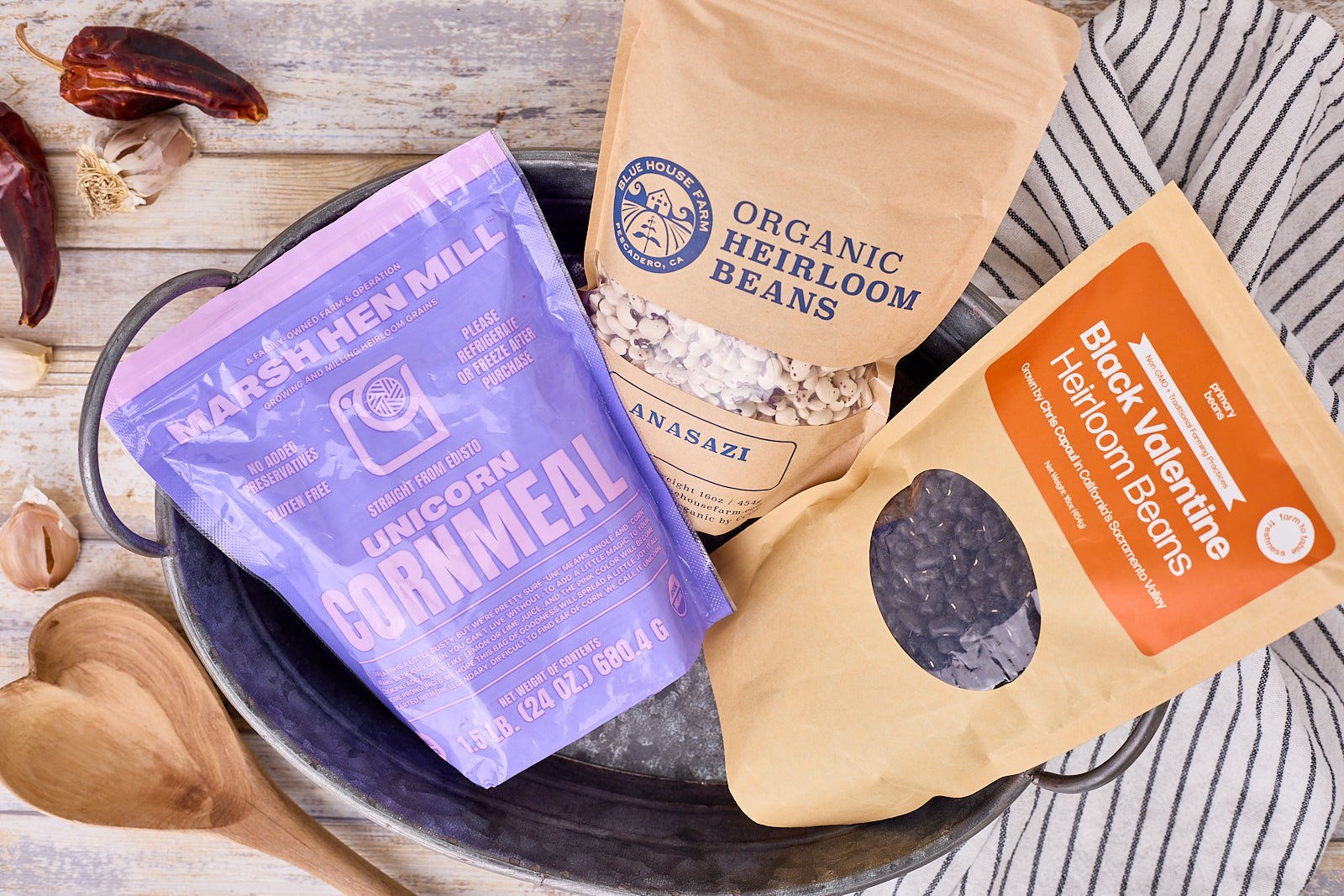
February's Heirloom Bean and Grain Club is all about spreading the love this Valentine's Day with ingredients as romantic as they are delicious. This month, we're celebrating heirloom beans and ancient grains grown with care on small family farms: Rustic Black Valentine Beans, Organic Anasazi Beans from Blue House Farm, and the naturally blushing Organic Unicorn Cornmeal from Marsh Hen Mill. The Black Valentine Bean, a historic variety that fed America through challenging times, brings a rich, meaty flavor that's perfect for hearty winter dishes. The Blue House Farms' Organic Anasazi Beans, cultivated for centuries by indigenous peoples of the Southwest and uniquely adapted to the terroir of California's fertile central coast for . And the Organic Unicorn Cornmeal? This stunning naturally pink, non-GMO cornmeal has a history almost as magical as its name. Whether you're cooking for loved ones or treating yourself to something special, this month's selection honors the farmers who preserve these culinary treasures and the deep agricultural heritage they represent. Scan the QR code below to read the full stories behind each ingredient and discover delicious recipes to bring them to life.
Black Valentine Beans, Organic Anasazi Beans, Organic Unicorn Cornmeal
THE BEAN ONLY CONTAINS:
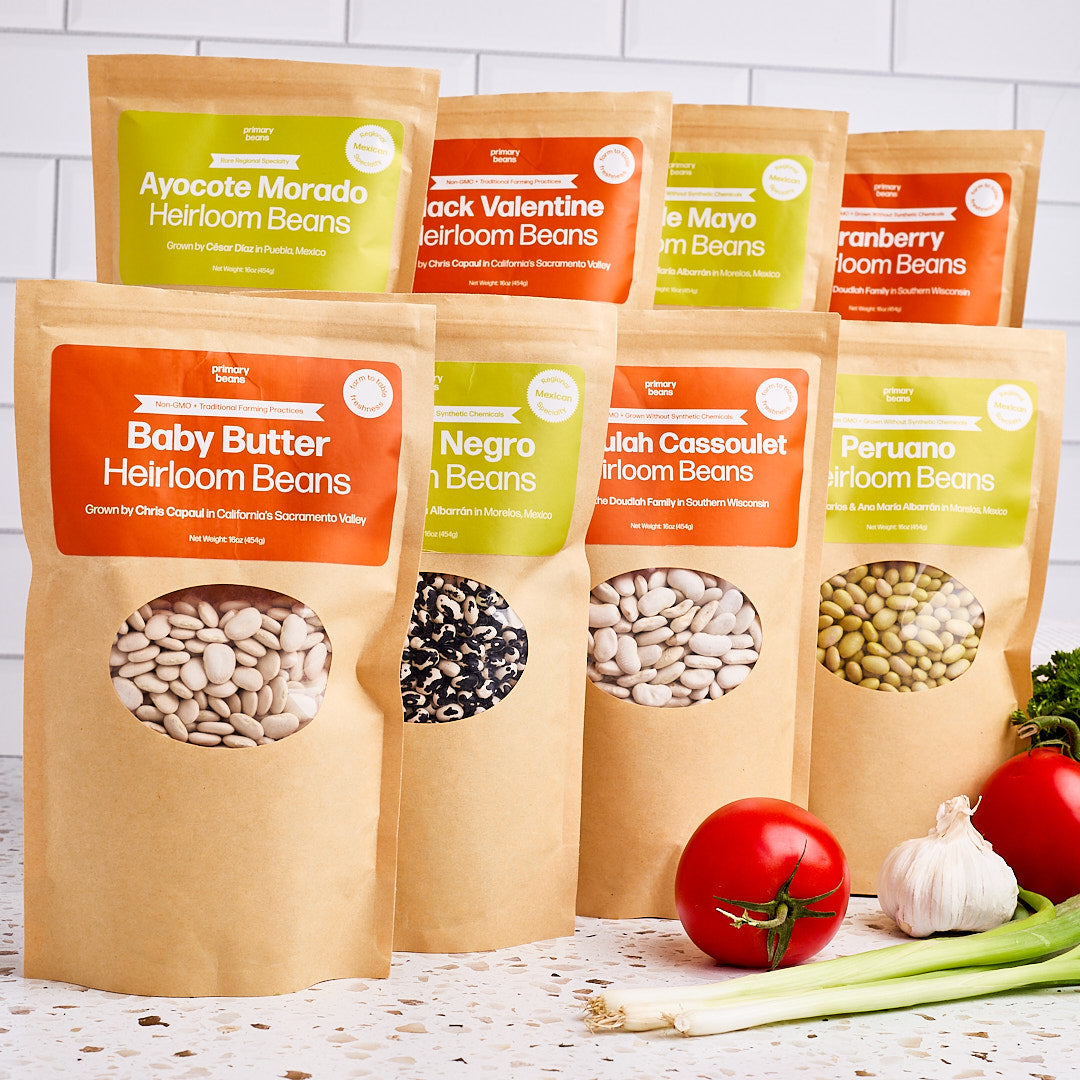
Black Valentine Beans, Organic Anasazi Beans and Baby Butter Beans

OUR CUSTOMER PORTAL
You can easily claim rewards, add to your next shipment and so much more! We made a video walking you through exactly how easy it is to add some goodies to your order and get cash back. WATCH THE VIDEO.
NEW TO THE CLUB? First of all, congratulations on scoring a spot. It's going to be harder to get in this year because of low yields from key farmers like Blue House Farms. Check out our blogposts with everything you need to know to get the most out of your membership in the heirloom bean and grain club.
How To Cook A Perfect Pot of Beans
The Definitive Guide To Cooking Beans
BLACK VALENTINE HEIRLOOM BEANS
Black Valentine heirloom beans deliver the kind of rich, almost chocolatey flavor that makes you understand why this legendary variety has captivated black bean lovers since it was first introduced in 1897. The texture is silky and luxurious with a robust flavor that you can't forget but it's the broth that keeps me coming back. They make an outstanding black bean soup or simply cooked with some garlic and bayleaf and served over rice.
WHAT TO DO WITH THEM
Larger and more creamy than your average black bean, we are loving the Black Valentines in possibly the most essential black bean dish for February, Black Bean Soup and we are particularly fond of this one by Rick Bayless. My vegan black bean chili with hominy makes a hearty plant base chili that could win over the most ardent con carne fan. They also make excellent Enfrijolidas, which uses up the left over beans from last night, Black Bean Tamales, Three Sisters Tamales, or some black bean Enchaladas. Of course it wouldn't be valentines day without chocolate and these would be an excellent choice for our all grown up urfa chili black bean brownies.
ABOUT THE FARM
Sacramento Valley has a long history of producing butter beans, which love its warmer climate compared to other California regions. Chris Capaul’s family has been growing diverse beans and vegetables since 1915 – in fact, he still has the original horse-drawn bean cutter! While bean production has declined and farms have gotten bigger through consolidation, Chris stands out as an innovator – perfecting his rotations of vine-type baby butter beans and rice, and preserving Speckled Bayo beans, a rare variety his father once grew. His careful growing methods nurture the land and produce beans far richer in flavor.
ORGANIC PESCADERO ANASAZI BEANS
You'll find many a cook that waxes poetic about the virtues of the legendary Anasazi bean. It is revered not only for it's sweet, dense flavor but also its quicker cooking times and the fact that there is no need to soak them. This is a unique Anasazi though, descended from a centuries old indigenous seed but adapted for the clilmate in cool, foggy Pescadero, California by Blue House Farms. The end result is a petit white bean with a spash of burgundy that delivers that same legendary bean broth and sweet flavor of it's ancestor.
Anasazi Beans have been grown by the Anasazi people in what is now called the four corners region of the United States dating back to at least 130 AD. They are sometimes called New Mexico Cave Beans because they were found in the ruins of their famous cave dwellings in New Mexico and Colorado. We're honoring the original but calling this a Pescadero Anasazi to distinguish it from the original. We love it just as much.
 WHAT TO DO WITH THEM
These are exceptionally delicious and beloved by chefs. They hold their shape well and produce a delicious golden bean broth. Cook them for 38 minutes from dry in the instant pot with a 20 minute natural pressure release or about 2-2 1/2 hours on the stovetop from dry. Remember to always salt the cooking and soaking water for the creamiest texture and to prevent your beans from exploding out of their skins. To make them more digestible I always add Kombu to the pot. With their slightly sweet and nutty flavor I made a sage and garlic brothy beans with them, slowly simmering rinsed and picked through beans for about 2 hours with 1 tablespoon of salt, a 4 inch strip of kombu, 2 bay leaves, a garlic bulb with the top lobbed off, onion and sage leaves. They took a little more than 2 hours from dry on the stovetop and honestly I was being impatient because they were so delicious, a little more time makes them more creamy. They hold their shape very well and the broth was perfect, light to medium body with a mouthwatering flavor.
With that sweet flavor they pair well with chili peppers, garlic and bright citrus. They really shine in simple preparation like brothy beans, olive oil braised beans and the Anasazi Frijoles de la Olla. Juniper berries are a common ingredient in indigenous cooking so we also love this recipe for Anasazi Beans with Juniper Berries. The anasazi goes particularly well with southwestern food which is why we'll be making this southwestern vegetarian chili for hearty evening meals.

ORGANIC UNICORN CORNMEAL
You are in for a treat! We've had so many requests for the Unicorn Cornmeal we finally got it back for a very limited time and you get first dibs!
This all Non-GMO, heritage cornmeal is naturally pink! Truly a unicorn. When Greg Johnsman of Marsh Hen Mill (formerly Geechie Boy Mill) found some pink kernels on an ear of his heritage Sea Island Blue Corn, he decided to save the seeds and see if he could make a little magic. Thus Unicorn corn was born. Greg and his amazing team grow this and all of their heirloom grains, peas and grains on their family owned farm on Edisto Island in South Carolina. Greg mills the corn in small batches on his antique milling equipment for the highest quality possible. Old mills work a little slower than modern equipment but that's just what Greg is looking for. He doesn't want the mill to heat up the grain and destroy the natural oils and flavors. Its why cornmeal from Marsh Hen Mill is so special. You might even call it magical!
This freshly milled cornmeal makes exceptional cornbread of course but I'm also partial to these savory waffles that can be topped with everything from creme fraiche and smoked salmon to fried chicken or vegan chili and cheese. To enhance the color, add a little lemon or lime to your cooking. We've found that the corn will toast to a brown when introduced to high heat, like in our waffle iron, but the inside will be a beautiful purple-pink. Also the more cornmeal in your recipe, the more vibrant the color will be. In our cornbread which is only half cornmeal, half flour the color is much less pronounced. Have fun experimenting with this delicious cornmeal in all of your cooking!
STORE THIS FRESHLY MILLED CORNMEAL IN YOUR REFRIGERATOR OR FREEZER TO PRESERVE FRESHNESS
ABOUT THE FARMER

Greg Johnsman is passionate about preserving traditional Southern foodways on the South Carolina Sea Islands. He and his wife Betsy farm and mill heirloom ingredients at Marsh Hen Mill on Edisto Island, where Betsy's family has farmed for generations.
Greg Johnsman has been milling in his mind for his entire life. As a boy in the upstate he learned the process of milling grits the old-fashioned way from a third-generation miller named Jack Brock. When he discovered a 1945 mill and separator in Saluda, SC owned by Lamar Berry he needed just the slightest encouragement from Betsy to bring it to their Edisto Island home. The mill is Greg's pride and joy. The antique equipment is slower than modern mills which keeps it from heating up the grain and destroying the natural oils and flavors.

The Heirloom Bean + Grain club
Learn More
Get impossible to find beans and grains shipped direct to your doorstep each month from small family farms.

Support small family farms
Shop Now
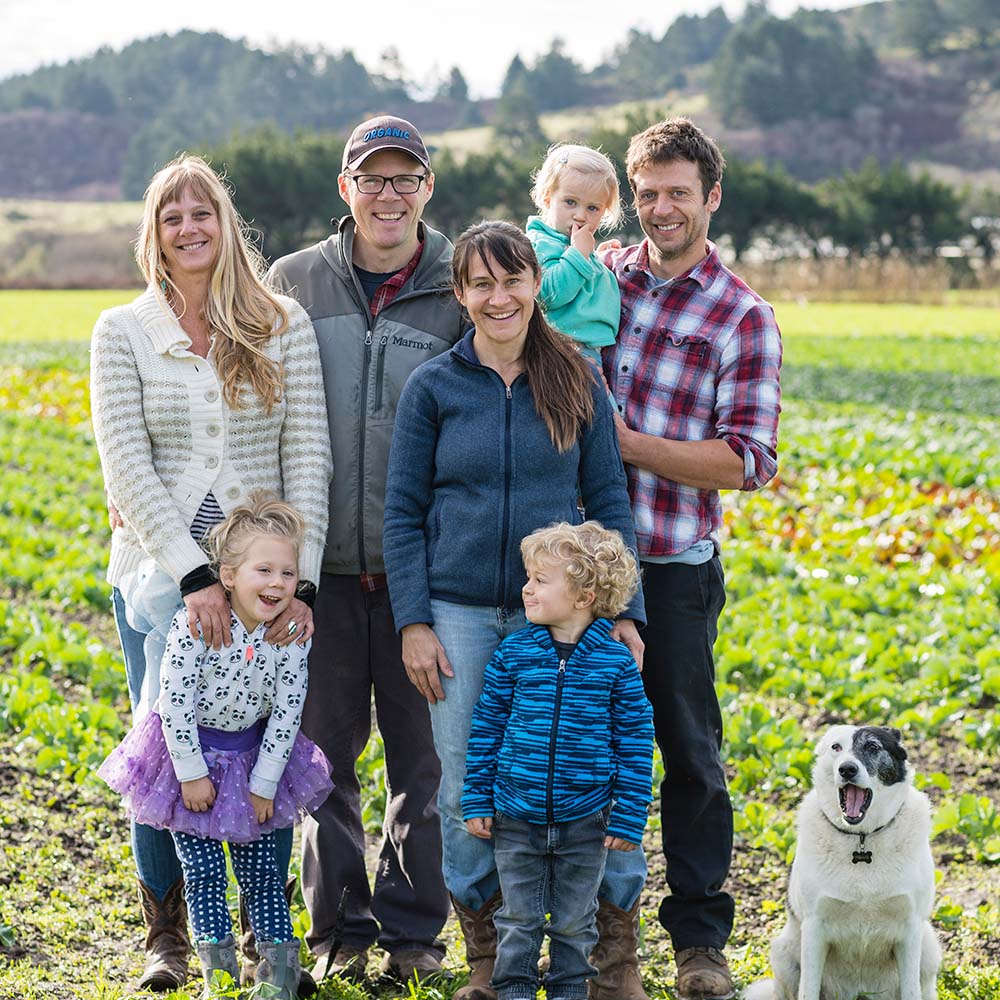
We support small, family owned farms across the nation. Did you know that farmers only make an average of 10 cents on every dollar you spend at the supermarket? Working directly with farms and not middle men ensures that more money goes back to the people actually growning your food.