




Sopa De Pedra (Stone Soup)
Creator notes
I love this dish's comforting flavors and hearty ingredients. It's originally linked to a folktale that goes like this: A friar visited the town of Almeirim and claimed he could make soup using only a stone, and then convinced villagers to contribute ingredients, eventually creating a rich meal. Some places in Almeirim serve it with a cleaned stone as a nod to the legend! – Jennifer Borges (@nothingssoffthetable)
The Stone Soup Folktale
Sopa de pedra is named after a Portuguese folktale that Jennifer shares: "A friar visited the town of Almeirim and claimed he could make soup using only a stone, and then convinced villagers to contribute ingredients, eventually creating a rich meal."
This clever story appears in various forms across cultures, the idea that sharing creates abundance, that a little from everyone makes something wonderful. Jennifer notes that "some places in Almeirim serve it with a cleaned stone as a nod to the legend!", a charming way to honor the story while serving the hearty soup it inspired.
Why This Recipe Works

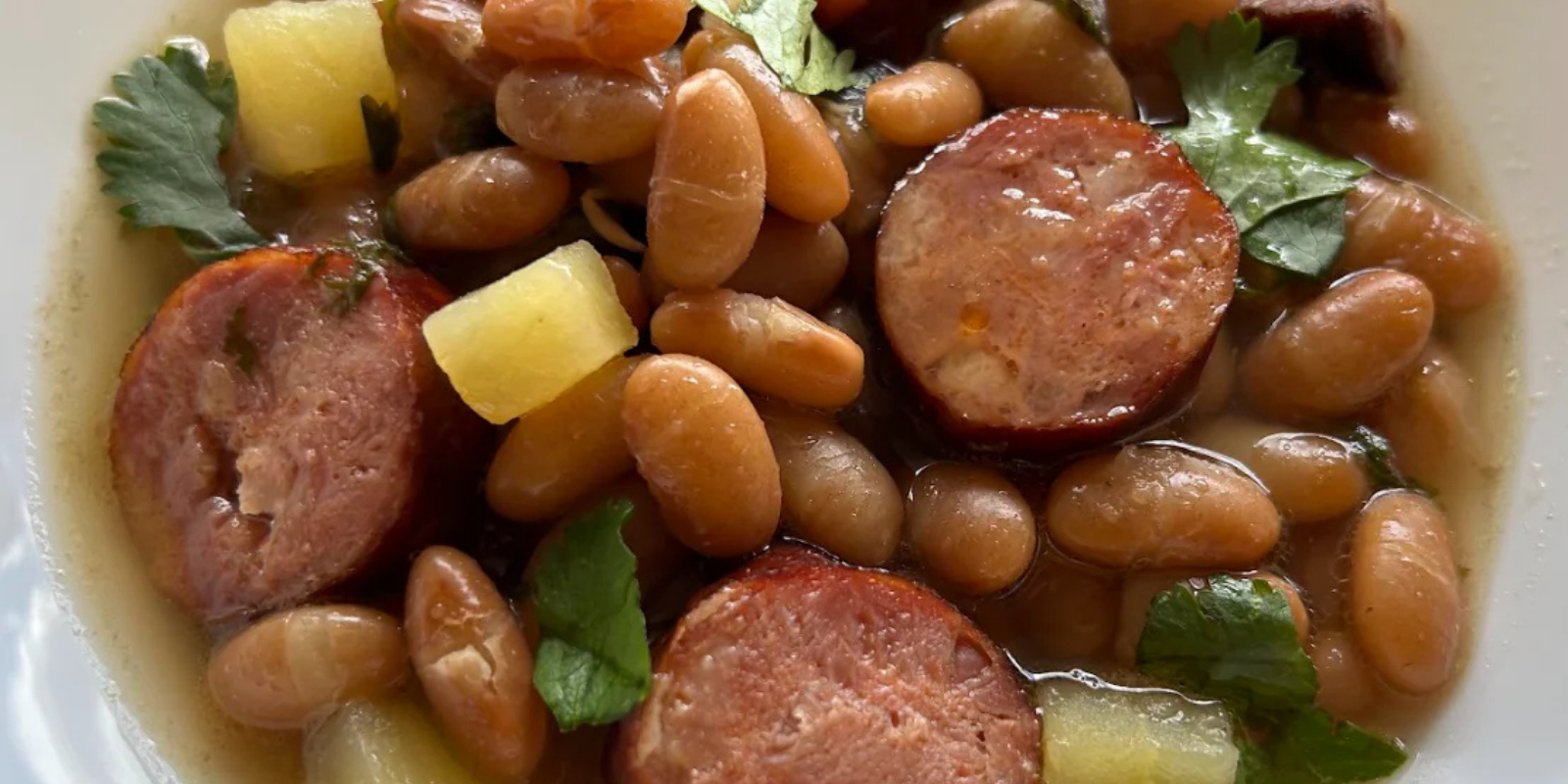
What makes this Portuguese soup so successful is how it layers flavors through careful technique. The toucinho (Portuguese bacon) gets fried until crispy, rendering flavorful fat. The chouriço cooks whole with the beans, infusing everything with smoky, spicy flavor, then gets sliced and returned at the end. The beans simmer long enough to become tender and create rich broth. The result is "comforting flavors and hearty ingredients", exactly what you want from a soup with such a warm-hearted origin story.
The Star: Peruano Beans

Let's talk about Peruano beans (called Mayocoba in the recipe) and why they're perfect for Portuguese stone soup. These beautiful yellow beans have a buttery texture and mild, creamy flavor that makes them ideal for soups where they need to absorb other flavors while maintaining their shape.
What makes Peruano beans ideal for sopa de pedra is their creamy texture that becomes silky through long simmering, their mild flavor that accepts the smoky chouriço and bacon beautifully, and their ability to create rich, starchy broth that gives the soup body.
When cooked with Portuguese sausages, aromatics, and chicken stock, these beans become the hearty foundation of a soup that's deeply satisfying and traditionally Portuguese in character.
The Toucinho
Toucinho is Portuguese bacon, typically thicker cut and lightly salted compared to American bacon. Fry it whole in olive oil over medium-high heat until it slightly crisps up. Remove and set aside.
This technique renders the fat (which stays in the pot for flavor) while creating crispy pieces that get chopped and added back at the end for textural contrast. If you can't find toucinho, use "thick cut, lightly salted bacon" as Jennifer suggests.
The Portuguese Chouriço
Portuguese chouriço (not to be confused with Mexican chorizo) is a smoked, cured pork sausage seasoned with paprika and garlic. It's firm, sliceable, and deeply flavorful, essential to Portuguese cooking.
Add half a link whole to the soup. It will cook with the beans for over an hour, infusing everything with its smoky, garlicky flavor. Then remove it, slice it, and return it at the end so you get both the infused flavor and distinct pieces of sausage.
Important Note on Sausage Substitutions
Jennifer provides crucial guidance: "If Portuguese chourico is difficult to find, please do not sub-Mexican chorizo as it is not the same. You can try dry-cured Spanish chorizo or linguica (another Portuguese sausage), or alternatively andouille."
This is important, Mexican chorizo is fresh and crumbly, completely different from the firm, cured Portuguese sausage. Spanish chorizo (dried, paprika-spiced) or linguiça (similar Portuguese sausage) are appropriate substitutes. Andouille (smoked Cajun sausage) would also work in a pinch.
The Long Simmer
Add chicken stock, whole chouriço, Peruano beans, bay leaf, diced onion, sliced garlic, and black pepper to the pot. Let cook for 1 hour 15 minutes on medium heat.
Check at 45 minutes, if stock no longer covers the ingredients, add more stock or water. At 1 hour 15 minutes, remove the chouriço and set aside. Let beans cook an additional 30 minutes.
This long cooking ensures the beans are completely tender and have absorbed all those wonderful flavors from the sausage, aromatics, and stock.
The Seasoning Adjustment
After the beans have cooked for nearly 2 hours total, adjust seasoning to your preference, salt, pepper, additional garlic if desired. Taste the broth and make it exactly how you want it.
This is when you can fine-tune the soup before adding the final ingredients.
The Potato and Final Assembly
Once the chouriço has cooled, slice it into rounds. Add diced potato and chopped cilantro to the soup and cook for 15 minutes until the potato is almost tender.
Add the sliced chouriço and chopped fried toucinho and continue cooking until beans and potato are completely tender.
The potato adds substance and creates additional starchiness in the broth. The cilantro provides fresh, herby brightness. The chouriço and toucinho return to add meaty flavor and crispy texture.
The Cilantro
Cilantro is traditional in Portuguese cooking (called coentros in Portuguese), though it's often surprising to people who only associate it with Mexican or Asian cuisine. The Portuguese have used cilantro for centuries, and it's essential to this soup's character.
Fresh cilantro gets chopped and added toward the end so it wilts into the soup while maintaining some of its bright flavor. Additional chopped cilantro garnishes each bowl.
Serving
Serve with additional cilantro for garnish, and rice or crusty bread on the side. The bread is for soaking up the flavorful broth, essential. Rice turns it into an even more substantial meal and is traditional in Portuguese cuisine.
The Almeirim Connection
Jennifer mentions that the soup is "originally linked" to the town of Almeirim in Portugal, where the folktale takes place. This geographical specificity matters, it's not just "Portuguese soup," it's from a specific place with its own story and tradition.
The fact that some restaurants in Almeirim still serve it with a cleaned stone shows how food and story intertwine, how a dish can carry cultural memory across generations.
The Folktale's Lesson
The stone soup folktale is about generosity, community, and abundance created through sharing. The friar's trick, convincing everyone to contribute "just a little" to the soup supposedly made from a stone, results in a feast.
Making this soup connects you to that story and its message about how individual contributions create something wonderful when brought together.
Portuguese Comfort Food
This is quintessential Portuguese comfort food, hearty, meaty, bean-based, fragrant with cilantro and garlic. It's the kind of soup that warms you from the inside, that feels like home even if you've never been to Portugal.
Make-Ahead Friendly
Like most bean soups, this improves with time as flavors meld. Make it a day ahead and reheat, or make a big batch and freeze portions. The flavors will only get better.
A Complete Meal
With beans (protein), potato (carbs), sausages (additional protein and fat), and chicken stock (richness), this soup is a complete meal. Add bread or rice and you're set.
The Jennifer Borges Approach
Jennifer's Instagram handle (@nothingssoffthetable) and her approach to this recipe, sharing the folktale, providing substitution guidance, honoring tradition while making it accessible, reflects thoughtful recipe development that respects origins while helping home cooks succeed.
*A Note On Our Recipes:
Every recipe here was developed and tested using farm-fresh beans from Foodocracy and Primary Beans. Older beans, anything past a year in your pantry or beans from other sources may need more coaxing. Give them a soak and add extra cooking time, and they'll get there eventually.

Related Recipes



The Heirloom Bean + Grain club
Learn More
Get impossible to find beans and grains shipped direct to your doorstep each month from small family farms.


Support small family farms
Shop Now
We support small, family owned farms across the nation. Did you know that farmers only make an average of 10 cents on every dollar you spend at the supermarket? Working directly with farms and not middle men ensures that more money goes back to the people actually growning your food.
Sopa De Pedra (Stone Soup)
Portuguese
Main Course
Creator notes I love this dish's comforting flavors and hearty ingredients. It's originally linked to a folktale that goes like this: A friar visited the town of Almeirim and claimed he could make soup using only a stone, and then convinced villagers to contribute ingredients, eventually creating a rich meal. Some places in Almeirim serve it with a cleaned stone as a nod to the legend! – Jennifer Borges (@nothingssoffthetable)
Featured bean: Peruano

Ingredients
- 100 grams of toucinho (thick cut, lightly salted bacon can be subbed), leave whole
- 1-2 tablespoons of olive oil
- 2.5 liters chicken stock
- 1 cup Peruano beans
- ½ link Portuguese chouriço, leave whole
- 1 bay leaf
- 1 medium yellow onion, diced
- 2 garlic cloves, sliced, plus more to taste
- 1 large white potato, diced into small cubes
- ½ a bunch of cilantro, chopped
- Salt and pepper, to taste
- For serving: additional chopped cilantro and rice or crusty bread
Directions
Fry toucinho in 1-2 tablespoons of olive oil on medium high heat in a soup pan until it slightly crisps up, remove from the pot and set aside.
Add chicken stock to a pot, along with chouriço, Peruano beans, bay leaf, onion, garlic, and a few grinds of pepper.
Let cook for 1 hour and 15 minutes on medium heat. Check at the 45 minute mark and if you notice stock is no longer covering the ingredients, add a little bit more stock or water. Take out chouriço, and set aside. Allow the beans to cook for an additional 30 minutes. At this point adjust for any seasoning of your preference (salt, pepper, garlic).
Once cooled, cut chouriço into slices. Add in potato and cilantro for an additional 15 minutes until potato is almost tender. Add sliced chouriço and chopped fried toucinho and continue cooking until beans and potato are tender.
Serve with additional cilantro, and rice or bread on the side.