



Persian-Style Herby Beans With Yogurt And Caramelized Onions
This year, March 20 marks the start of Nowruz, the Persian New Year. The ancient festival is a 13-day celebration of springtime and a brand new year for hundreds of millions of people around the world. You can find fresh, herb-laden dishes at every celebration, and thanks to chefs and cookbook authors like Samin Nosrat, Yasmin Khan, and Naz Deravian, we can all learn about the distinctive Persian cooking techniques and ingredients at home. We're excited to share one of our favorite recipes, adapted from the herbaceous bean and noodle soup known as ash reshteh, which is commonly enjoyed during Nowruz. Our version is heavy on the beans, and features the traditional yogurt and caramelized onion topping. Don't forget the warm flatbread!
What Is Ash Reshteh?

Ash reshteh is a traditional Persian bean, greens, and noodle soup that's particularly popular during Nowruz celebrations. The name comes from "ash" (thick soup) and "reshteh" (noodles). It's characterized by abundant fresh herbs, beans, lentils, and distinctive toppings, yogurt (kashk traditionally, but yogurt works beautifully), caramelized onions, and fragrant mint oil.
This adaptation is "heavy on the beans" and omits the noodles, focusing on the essence of what makes ash reshteh special: fresh herbs in abundance, multiple legumes, and those transformative toppings.
The Nowruz Connection
Nowruz marks the spring equinox and the Persian New Year, "a 13-day celebration of springtime and a brand new year for hundreds of millions of people around the world." The celebration has ancient roots (over 3,000 years old) and is observed across Iran, Afghanistan, Central Asia, and parts of the Middle East.
Fresh herbs are central to Nowruz celebrations, symbolizing rebirth and renewal. This dish, with its "fresh, herb-laden" character, embodies that spring celebration perfectly.
The Star: Chickpeas

Let's talk about chickpeas in this Persian-inspired preparation. Our chickpeas are tiny and intensely nutty, with firm texture that holds up beautifully through long cooking with herbs and spices.
What makes chickpeas ideal for this dish is their firm texture that maintains structure even after cooking with lentils and herbs, their nutty flavor that complements the earthy turmeric and fresh herbs, and their traditional use in Persian cooking.
Combined with Cannellini beans (which add creaminess), lentils (for earthiness), and abundant fresh herbs, chickpeas create a dish that's substantial, nourishing, and distinctly Persian in character.
The Two-Bean Approach
The recipe uses both chickpeas and Cannellini beans, half a cup each of dried beans. This combination creates textural variety (firm chickpeas, creamy Cannellini) and ensures the dish is substantial and satisfying.
Cooking two types of beans together is common in Persian cooking, where variety and complexity are valued.
Building the Aromatic Base
Heat olive oil in a pressure cooker pot (using sauté function) or large pot. Add finely chopped onion and a generous pinch of salt. Cook, stirring regularly, until the onion is tender and golden brown, 16-18 minutes.
This long, slow cooking of the onion creates sweetness and depth that becomes the foundation for everything else. Don't rush this step, properly browned onions are essential to Persian flavor profiles.
Add minced garlic and cook, stirring constantly, for 1 minute. Add the dried beans, turmeric, and black pepper. Stir to coat the beans in the aromatic mixture.
The Turmeric
Turmeric is fundamental to Persian cooking, providing earthy flavor and golden color. It's used generously in this dish, coating the beans and creating that characteristic Persian hue.
Persian turmeric usage differs from Indian, it's less about creating curry flavor and more about providing earthy depth and color.
Cooking the Beans
Cover the beans with water by 1.5 inches. Secure the lid and cook for 40 minutes on high pressure in an electric pressure cooker, allowing natural pressure release.
Alternatively, cook in a large pot until the beans start to soften but are still al dente. The pressure cooker is faster and more convenient, but stovetop works beautifully too.
Adding Lentils
Stir in green lentils and cook, stirring occasionally, until both beans and lentils are completely tender, 25-35 minutes. The mixture should be thick, more like a stew than a soup.
Green lentils add earthiness and additional protein while maintaining their shape (unlike red lentils which would break down completely).
The Herb Abundance
Add a pound of coarsely chopped baby spinach, plus chopped cilantro, parsley, and dill—two bunches of each, with tough stems removed. This is an enormous amount of herbs, which is exactly right for Persian cooking.
Cook until the greens are just wilted and have slightly darkened, 4-6 minutes. You want them cooked but still vibrant green.
Stir in fresh lemon juice and season with salt and pepper. The lemon brightens everything and is essential to the dish's character.
The Three Toppings
What makes this dish truly Persian are the three traditional toppings:
1. Caramelized Onions: Heat 2 tablespoons oil in a skillet over medium-high. Add very thinly sliced onion and cook, stirring often, until golden and caramelized, 16-18 minutes. Season with salt.
These sweet, deeply browned onions provide textural contrast and concentrated onion flavor.
2. Yogurt Mixture: Mix Greek yogurt (Fage is recommended for its thick, tangy quality), buttermilk, and a pinch of salt in a small bowl.
Traditionally, ash reshteh uses kashk (fermented whey), but this yogurt-buttermilk mixture captures that tangy, creamy quality beautifully. The buttermilk thins the yogurt so it drizzles nicely.
3. Mint Oil: Wipe out the skillet and heat 4 tablespoons of oil over low heat. Add dried mint and remove from heat immediately. Let steep for at least a few minutes until fragrant.
This aromatic mint oil is drizzled over each bowl, adding herbal fragrance and richness.
The Assembly
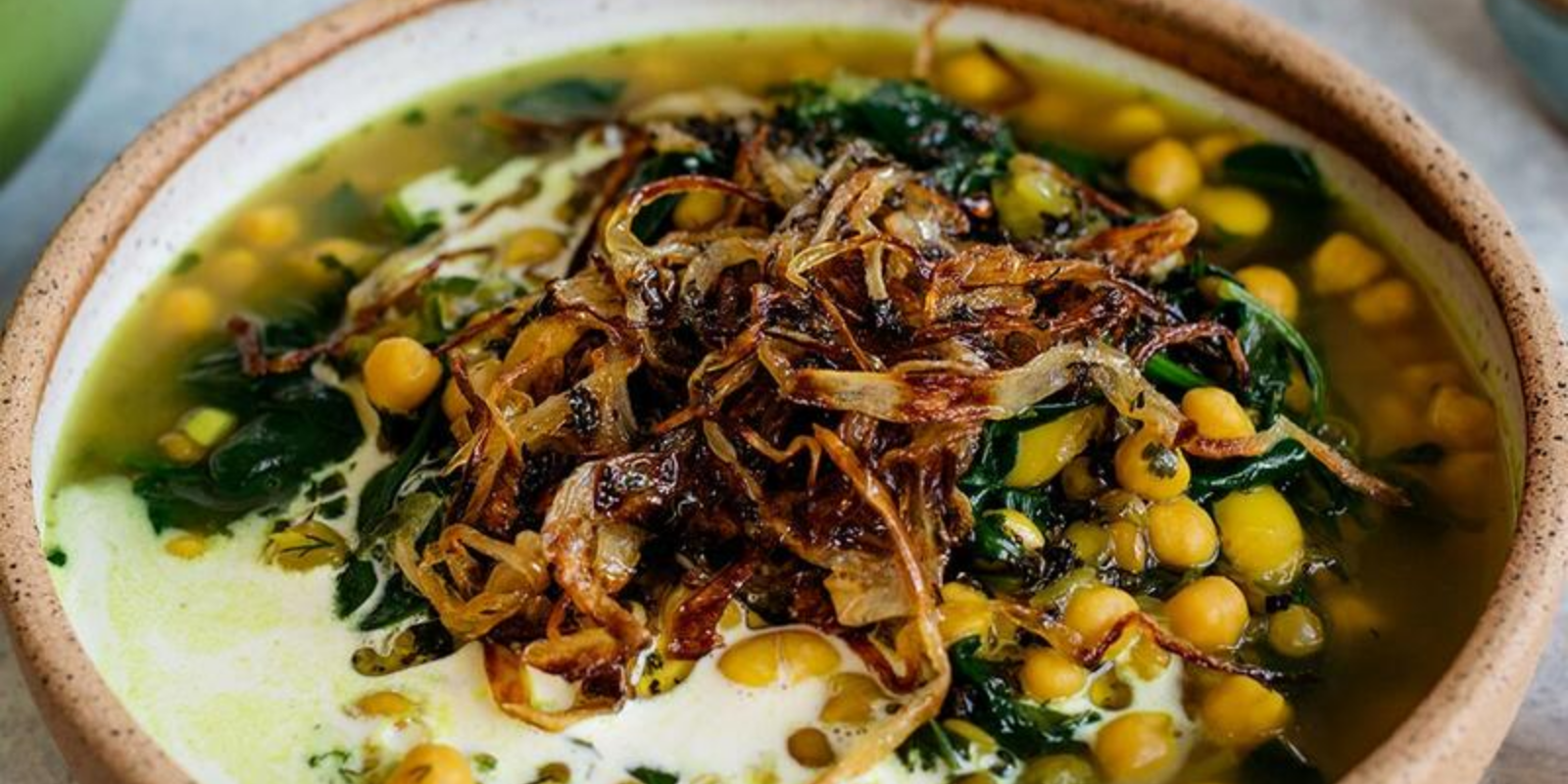
Divide the thick, herby bean mixture among bowls. Drizzle with the yogurt mixture and mint oil. Top with caramelized onions.
The visual presentation is beautiful, dark green beans, white yogurt swirls, golden caramelized onions, fragrant mint oil. Every element is distinct but comes together in each spoonful.
Serving with Flatbread
The recipe emphasizes: "Don't forget the warm flatbread!" In Persian meals, bread (usually lavash or barbari) is essential for scooping up stews and soups.
Warm flatbread, pita, lavash, naan, or any flatbread you can find, is necessary for enjoying this dish properly.
Sabzi Khordan
The recipe suggests serving with "sabzi khordan, a heaping platter of fresh herbs, radishes, walnuts and feta that accompanies nearly every Persian meal."
This raw herb platter is traditional at Persian tables, bunches of fresh basil, mint, cilantro, parsley, tarragon, plus radishes, scallions, walnuts, and feta cheese. Diners grab herbs with their hands and eat them alongside the main dish.
This abundance of fresh herbs connects to the spring celebration of Nowruz and Persian food culture's love of fresh, vibrant flavors.
The Cultural Teachers
The recipe acknowledges the chefs and authors who have made Persian cooking accessible: "thanks to chefs and cookbook authors like Samin Nosrat, Yasmin Khan, and Naz Deravian, we can all learn about the distinctive Persian cooking techniques and ingredients at home."
This recognition is important, these women have done essential work sharing Persian food culture with English-speaking audiences through cookbooks, articles, and teaching.
The Adaptations
The recipe notes it's adapted from Samin Nosrat's ash reshteh recipe (NYT Cooking) and Andy Baraghani's beans and greens soup (Bon Appétit). Both sources are credited with links, demonstrating proper attribution.
This adaptation focuses on beans rather than noodles, making it even more suitable as a Primary Beans recipe while honoring the traditional flavors and techniques.
A Celebration of Spring
This dish embodies Nowruz's celebration of spring, fresh herbs in abundance, bright green colors, nourishing but not heavy, perfect for the transition from winter to warmer weather.
Making it for Nowruz or any spring celebration connects you to an ancient tradition observed by hundreds of millions of people worldwide.
*A Note On Our Recipes:
Every recipe here was developed and tested using farm-fresh beans from Foodocracy and Primary Beans. Older beans, anything past a year in your pantry or beans from other sources may need more coaxing. Give them a soak and add extra cooking time, and they'll get there eventually.

Related Recipes



The Heirloom Bean + Grain club
Learn More
Get impossible to find beans and grains shipped direct to your doorstep each month from small family farms.


Support small family farms
Shop Now
We support small, family owned farms across the nation. Did you know that farmers only make an average of 10 cents on every dollar you spend at the supermarket? Working directly with farms and not middle men ensures that more money goes back to the people actually growning your food.
Persian-Style Herby Beans With Yogurt And Caramelized Onions
Persian-Inspired
Main Course
This recipe is adapted from the herbaceous bean and noodle soup known as ash reshteh, which is commonly enjoyed during Nowruz. Our version is heavy on the beans, and features the traditional yogurt and caramelized onion topping. Don't forget the warm flatbread!
Featured bean: Chickpeas
Other beans to try: Cannellini

Ingredients
The beans
- 3 tbsp olive oil
- 1 large yellow onion, finely chopped
- 3 garlic cloves, minced
- ½ cup dried Chickpeas
- ½ cup dried Cannellini beans
- 1 tsp ground turmeric
- Coarse salt and freshly ground pepper
The rest
- ½ cup green lentils
- 1 lb baby spinach, coarsely chopped
- 2 bunches cilantro, tough stems removed, chopped
- 2 bunches parsley, tough stems removed, chopped
- 2 bunches dill, tough stems removed, chopped
- 2 tbsp fresh lemon juice
Toppings
- 6 tbsp vegetable oil, divided
- 1 large yellow onion, very thinly sliced
- ½ cup Greek yogurt (preferably Fage)
- ¼ cup buttermilk
- 2 tbsp dried mint
Directions
Cook the beans: Heat olive oil in the pressure cooker pot insert using the sauté function. Add onion and a generous pinch of salt. Cook, stirring regularly, until onion is tender and golden brown, 16-18 minutes. Add garlic and cook, stirring constantly, 1 minute. Add dried beans, turmeric, and 1 tsp freshly ground pepper. Stir to coat. Cover with water by 1½ inches. Secure the lid, and cook for 40 minutes on high pressure. Allow the pressure to naturally release. (Alternatively, you can cook beans in a large pot; cook until they start to soften, but are still al dente.)
Add remaining ingredients: Stir in lentils and cook, stirring occasionally, until beans and lentils are completely tender, 25-35 minutes. The soup should be thick. Add spinach, cilantro, parsley, and dill and cook until greens are just wilted and have slightly darkened, 4-6 minutes. Stir in lemon juice and season with salt and pepper. Set aside and keep warm.
Caramelize the onions: Meanwhile, heat 2 tbsp oil in a medium skillet over medium-high. Add onion and cook, stirring often, until golden and caramelized, 16-18 minutes. Season with salt and set aside.
Prepare the yogurt: Mix yogurt, buttermilk, and a pinch of salt in a small bowl.
Prepare the mint oil: Wipe out skillet and heat remaining 4 tbsp oil over low. Add mint and remove from heat. Let steep for at least a few minutes until mint oil is fragrant.
Assemble and enjoy: Divide soup among bowls and drizzle with yogurt mixture and mint oil. Top with caramelized onions.