



Pared-Down Cassoulet
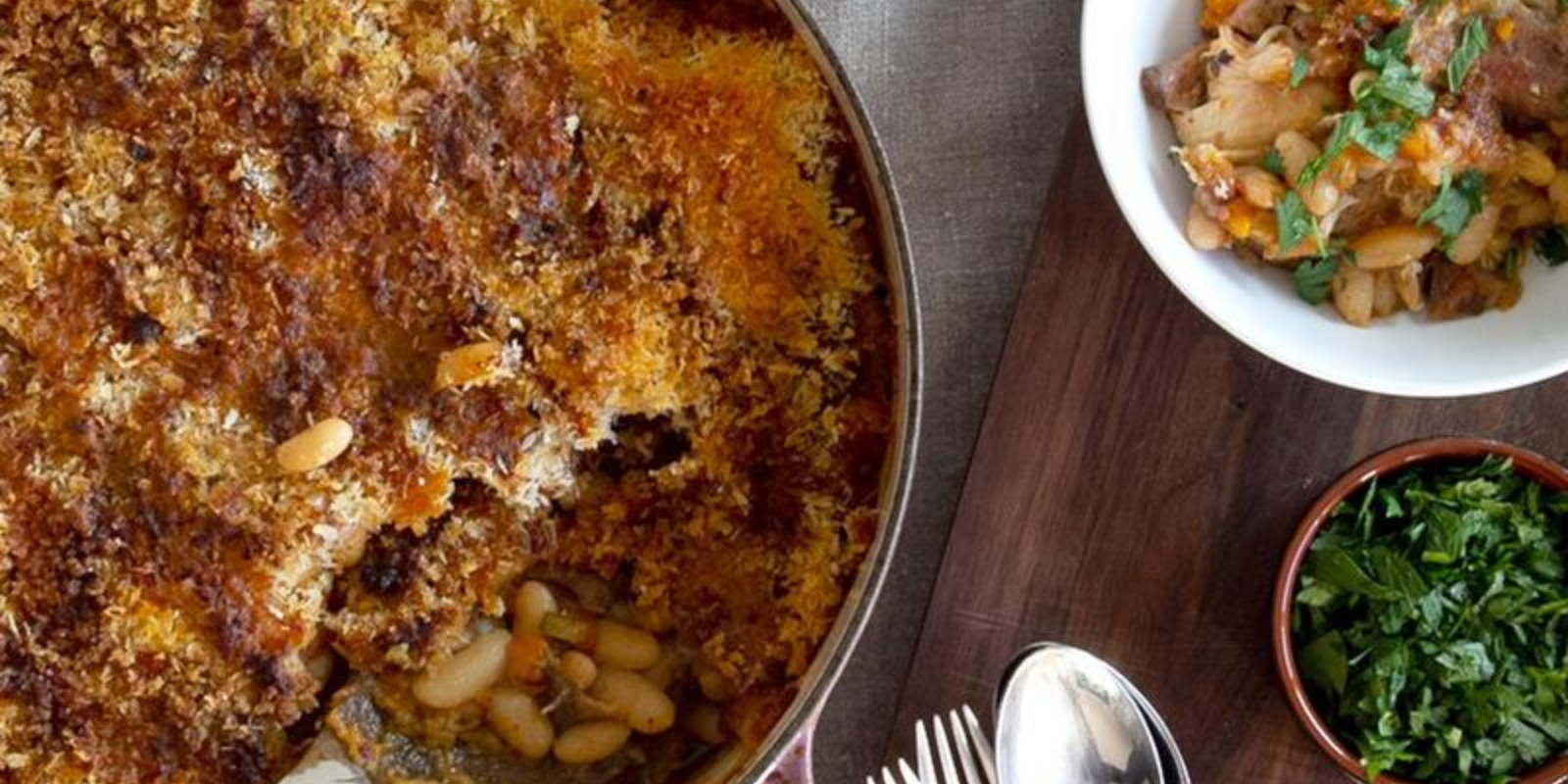
Deceptively known as "peasant fare" in France, cassoulet is as technical as it gets when it comes to beans. Beans are the backbone of this dish and work their magic by absorbing the many savory and garlicky flavors as they cook. This recipe was adapted from NYT Cooking's Melissa Clark, in "The New Essentials of French Cooking," where she expertly instructs home cooks how to tackle the cassoulet. Here, we pare down the meats involved because, um, 4 different types is plenty? Call it a faux cassoulet, if you will. We think it's delicious.
What Is Cassoulet?

Cassoulet is one of France's most celebrated dishes, a rich, hearty bean stew from the Languedoc region that combines white beans with various meats (traditionally duck confit, pork, lamb, and sausage), all baked together under a golden breadcrumb crust. It's the kind of dish that takes time and care, with layers of flavor built through careful technique.
The name comes from the cassole, the traditional earthenware pot in which it's cooked. And while it's often called "peasant food," there's nothing simple about making great cassoulet. It requires patience, technique, and attention to detail, marinating meats, slow-roasting them in fat, cooking vegetables until sweet, building that crust and nursing it through multiple crackings.
This version pares down the meat to "just" four types (pork stew meat, lamb stew meat, and fresh sausages, instead of the traditional five or six different preparations), making it more manageable for home cooks while still honoring the spirit of the dish.
The Star: Classic Flat White Beans

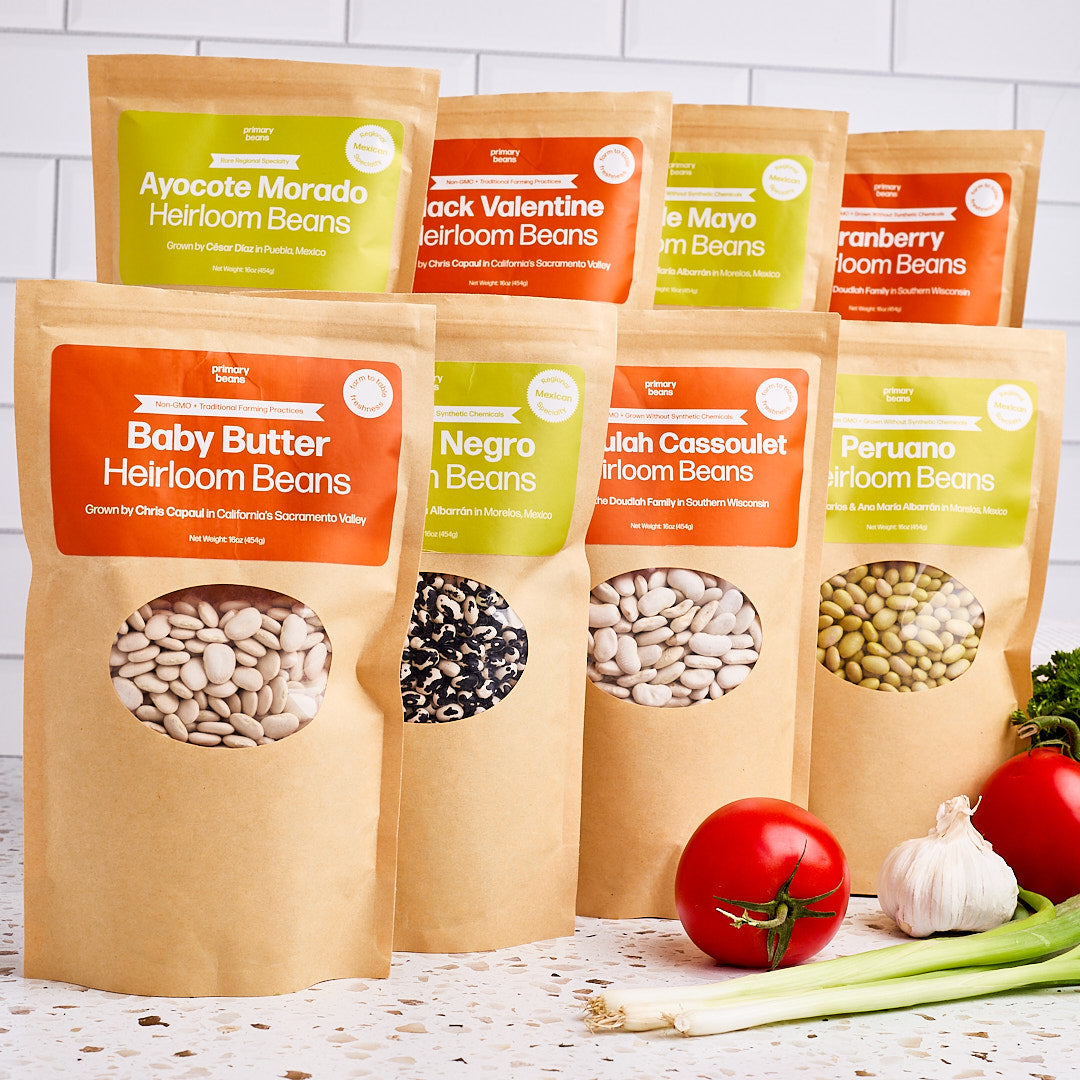
Let's talk about Classic Flat White beans, also known as Cassoulet beans or Cannulah™. These are the beans cassoulet was made for, large, creamy French beans that hold their shape beautifully through long cooking while absorbing all those wonderful savory flavors.
What makes Classic Flat White beans essential to great cassoulet is their size, texture, and flavor. They're substantial enough to stand up to rich meats and long baking. They have a light-bodied, fresh, herbal broth quality that complements rather than competes with the meat flavors. And they stay intact through multiple stages of cooking, giving you distinct, creamy beans rather than mush.
These beans are part of the Classic Flat White™ project, bred from the exact same seed famously grown in France and Spain. Our Classic Flat White beans come from Mark Doudlah at Doudlah Farms in Wisconsin, where they're grown using regenerative organic practices and planted harmoniously with sunflowers in a living trellis system, just like in France. The care that goes into growing these beans is evident in their quality, they're the real deal, the kind of beans French cooks have treasured for generations. Learn more about Mark and Doudlah Farms.
The Marinated Meats
The meats get marinated for 4-8 hours with garlic, ground cloves, bay leaf, rosemary, thyme, salt, and pepper. This isn't just for flavor, it's traditional French technique that seasons the meat throughout and begins developing those complex flavors that make cassoulet special.
Bone-in pork and lamb stew meat are ideal because the bones add flavor and body to the dish. The combination of pork and lamb creates depth, pork is sweet and fatty, lamb is earthy and slightly gamey. Together, they create something richer than either alone.
The Slow Roast
After marinating, the meats get roasted low and slow, first uncovered at 325°F for an hour until browned, then covered for another 1½ hours until soft and tender. They roast in melted duck fat or lard, which keeps them moist and adds incredible richness.
This slow roasting does several things: it renders fat that you'll use later for cooking vegetables, it creates deeply flavorful browned bits, and it makes the meat fall-apart tender. Those precious drippings and fat are reserved, nothing goes to waste.
The Sausages
Fresh pork sausages (ideally Toulouse sausages if you can find them) get browned separately in olive oil until well-colored on all sides, about 20 minutes. Toulouse sausages are coarsely ground pork sausages seasoned simply with salt, pepper, and sometimes garlic. They're traditional in cassoulet and add another texture and flavor dimension.
The sausage fat stays in the pan for cooking the vegetables, again, nothing wasted, every element contributing flavor.
The Vegetable-Bean Mixture
The vegetables, onions, carrots, and celery, cook in reserved fat from the roasted meats until softened and sweet. Garlic goes in until fragrant. Then crushed tomatoes get added and simmered until thickened, creating a rich, savory base.
The cooked beans get stirred into this vegetable-tomato mixture, coating them with all those flavors. This is where the beans begin their transformation, no longer plain cooked beans, but beans infused with garlic, tomato, sweet vegetables, and rich meat fat.
The Assembly
Assembling cassoulet is like building a lasagna, layers matter. You grease your Dutch oven or deep casserole dish with some of that precious reserved fat. Then:
- Layer 1: About a third of the bean mixture
- Layer 2: Half the roasted meat and half the sausages
- Layer 3: Another third of the bean mixture
- Layer 4: Remaining meat and sausages
- Layer 5: Final third of bean mixture, spread to the edges
Then you slowly pour reserved bean broth over everything, letting it seep through the layers. The liquid should come to the top layer of beans but not cover them, you want beans exposed for the crust to form.
Panko breadcrumbs get sprinkled generously over the top, then drizzled with olive oil. This will become the legendary cassoulet crust.
Nursing the Crust
This is where cassoulet gets technical and truly special. The dish bakes at 365°F for about 1½ hours total, but you don't just leave it alone. Every 20 minutes, you crack the crust with a large spoon and drizzle bean liquid over it, encouraging it to bubble up.
This repeated process creates layers of crust, each time you crack it and add liquid, some sinks in and some stays on top, creating new crust as it bakes. By the end, you have a deeply golden, crackling crust with multiple layers, while underneath, the beans and meats are bubbling together in rich, flavorful liquid.
The crust should be well-browned, the liquid bubbling, and your kitchen smelling absolutely incredible.
Why It's Worth It
Cassoulet takes 5 hours from start to finish. It dirties multiple dishes. It requires technique and attention. So why make it?
Because it's one of the great dishes of French cuisine. Because it's the kind of food that brings people together around the table for hours. Because nothing else tastes quite like it, those beans infused with garlic and rich meat flavors, that golden crust, the way everything comes together into something greater than the sum of its parts.
It's a special-occasion dish, the kind you make for cold winter weekends when you have time to spend in the kitchen and people you want to feed something extraordinary.
Serving
Cassoulet is meant to be served family-style, straight from the casserole dish. Let it cool slightly so people don't burn themselves, then bring it to the table with a large serving spoon. Everyone helps themselves to beans, meat, sausage, and plenty of that crackling crust.
As the recipe notes: pair with hearty, tannic red wine. Period. A good Côtes du Rhône, Cahors, or Madiran would be traditional and perfect. The wine cuts through the richness and complements the complex flavors.
Crusty bread on the side is essential for soaking up that delicious bean liquid. A simple green salad provides contrast to all that richness.
Leftovers
If you somehow have leftovers (unlikely with 8-10 hungry eaters), cassoulet reheats beautifully. The flavors continue to develop as it sits. Reheat gently in the oven, covered, adding a splash of water or stock if needed. The crust won't be quite as crispy, but it'll still be delicious.
A Labor of Love
Cassoulet is a labor of love, no question. But it's the kind of labor that's meditative and satisfying. You're connecting with centuries of French cooking tradition. You're creating something that will make people happy, full, and content.
And those beans, those beautiful Classic Flat White beans that started this whole thing, become the canvas for all those wonderful flavors, proving once again that beans can be the star of even the most celebrated dishes.
*A Note On Our Recipes:
Every recipe here was developed and tested using farm-fresh beans from Foodocracy and Primary Beans. Older beans, anything past a year in your pantry or beans from other sources may need more coaxing. Give them a soak and add extra cooking time, and they'll get there eventually.

Related Recipes



The Heirloom Bean + Grain club
Learn More
Get impossible to find beans and grains shipped direct to your doorstep each month from small family farms.


Support small family farms
Shop Now
We support small, family owned farms across the nation. Did you know that farmers only make an average of 10 cents on every dollar you spend at the supermarket? Working directly with farms and not middle men ensures that more money goes back to the people actually growning your food.
Pared-Down Cassoulet
French
Main Course
Deceptively known as "peasant fare" in France, cassoulet is as technical as it gets when it comes to beans. Beans are the backbone of this dish and work their magic by absorbing the many savory and garlicky flavors as they cook. This recipe was adapted from NYT Cooking's Melissa Clark. Here, we pare down the meats involved because, um, 4 different types is plenty? Call it a faux cassoulet, if you will. We think it's delicious.
Featured bean: Classic Flat White
Other beans to try: Cannellini, Flageolet

Ingredients
The beans
- 1 lb dried Classic Flat White beans
The meat
- 4 lbs bone-in pork stew meat, bone-in lamb stew meat, or a combination
- 2½ tsp coarse salt
- 1 tsp freshly ground black pepper
- 9 garlic cloves, peeled, plus 3 minced garlic cloves
- ⅛ tsp ground cloves
- 1 bay leaf
- 2 sprigs rosemary
- 2 sprigs thyme
- ½ cup duck fat or lard, or a combination
The rest
- 5 tbsp olive oil, divided
- 1 lb fresh pork sausages (ideally Toulouse)
- 2 medium white or yellow onions, diced
- 2 large carrots, diced
- 2 celery stalks, diced
- 9 garlic cloves, peeled
- 3 cups canned crushed tomatoes
- Coarse salt and freshly ground black pepper
- 1½ cups panko bread crumbs
Directions
Marinate the meat(s): Combine all ingredients except the fat and toss to combine. Cover and refrigerate for 4-8 hours.
Roast the meat(s): Preheat oven to 325 degrees. Line baking sheet with foil and add meat. Melt fat and pour over meat. Mix to combine and spread meat in one even layer. Roast until browned, about 1 hour. Turn pieces, cover with foil, and continue to roast until soft, another 1½ hours. Remove meat and reserve fat and browned bits.
Make the beans: Cook beans according to our guide in the cooking vessel of your choice. Once cooked, strain and set aside to cool.
Cook the sausage: Meanwhile, heat 1 tbsp olive oil in sauté pan or skillet over medium-high heat and add sausages. Cook until well browned on all sides, about 20 minutes. Set aside, leaving any sausage fat in skillet.
Prepare the vegetable/bean mixture: Once meat is done roasting, in the same sauté pan or skillet, add 2-3 tbsp of reserved fat from roasted meat. Add onions, carrots, and celery, and cook until softened, about 10 minutes. Add garlic and cook until fragrant, another few minutes. Stir in tomatoes and simmer until thickened, 5-10 minutes. Meanwhile, strain beans, reserving bean broth, and stir beans into the vegetable mixture to combine. Remove from heat and season with salt to taste.
Assemble the cassoulet: Heat oven to 365 degrees. Grease Dutch oven or casserole dish with some of the reserved fat, add about a third of beans and spread evenly. Top with half of roasted meat and half of cooked sausage. Add another third of beans, and top with remaining meat and sausages. Top with remaining beans, spreading them to the edges and covering the meat. Slowly pour reserved bean broth on top so that it seeps through the layers, stopping when liquid comes to the top layer of beans but does not cover them. Sprinkle with breadcrumbs and drizzle with remaining 4 tbsp olive oil.
Cook the cassoulet (and nurse that crust!): Bake until the crust is lightly browned, about 30 minutes. Use a large spoon to slightly crack the crust so the liquid bubbles up. Use the spoon to drizzle bean liquid all over the top of the crust. Return to oven and bake 1 hour longer, cracking the crust and drizzling with bean liquid every 20 minutes, until the crust is well browned and liquid is bubbling. The total baking time should be about 1½ hours. Remove from oven and let cool slightly before serving.