



Habichuelas Guisadas
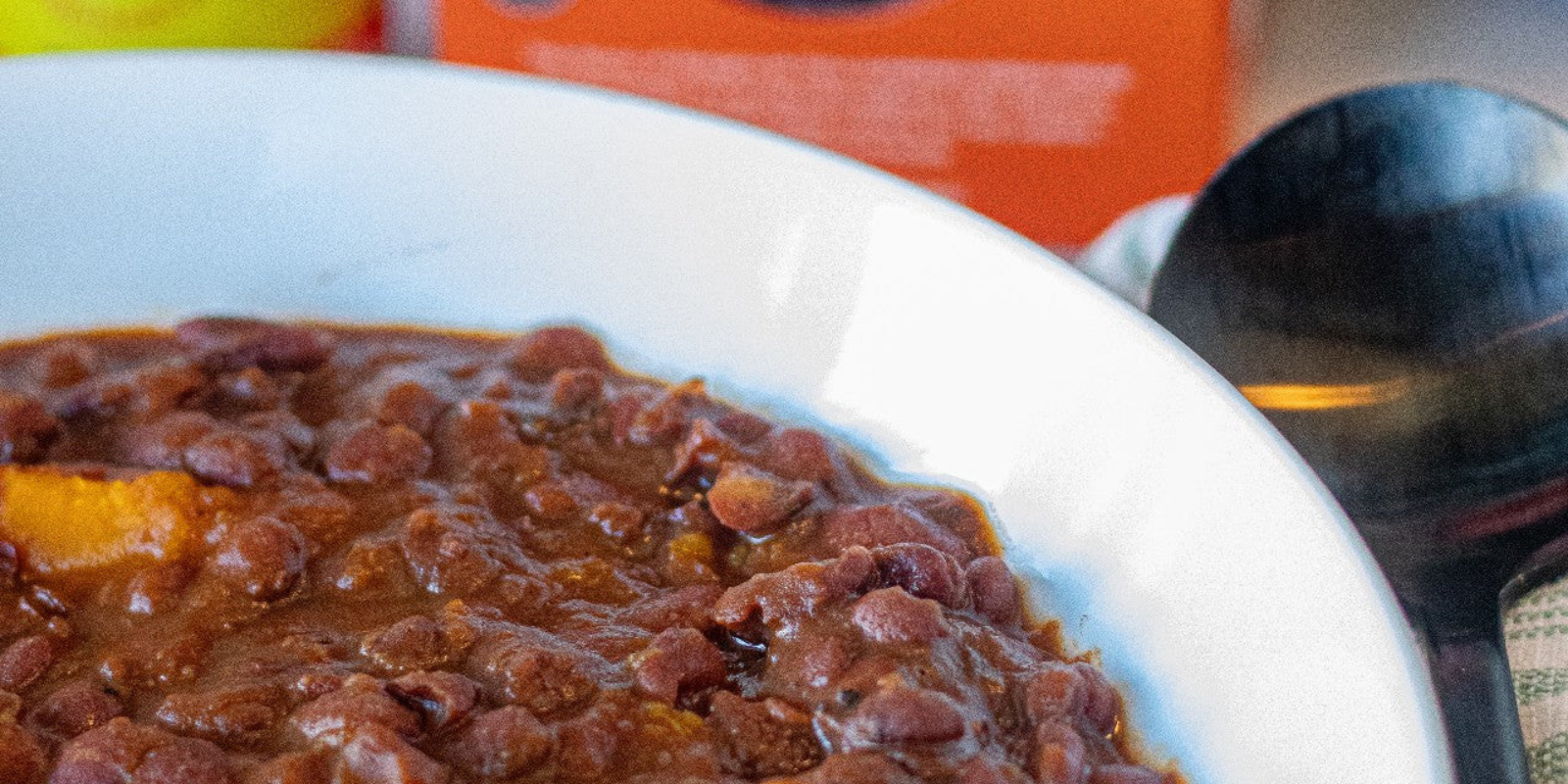
We teamed up with our favorite Latin American pantry brand, Loisa, to bring you our spin on habichuelas guisadas, classic Caribbean stewed red beans with squash. This recipe brings together our thoughtfully sourced ingredients in a complex and hearty stew, created by Belqui Ortiz Millili (@belquistwist).
Get the ingredients in our limited-edition Taste of the Caribbean kit!
Creator notes
Raised between the Dominican Republic and NYC, there is nothing I love more than a good habichuelas guisadas to spoon over a healthy serving of white rice. It's a staple in basically every Caribbean country and across Latin America. Growing up we always bought dried beans, and to speed up the process, we used the old-style pressure cookers. Habichuelas guisadas was the third recipe I learned to cook proficiently by age 13. My family raved about how good my beans were and still to this day, they feel the same.
Beans have a very long history in Caribbean cuisine, dating back to the indigenous Taino people who cultivated various types of beans. With the arrival of European colonists, beans were integrated into the local diet and adapted to the tastes and ingredients of the time.
In the Dominican Republic, habichuelas guisadas are typically made with red kidney beans. The beans are stewed in a flavorful tomato-based sauce, often seasoned with sofrito, which includes ingredients like onions, bell peppers, garlic, culantro, and cilantro. The beans are usually served with white rice and a protein like chicken, pork, or beef. This recipe is particularly delicious because not only am I using my favorite seasonings by Loisa, but I am also using Sangre de Toro red beans by Primary Beans. – Belqui Ortiz Millili (@belquistwist)
What Are Habichuelas Guisadas?

Habichuelas guisadas are Caribbean stewed beans, a staple across the Caribbean and Latin America, with variations in every country and household. The name literally means "stewed beans," but that simple translation doesn't capture what they represent: comfort, home, tradition, the kind of food that connects you to family and culture.
As Belqui notes, there's nothing she loves more than spooning these beans over white rice. That combination, habichuelas guisadas and arroz blanco, is fundamental to Caribbean cuisine, appearing on tables daily across the region. It's the kind of food that people grow up eating, learn to cook early (Belqui mastered it by age 13), and continue making throughout their lives.
The Historical Context
Belqui provides important historical context: beans have been central to Caribbean cuisine since the indigenous Taino people cultivated various bean varieties long before European colonization. With the arrival of colonists, beans were integrated into local diets and adapted with new ingredients and techniques.
This history matters. Habichuelas guisadas isn't just a recipe, it's a dish that connects to centuries of Caribbean foodways, indigenous traditions, colonial adaptations, and the evolution of distinctive regional cuisines. When you make this dish, you're participating in that long culinary history.
The Star: Sangre de Toro Beans
Let's talk about Sangre de Toro beans, "bull's blood" beans named for their deep burgundy color. These stunning beans are large, meaty, and incredibly flavorful. While Dominican habichuelas guisadas are traditionally made with red kidney beans, Sangre de Toro beans are an excellent choice, as Belqui notes.
What makes Sangre de Toro beans perfect for this stew is their robust texture that holds up to long simmering in tomato sauce, their meaty quality that makes them substantial and satisfying, and their deep color that contributes to the rich, dark appearance of properly made habichuelas guisadas.
When stewed with sofrito, adobo, sazón, tomato sauce, and squash, these beans absorb all those wonderful Caribbean flavors while maintaining their shape and providing satisfying, hearty bites throughout the stew.
The Loisa Partnership
This recipe was created for the Taste of the Caribbean kit, a collaboration between Primary Beans and Loisa celebrating Caribbean and Latin American flavors. Loisa makes authentic Latin American seasonings, sofrito, adobo, sazón, that capture traditional flavors in convenient forms.
Using Loisa's prepared seasonings makes authentic habichuelas guisadas accessible without requiring you to make sofrito from scratch (though the recipe provides instructions if you want to). The partnership celebrates quality ingredients from thoughtful brands working to preserve and share traditional foodways.
The Essential Seasonings
Three key seasonings make habichuelas guisadas taste authentically Caribbean:
- Sofrito: Aromatic base of onions, peppers, garlic, cilantro, and culantro (recao). This is the flavor foundation of countless Caribbean and Latin American dishes.
- Adobo: All-purpose seasoning blend typically containing garlic powder, onion powder, oregano, black pepper, and salt. It adds savory depth.
- Sazón: Seasoning blend with cumin, coriander, garlic, and often annatto for color. Gives distinctive Caribbean flavor and golden-red color.
Together, these create the complex, layered flavor that makes habichuelas guisadas special. If you want to make sofrito from scratch, the recipe provides instructions: process onions, peppers, garlic, cilantro, culantro, and oregano until smooth.
The Auyama (Squash)
Auyama, also called calabaza, West Indian pumpkin, or kabocha squash, is traditional in Caribbean bean stews. Cut into 1-inch pieces, it cooks with the beans and serves two purposes: it adds subtle sweetness that balances the savory seasonings, and it partially dissolves into the stew, creating body and richness.
The recipe offers a choice: add all the squash at the beginning and let it mostly dissolve (creating a thicker, richer stew), or reserve half and add it during the last 30 minutes of cooking (so you have visible squash pieces in the finished dish). Both approaches are traditional, it's about texture preference.
The Technique
The method is straightforward and allows the ingredients to slowly develop flavor. Heat oil in a pot, stir in sofrito, garlic, and salt to bloom those aromatics. Add everything else, onions, peppers, squash, tomato sauce, adobo, sazón, beans, cilantro, and water.
Bring to a boil, then reduce to a simmer and cook for about 2 hours until the beans are tender. Add warm water as needed if too much liquid evaporates. The beans should be fully soft and the stew should be thick and saucy, not soupy or dry.
The Slow Development
The 2-hour simmer is essential. During this time, the beans soften and absorb the tomato sauce and seasonings, the sofrito infuses everything with its aromatic flavors, the squash breaks down and thickens the stew, and all the flavors meld and deepen.
This isn't fast cooking, it's the kind of slow, patient cooking that creates deeply flavored, complex food. As Belqui notes, her family used pressure cookers to speed things up, and you certainly can too if you prefer. But the slow simmer is traditional and creates excellent results.
Serving
Habichuelas guisadas are traditionally served over arroz blanco (white rice) with a protein on the side, chicken, pork, or beef. This combination is fundamental to Caribbean eating: the beans provide rich, saucy flavor that soaks into the rice, the rice provides neutral starch to balance the beans' intensity, and the protein completes the meal.
As Belqui describes, you spoon the beans over a "healthy serving" of white rice. The rice should be fluffy and plain, letting the beans' flavors shine.
A Recipe of Pride
What makes Belqui's story so touching is how proud her family was (and still is) of her habichuelas guisadas. She learned to make them proficiently by age 13, and decades later, her family still raves about them. That's the power of mastering traditional recipes, they connect you to family, earn respect, and become part of your identity.
This is the kind of recipe worth learning well, worth making often, worth passing down to the next generation.
Cultural Staple
As Belqui emphasizes, habichuelas guisadas are "a staple in basically every Caribbean country and across Latin America." While each region has variations (different beans, different seasonings, different additions), the fundamental concept, beans stewed in flavorful sauce, appears everywhere.
Learning to make one version well gives you the foundation to explore others and understand how Caribbean and Latin American cooking connects across borders through shared techniques and ingredients.
Better the Next Day
Like most bean stews, habichuelas guisadas are even better the next day. The flavors continue to develop and deepen as the stew sits. Make a big batch, refrigerate what you don't eat, and enjoy it throughout the week with rice and different proteins.
¡Buen Provecho!
Belqui ends with the traditional Spanish blessing before meals: "¡Buen Provecho!", essentially "Enjoy your meal!" It's a warm, communal sentiment that captures the spirit of this dish: food meant to be shared, enjoyed, and savored with people you love.
*A Note On Our Recipes:
Every recipe here was developed and tested using farm-fresh beans from Foodocracy and Primary Beans. Older beans, anything past a year in your pantry or beans from other sources may need more coaxing. Give them a soak and add extra cooking time, and they'll get there eventually.

Related Recipes



The Heirloom Bean + Grain club
Learn More
Get impossible to find beans and grains shipped direct to your doorstep each month from small family farms.


Support small family farms
Shop Now
We support small, family owned farms across the nation. Did you know that farmers only make an average of 10 cents on every dollar you spend at the supermarket? Working directly with farms and not middle men ensures that more money goes back to the people actually growning your food.
Habichuelas Guisadas
Caribbean
Main Course
Creator notes In the Dominican Republic, habichuelas guisadas are typically made with red kidney beans stewed in a flavorful tomato-based sauce, often seasoned with sofrito. This recipe is particularly delicious because not only am I using my favorite seasonings by Loisa, but I am also using Sangre de Toro red beans by Primary Beans. – Belqui Ortiz Millili (@belquistwist)
Featured bean: Sangre de Toro
Other beans to try: Chaparro

Ingredients
- 1 tbsp high heat cooking oil
- 3 tbsp homemade* or prepared sofrito (such as Loisa's Sofrito)
- 1 tsp minced garlic
- ½ tsp sea salt
- ¼ yellow onion, diced
- ¼ green bell pepper, diced
- 1 cup auyama, also known as calabaza, West Indian pumpkin, or kabocha squash, cut into 1-inch pieces
- ½ cup tomato sauce
- 1 tbsp adobo (we used Loisa's Adobo)
- 1 tbsp sazón (we used Loisa's Sazón)
- 2 sprigs cilantro, whole or chopped
- 1 lb dried Sangre de Toro beans
Directions
In a medium pot, over medium/high flame, heat your oil. Then stir in sofrito, garlic and sea salt.
Add the remaining ingredients: onions, peppers, auyama, tomato sauce, adobo, sazón, beans, and water. Give it a stir. Note: During the cooking process, your auyama may dissolve into the dish. If you'd like pieces of auyama visible within the beans, reserve half to add later.
Raise the heat to high, cover the beans, and bring them to a boil. Then, reduce to a simmer and cook until the beans are tender, about 2 hours. Add warm water as needed if you see too much liquid has evaporated.
If you reserved auyama for later, add them back in when you have about 30 minutes left of cooking time.
Once the beans are tender, taste for seasoning. Add more salt as needed. Serve with arroz blanco and protein of your choice. ¡Buen Provecho!