



Chicken basquaise with Flageolet
Creator notes
Inspired by Chicken Basquaise, a chicken and pepper stew from the Basque-Pyrenees in southwest France, this one-pan dinner gets the very French addition of Flageolet beans, beloved in this region. The key ingredient that puts the "Basque" in "basquaise" is piment d'espelette, one of the most cherished pantry staples in kitchens across the Basque-Pyrenees. Known for its fruity, red pepper flavor and mild heat, Piment d'Espelette is actually protected by the French government, from where the peppers are grown to how they are dried and powdered. You can also find American-grown versions of this spice under the name espelette powder. And, if you can't find it, sweet paprika will do in a pinch! While Primary Beans can be cooked straight from dried, when braising dried beans of any kind, I like to give the legumes an overnight or quick soak. This gives them a head start and primes them to soak up lots of the braising liquid. –Asha Loupy (@fromheadtotable)
What Is Chicken Basquaise?

Chicken Basquaise (poulet basquaise in French) is a traditional stew from the Basque-Pyrenees region of southwest France. It typically features chicken braised with peppers, tomatoes, white wine, and the region's signature spice, Piment d'Espelette. Asha's version adds Flageolet beans, which are "beloved in this region," making the dish even more substantial and authentically French.
The Basque region spans the border between France and Spain, and its cuisine reflects both influences, Spanish peppers and tomatoes, French technique and refinement, and distinctive local ingredients like Piment d'Espelette.
The Star: Flageolet Beans

Let's talk about Flageolet beans and why they're perfect for this French braise. These pale green beans are considered a delicacy in France, traditionally served with roasted lamb but excellent in braises. They have a delicate, slightly herbaceous flavor and creamy texture.
What makes Flageolet beans ideal for chicken basquaise is their delicate flavor that complements rather than competes with the chicken and peppers, their creamy texture that becomes silky through long braising, and their traditional French association (they're the bean French cooks reach for).
When braised with white wine, chicken stock, tomato paste, and Piment d'Espelette alongside chicken thighs, these beans absorb all those wonderful flavors while maintaining their distinctive character.
About Piment d'Espelette
Asha provides important context about this "key ingredient that puts the 'Basque' in 'basquaise'": Piment d'Espelette is "one of the most cherished pantry staples in kitchens across the Basque-Pyrenees. Known for its fruity, red pepper flavor and mild heat."
The peppers are so valued that they're "actually protected by the French government, from where the peppers are grown to how they are dried and powdered", an AOC (Appellation d'Origine Contrôlée) designation like wine or cheese.
You can find American-grown versions sold as "espelette powder," or substitute sweet paprika if necessary (though you'll lose some of the distinctive fruity character).
The Soaking Technique
Asha recommends soaking the beans before braising: "when braising dried beans of any kind, I like to give the legumes an overnight or quick soak. This gives them a head start and primes them to soak up lots of the braising liquid."
The overnight soak is simple, cover beans with cold water and let sit. The quick soak method: boil beans for 1 minute, turn off heat, cover, and let sit for 1.5-2 hours.
This pre-soaking ensures the beans cook evenly with the chicken and absorb maximum flavor from the braising liquid.
Rendering the Chicken
Season chicken thighs (bone-in, skin-on) on both sides with salt. Place skin-side down in a cold large ovenproof skillet or Dutch oven, then turn heat to medium. This cold-start method helps render the fat slowly.
Cook undisturbed until the skin is light golden and fat has rendered, 10-15 minutes. This patience creates crispy skin and flavorful fat for cooking the vegetables. Flip and cook until just starting to brown on the other side, 4-6 minutes.
Transfer the browned chicken to a plate. The chicken isn't fully cooked yet, it will finish in the oven with the beans.
Building the Pepper Base
Add olive oil, diced onion, diced red bell pepper, diced poblano or green bell pepper, and remaining salt to the chicken fat. Increase heat to medium-high and sauté until vegetables start to soften, 5 minutes.
Add tomato paste and continue cooking, stirring occasionally, until it turns "a couple shades darker and starts to separate from the oil", 3-5 minutes. This technique (seen in several recipes) concentrates tomato flavor and removes any raw taste.
The Braising Liquid
Stir in white wine, chicken stock, Piment d'Espelette (or espelette powder), and optional bay leaves. Taste and adjust salt if necessary.
The combination of wine and stock creates a flavorful braising liquid that will reduce and concentrate during the long cooking, becoming a rich sauce.
Drain the soaked beans well and stir them into the tomato-pepper mixture.
The Garlic Head
Nestle a whole head of garlic, with the top quarter sliced off to expose the cloves, cut-side down in the pan. This technique (seen in other recipes) roasts the garlic while it braises, making it sweet, soft, and spreadable.
Bring the liquid to a gentle boil, then transfer to a 350°F oven uncovered for 30 minutes. This gives the beans a head start before adding the chicken.
The Final Braise
After 30 minutes, carefully nestle the browned chicken thighs skin-side up into the beans, making sure the skin stays above the liquid (so it stays crispy). Flip the garlic head so it's cut-side up.
Return to the oven and bake until the beans are cooked through and the chicken is "falling off the bone", 1 hour 45 minutes to 2 hours 15 minutes total.
The beans should be "saucy, but not too brothy." Check a couple times while baking and add a quarter cup of water if the beans look too dry.
The Long Braise Benefits
This long, slow cooking does several things:
- Renders the chicken completely tender (falling off the bone)
- Cooks the beans perfectly while they absorb flavors
- Reduces and concentrates the sauce
- Allows all the flavors to meld and harmonize
- Creates that deep, complex taste that only comes from time
The One-Pan Appeal
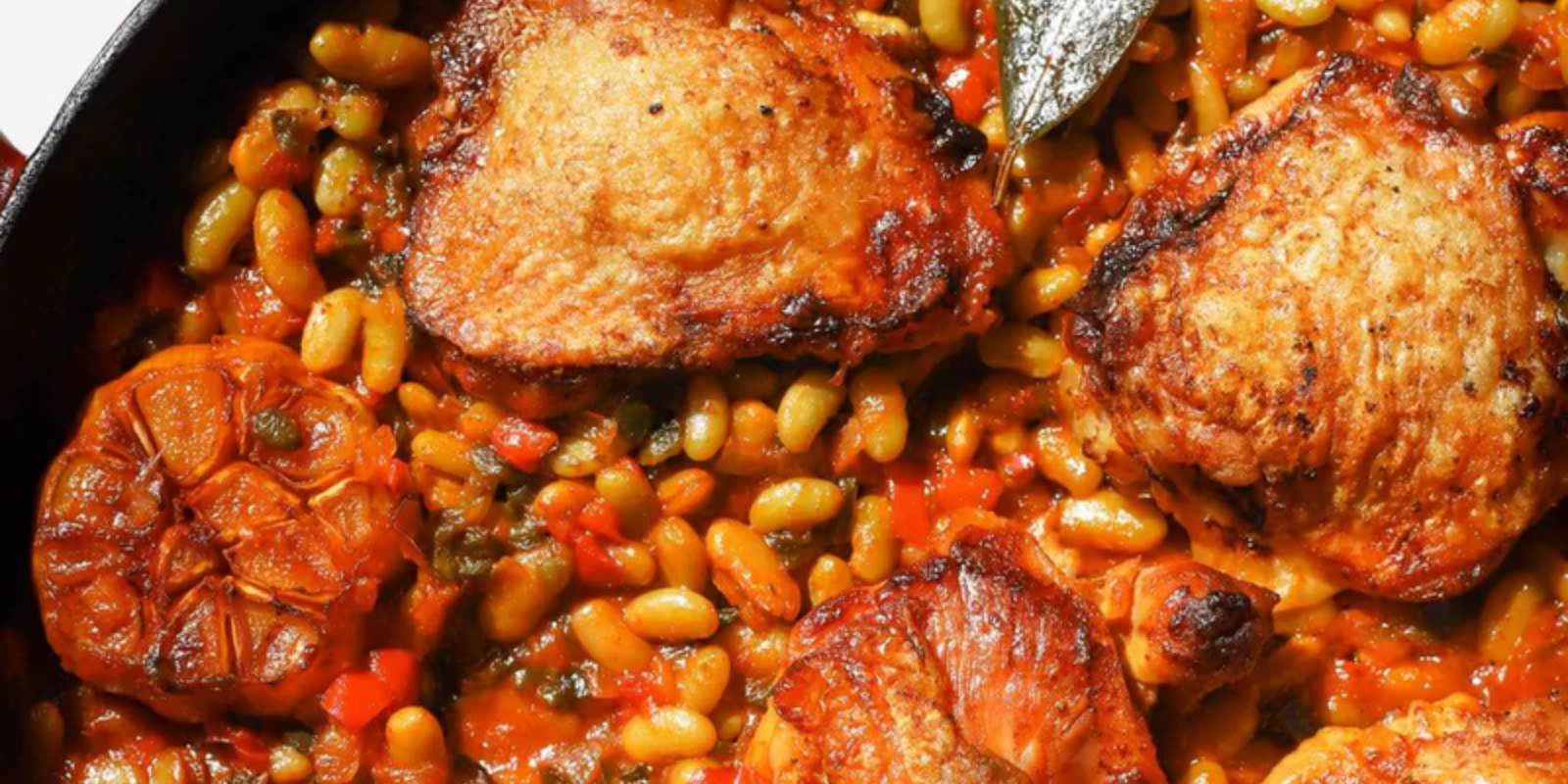
This is described as a "one-pan dinner," which is accurate and valuable. You brown the chicken, build the sauce, braise everything together, and serve directly from the pan. The presentation is rustic and beautiful, chicken thighs nestled in beans and peppers, the roasted garlic head, everything glossy and aromatic.
Minimal cleanup for maximum flavor makes this perfect for dinner parties or weeknight cooking when you don't want to wash multiple pots.
French Regional Cooking
This recipe exemplifies French regional cooking, dishes that are specific to a place, using local ingredients and traditional techniques. The Basque-Pyrenees region has distinctive cuisine that's recognizable from key ingredients like Piment d'Espelette and Flageolet beans.
Learning to cook regionally specific dishes connects you to place and tradition in a way that generic "French cooking" doesn't.
The Food Memories Series
This recipe is part of the Food Memories series, which makes sense given Asha's thoughtful approach and the way she connects this dish to a specific region and its culinary traditions.
Serving Suggestions
Serve directly from the pan after letting it cool for 5 minutes. The rustic presentation is part of the appeal, bring the whole pan to the table.
The roasted garlic can be squeezed from its papery skin and spread on crusty bread, or mashed into the beans for additional flavor.
Serve with crusty French bread for soaking up the sauce, and perhaps a simple green salad or roasted vegetables.
A Sophisticated Dinner
This is the kind of dish that feels sophisticated enough for guests but is actually straightforward to make. The technique is mostly hands-off braising, yet the result is restaurant-quality, tender chicken, creamy beans, rich sauce, complex flavors.
Make it when you want to impress without stressing.
*A Note On Our Recipes:
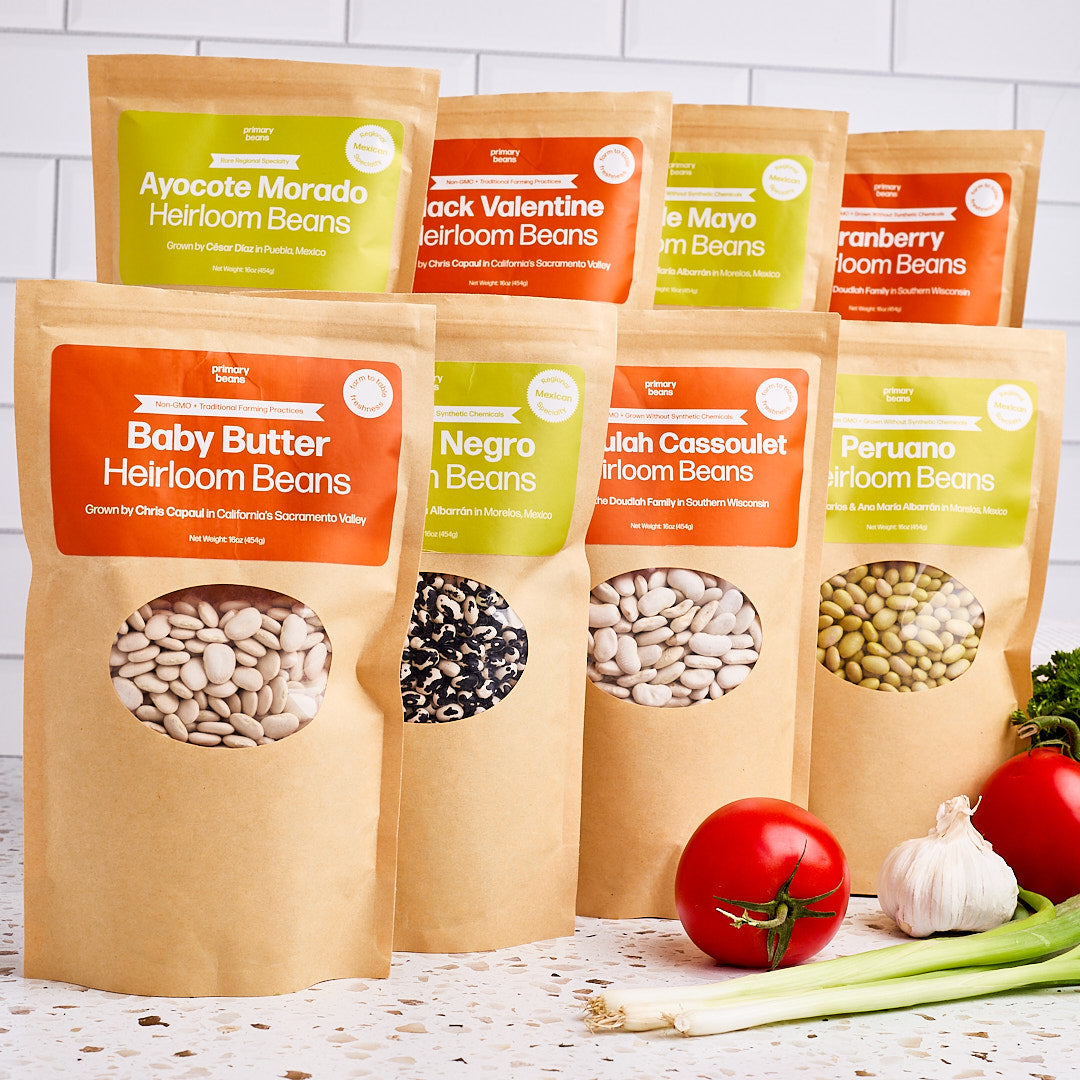
Every recipe here was developed and tested using farm-fresh beans from Foodocracy and Primary Beans. Older beans, anything past a year in your pantry or beans from other sources may need more coaxing. Give them a soak and add extra cooking time, and they'll get there eventually.

Related Recipes



The Heirloom Bean + Grain club
Learn More
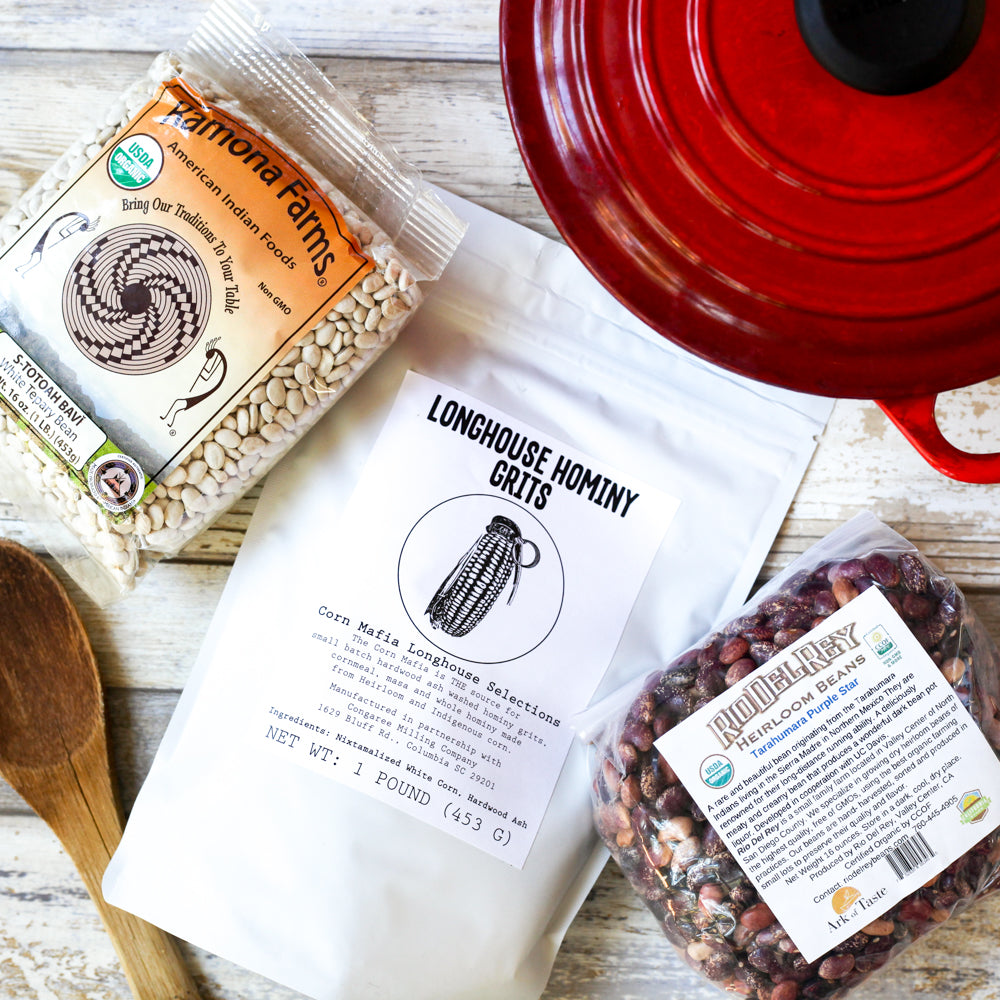
Get impossible to find beans and grains shipped direct to your doorstep each month from small family farms.


Support small family farms
Shop Now
We support small, family owned farms across the nation. Did you know that farmers only make an average of 10 cents on every dollar you spend at the supermarket? Working directly with farms and not middle men ensures that more money goes back to the people actually growning your food.
Chicken Basquaise With Flageolet
French
Main Course
Creator notes Inspired by Chicken Basquaise, a chicken and pepper stew from the Basque-Pyrenees in southwest France, this one-pan dinner gets the very French addition of Flageolet beans, beloved in this region. The key ingredient that puts the "Basque" in "basquaise" is piment d'espelette, one of the most cherished pantry staples in kitchens across the Basque-Pyrenees. While Primary Beans can be cooked straight from dried, when braising dried beans, I like to give them an overnight or quick soak. This gives them a head start and primes them to soak up lots of the braising liquid. –Asha Loupy (@fromheadtotable)
Featured bean: Flageolet
Other beans to try: Cassoulet, Cannellini, Speckled Bayo

Ingredients
- ½ lb Primary Beans Flageolet beans
- 2 lbs bone-in, skin-on chicken thighs (about 5-6)
- 2½ tsp Diamond Crystal or 1¾ tsp Morton's kosher salt
- ¼ cup extra virgin olive oil
- 1 white or yellow onion, finely diced
- 1 large red bell pepper, finely diced
- 2 poblano or 1 large green bell pepper, finely diced
- ¼ cup tomato paste
- 1½ cups dry white wine
- 1½ cups chicken stock
- 1½ tsp Piment d'Espelette or espelette powder
- 2 bay leaves (optional)
- 1 head garlic, top ¼ sliced off
Directions
Place beans in a large bowl, pick through for stones or other debris, and cover with cold water. Soak overnight. Alternatively, use the quick soak method: After picking through the beans, add them to a large pot and cover with a few inches of water. Bring to a boil, boil for 1 minute, turn off the heat, cover, and allow to sit for 1½-2 hours.
Preheat the oven to 350°F. Season chicken thighs on both sides with 1½ tsp Diamond Crystal or ¾ tsp Morton's kosher salt. Add chicken thighs skin side-down in a large, ovenproof, high-rimmed skillet or Dutch oven and place over medium heat. Cook, undisturbed, until the skin is light golden and some of the fat has rendered, 10-15 minutes. Flip and cook until just starting to brown on the other side, 4 to 6 minutes. Transfer the browned chicken to a plate and set aside.
Add olive oil, onion, red bell pepper, poblano pepper, and remaining salt, increase the heat to medium high, and sauté until the vegetables start to soften, 5 minutes. Add tomato paste and continue to cook, stirring occasionally, until tomato paste turns a couple shades darker and starts to separate from the oil, 3 to 5 minutes.
Stir in the white wine, chicken stock, Piment d'Espelette or espelette powder, and bay leaves, if using. Taste, and adjust salt, if necessary. Drain beans well and stir into the tomato-pepper mixture. Nestle the head of garlic cut side down in the pan, bring the liquid to a gentle boil. Transfer the pan to the oven and bake, uncovered, for 30 minutes.
Carefully nestle the brown chicken thighs, skin side-up, making sure the skin is above the liquid, and flip the head of garlic so it is cut side-up. Return the pan to the oven, and bake until the beans are cooked through and the chicken is falling off the bone, 1:45 hours to 2:15 hours. The beans should be saucy, but not too brothy. (Check a couple times while baking, if the beans are looking too dry, add ¼ cup of water.) Let cool for 5 minutes and serve directly out of the pan.