



Mole Bean Chili With Mushrooms
In celebration of our Primary Beans x Guelaguetza Mole and Beans kit, we created this cozy recipe for Mole Bean Chili with Mushrooms. It's easy enough for weeknight dinners, but complex enough to be worthy of your next dinner party gathering.
"Oaxaca's best-known chocolate-y Mole Negro forms the backbone of this dish, enveloping creamy and meaty Ayocote Morado beans. It's enriched by the earthy tones of mixed mushrooms, warm spices, and garlic." – Creator and Guelaguetza Co-owner, Bricia Lopez (@bricialopez)
Why This Recipe Works

What makes this mole bean chili so successful is how it balances complexity with accessibility. Mole Negro, one of Oaxaca's seven famous moles, is traditionally an all-day project requiring dozens of ingredients. But by using Guelaguetza's prepared Mole Negro paste, you get authentic, complex Oaxacan flavor in a fraction of the time.
The combination of chocolate-y mole, meaty Ayocote Morado beans, and earthy mushrooms creates layers of flavor and texture that feel sophisticated and special. Yet the technique is straightforward enough for a weeknight, making this the kind of recipe that impresses without intimidating.
The Star: Ayocote Morado Beans

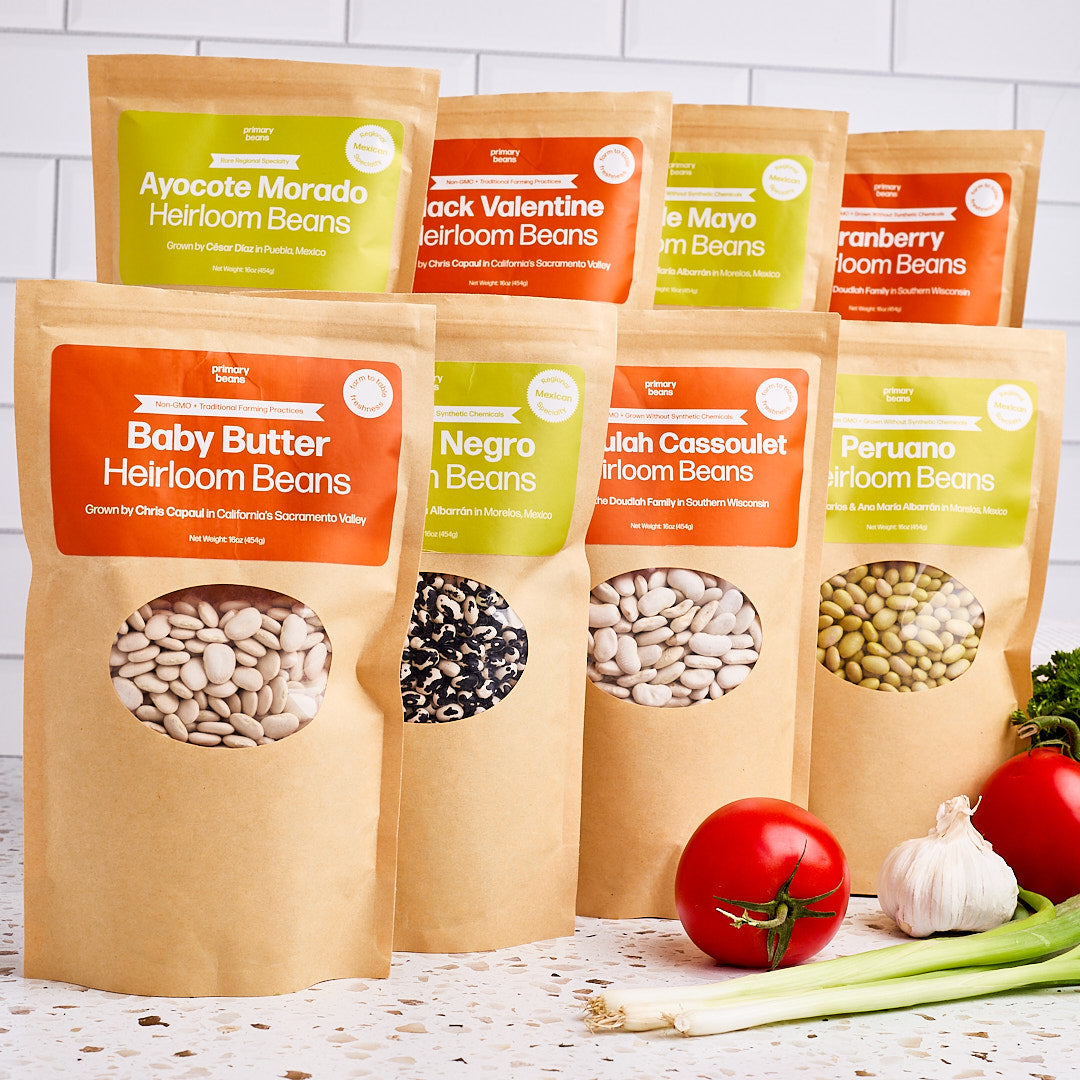
Let's talk about Ayocote Morado beans, stunning purple-black beans that are among the largest bean varieties. These heritage Mexican beans have a meaty texture and rich, earthy flavor that makes them perfect for hearty preparations like mole chili.
What makes Ayocote Morado beans ideal for this dish is their size and substance. As Bricia notes, they're "creamy and meaty", substantial enough to stand up to the bold mole sauce while becoming wonderfully creamy inside. Their large size makes each bean a satisfying bite, and their earthy flavor complements the complex mole spices beautifully.
When cooked properly and simmered in mole sauce, these beans absorb all those wonderful flavors, chocolate, chiles, spices, garlic, while maintaining their shape and providing that satisfying, meaty texture.
The Guelaguetza Partnership
This recipe was created for the Primary Beans x Guelaguetza collaboration, celebrating the connection between heritage beans and traditional Oaxacan cuisine. Guelaguetza, founded by the Lopez family, is one of the most respected Oaxacan restaurants in the United States, preserving and sharing authentic recipes and techniques.
Bricia Lopez, co-owner and the creative force behind much of Guelaguetza's work, developed this recipe to showcase how their Mole Negro paste can transform beans into something extraordinary. It's a perfect example of how quality prepared ingredients (the mole paste) combined with quality raw ingredients (the beans) can create restaurant-quality results at home.
About Mole Negro
Mole Negro is one of Oaxaca's seven famous moles and arguably the most complex. It's characterized by its deep, dark color (almost black), rich chocolate notes, and complex flavor profile from dozens of ingredients including multiple types of chiles, spices, nuts, seeds, chocolate, and often fruit.
Traditionally, making Mole Negro from scratch takes hours, toasting and grinding chiles, spices, and seeds, frying ingredients in specific sequences, simmering everything together. Guelaguetza's prepared paste captures these authentic flavors in a form that home cooks can use easily, making genuine Oaxacan mole accessible.
The paste gets dissolved in apple cider vinegar and vegetable broth, creating a smooth, flavorful base for the chili.
The Building Blocks
The recipe builds flavor in layers:
- Aromatic base: Sautéed onions, garlic, cumin, salt
- Mole backbone: Dissolved Mole Negro paste
- Protein and substance: Ayocote Morado beans
- Body: Vegetable or bean broth
- Richness: Mushrooms sautéed with butter, shallot, garlic, coriander
- Thickening: Partial pureeing with cornstarch slurry
Each element contributes something essential to the final dish.
The Mushrooms
The mushrooms deserve special attention. Mixed mushrooms (cremini, shiitake, oyster) get torn into bite-size pieces and cooked separately in their own skillet until they brown and crisp around the edges, about 7-10 minutes.
This separate cooking is important. If you added raw mushrooms directly to the stew, they'd release water and become soft and slippery. By cooking them separately until browned and crispy, you develop deep, caramelized flavors and meaty texture.
Butter, chopped shallot, garlic, and ground coriander get added at the end, creating an aromatic mushroom mixture that gets spooned over the finished chili. The mushrooms add earthiness, texture, and visual appeal.
The Thickening Technique
After the stew simmers for 15 minutes, you transfer 2 cups to a blender along with a cornstarch slurry (cornstarch mixed with cold water). Blend until smooth, then return to the pot.
This partial pureeing does two things: it thickens the chili naturally by breaking down some of the beans, and the cornstarch provides additional thickening power. The result is a chili that's thick and hearty but not pasty, with both whole beans and creamy puree throughout.
Assembly and Serving
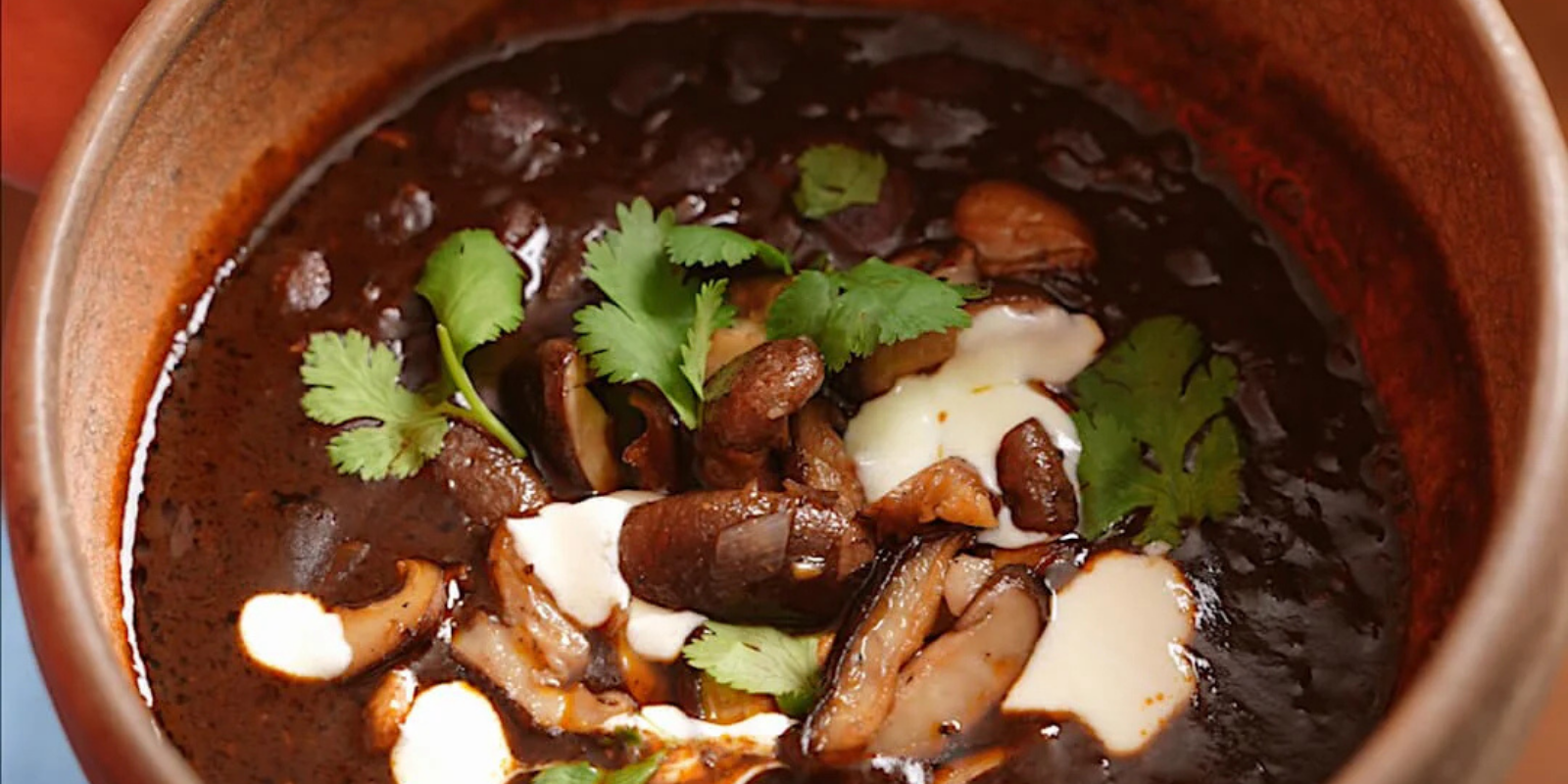
The finished chili gets ladled into bowls, topped with the sautéed mushrooms, and finished with a drizzle of crema (Mexican sour cream). The crema adds cooling richness that balances the complex, spicy mole flavors.
Traditional accompaniments might include:
- Warm corn tortillas
- Rice
- Pickled onions
- Fresh cilantro
- Lime wedges
- Queso fresco
But honestly, the chili is so rich and satisfying that it needs little else beyond the mushrooms and crema.
Weeknight to Dinner Party
What makes this recipe so valuable is its versatility. On a weeknight when you want something comforting and satisfying, you can make this in under an hour (assuming you have cooked beans). The technique is straightforward, sauté aromatics, simmer everything together, cook mushrooms, blend and thicken, serve.
But the complex flavors from the Mole Negro, the meaty Ayocote Morado beans, and the earthy mushrooms make it feel special enough for a dinner party. Guests will be impressed by the depth of flavor and won't know that the mole came from a paste rather than hours of work.
The Oaxacan Connection
This dish is distinctly Oaxacan, using Mole Negro (one of Oaxaca's signature preparations) and Ayocote Morado beans (a traditional Mexican variety). It's a celebration of Oaxacan foodways and how beans are central to the region's cuisine.
By making this recipe, you're participating in that tradition and experiencing authentic Oaxacan flavors, even if you've never been to Oaxaca yourself.
Make-Ahead Friendly
Like most mole dishes and bean stews, this is even better the next day. The flavors continue to develop and deepen as it sits. Make it ahead, refrigerate, and gently reheat when ready to serve. You might need to add a splash of broth when reheating as it will thicken.
The mushrooms are best cooked fresh, so if making ahead, prepare the chili base and cook the mushrooms just before serving.
A Gateway to Oaxacan Cooking
For people unfamiliar with Oaxacan cuisine, this recipe is an excellent introduction. The Guelaguetza Mole Negro paste removes the intimidation factor while delivering authentic flavors. The technique is accessible, and the result is genuinely delicious and representative of Oaxacan food traditions.
It's the kind of recipe that might inspire you to explore more Oaxacan cooking, to seek out other mole varieties, to experiment with different Mexican bean varieties, to dive deeper into one of the world's great culinary traditions.
*A Note On Our Recipes:
Every recipe here was developed and tested using farm-fresh beans from Foodocracy and Primary Beans. Older beans, anything past a year in your pantry or beans from other sources may need more coaxing. Give them a soak and add extra cooking time, and they'll get there eventually.

Related Recipes



The Heirloom Bean + Grain club
Learn More
Get impossible to find beans and grains shipped direct to your doorstep each month from small family farms.


Support small family farms
Shop Now
We support small, family owned farms across the nation. Did you know that farmers only make an average of 10 cents on every dollar you spend at the supermarket? Working directly with farms and not middle men ensures that more money goes back to the people actually growning your food.
Mole Bean Chili With Mushrooms
Oaxacan
Main Course
In celebration of our Primary Beans x Guelaguetza Mole and Beans kit, we created this cozy recipe for Mole Bean Chili with Mushrooms. It's easy enough for weeknight dinners, but complex enough to be worthy of your next dinner party gathering.
"Oaxaca's best-known chocolate-y Mole Negro forms the backbone of this dish, enveloping creamy and meaty Ayocote Morado beans. It's enriched by the earthy tones of mixed mushrooms, warm spices, and garlic." – Creator and Guelaguetza Co-owner, Bricia Lopez (@bricialopez)
Featured bean: Ayocote Morado
Other beans to try: Flor de Mayo, Chaparro

Ingredients
- ½ cup Guelaguetza Mole Negro starter
- 2½ tsp apple cider vinegar
- 4 tbsp grapeseed or avocado oil, divided
- 1 large yellow onion, diced small
- 4 garlic cloves, minced + 2 large garlic cloves, finely chopped
- 1 tsp ground cumin
- Kosher salt and ground pepper to taste
- 3 cups Ayocote Morado beans (cooked according to the Primary Beans cooking guide)
- 3 cups vegetable broth, bean broth, or chicken stock, divided
- 1 tsp cornstarch
- 1 lb mixed mushrooms, such as cremini, shiitake or oyster, torn into bite-size pieces
- 1 tbsp butter
- 1 shallot, finely chopped
- 1½ tsp ground coriander
- Crema, for serving
Directions
Prepare the mole: In a medium bowl, stir in Guelaguetza Mole Negro paste, apple cider vinegar and about 3 tbsp of the stock. Stir with a spatula until mole paste has fully dissolved. Reserve.
Build the base: In a medium pot, heat 2 tbsp oil over medium heat. When oil is hot, add onions and cook, stirring until soft, about 5 minutes. Stir in 4 minced garlic cloves, cumin, and ½ tsp salt, cook until fragrant, about 1-2 minutes.
Simmer the chili: Stir in Guelaguetza Mole Negro mixture, cooked Ayocote Morado beans, remaining stock, and season with salt and pepper. Raise the heat to medium-high heat and bring to a boil, then lower to medium-low to simmer, stirring occasionally for about 15 minutes.
Cook the mushrooms: While the stew cooks, prepare the mushrooms: In a large (12-inch) ovenproof skillet, heat 2 tbsp oil over medium heat. Add mushrooms, and season with salt and pepper. Cook, stirring occasionally until they begin to brown and crisp around the edges, 7-10 minutes. Add butter, shallot, garlic, and coriander, and stir until shallot has softened slightly and garlic is fragrant, about 1 minute. Season with salt.
Thicken: In a separate bowl, combine the cornstarch and about 1 tablespoon of cold water, stir to combine. Reserve. After the stew has cooked for about 15 minutes, transfer 2 cups to a blender and add the cornstarch mixture. Purée until smooth and return to pot. Cook, stirring, until stew thickens, about 2 minutes.
Serve: Serve in bowls with mushrooms and crema.