



Chinese Xian Bing (Pan-Fried Buns) With Beans
Creator notes
So much of my cooking is inspired by my favorite childhood flavors, and xian bing is one of the most nostalgic. As a child, I'd wake up on weekends to the incredible aroma of my mom preparing a batch of these pan-fried, pork-filled buns for brunch. The smell of sesame oil and sizzling pork filling our kitchen would draw me out of bed and lead me right to the pan to eat them while they were still hot and juicy.
My version includes mild, buttery Peruano beans, giving the filling a creamy, almost indulgent textural addition. Wrapped in a skin that's crispy, chewy, and fluffy all at once, these xian bing are my perfect snack or light meal. Serve them with a side of chili oil or Chinese black vinegar for just the right amount of kick. – Angie (@spoonful.tian)
What Are Xian Bing?

Xian bing are Chinese pan-fried buns with savory fillings, popular throughout northern China. Unlike steamed buns (baozi), xian bing are cooked in a skillet, creating a texture that's "crispy, chewy, and fluffy all at once", crispy golden bottom, chewy sides, and fluffy top from the steam-frying technique.
They're street food, breakfast food, snack food, the kind of humble, delicious comfort food that people grow up eating and crave for the rest of their lives. As Angie beautifully describes, the aroma of her mom making these on weekend mornings would "draw me out of bed and lead me right to the pan to eat them while they were still hot and juicy."
The Nostalgic Connection
What makes Angie's description so touching is how food connects to memory and family. The smell of sesame oil and sizzling pork, weekend mornings, her mom's cooking, these sensory memories are what make certain foods special beyond just taste.
Her version honors that tradition while adding her own touch: Peruano beans in the filling, creating "a creamy, almost indulgent textural addition" that makes the buns even more satisfying.
The Star: Peruano Beans

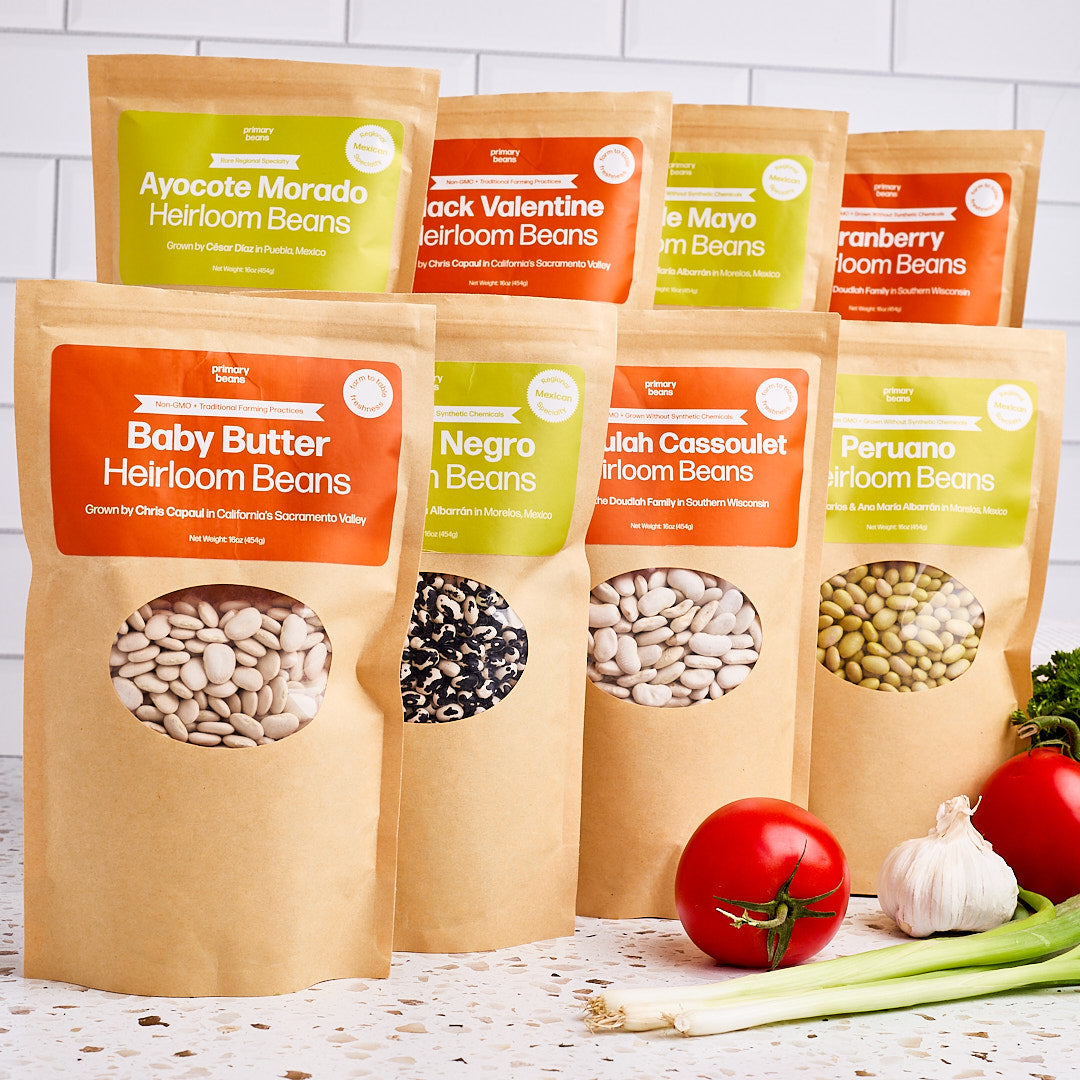
Let's talk about Peruano beans (also called Mayocoba) and why they're perfect for this application. These beautiful yellow beans have a buttery texture and mild, creamy flavor that makes them incredibly versatile.
What makes Peruano beans ideal for xian bing filling is their mild flavor that doesn't compete with the pork and seasonings, their creamy texture that adds richness without being heavy, and their ability to blend seamlessly into the filling while maintaining some texture.
When mixed with ground pork and Chinese seasonings, these beans create a filling that's richer and more satisfying than pork alone, with a creaminess that Angie describes as "almost indulgent."
The Filling
The filling combines traditional Chinese flavors with the bean addition. Mix ground pork with light soy sauce (salty, delicate), dark soy sauce (thicker, richer, slightly sweet), oyster sauce (umami, savory), five-spice powder (warm aromatics), chopped scallions (fresh, sharp), ground ginger (spicy, aromatic), and the cooked Peruano beans.
Mix until well combined. Add 1-2 tablespoons of water if necessary to create a paste-like consistency. The filling should be cohesive and moist but not watery.
The beans add substance and creaminess while allowing you to use less pork without sacrificing satisfaction. They also help bind the filling and keep it moist during cooking.
About the Soy Sauces
The recipe includes a helpful note: "The soy sauce commonly found in most grocery stores is light soy sauce, which has a saltier, more delicate flavor. Dark soy sauce is thicker and has a richer flavor, often enhanced with a bit of sugar or molasses for sweetness."
Using both creates depth, the light provides saltiness and savory flavor, while the dark adds color, richness, and subtle sweetness. Dark soy sauce is what gives Chinese braised dishes their characteristic deep brown color.
You can find dark soy sauce at Asian grocery stores or online. If you can't find it, you can use all light soy sauce, though you'll lose some color and complexity.
The Overnight Dough
The dough requires overnight proofing in the refrigerator, so plan ahead. Combine bread flour, instant yeast, and sugar in a bowl. Add warm water, sesame oil, and salt. Mix until all liquid is absorbed and the dough is sticky.
Cover and proof overnight in the fridge. This slow, cold fermentation develops flavor and creates a dough that's easier to work with and has better texture. The long rise also fits well with the weekend brunch timeline Angie describes, make the dough Friday night, assemble and cook Saturday morning.
The Assembly
Oil your hands to prevent sticking, this dough is intentionally sticky. Portion the dough into small balls, about 3-4 tablespoons each.
Take one ball and flatten it into a disk. Add 1-2 tablespoons of filling to the center. Wrap the dough around the filling to enclose it, stretching and pressing as you work until fully sealed.
This wrapping technique takes practice, the first few might not be perfectly sealed, but you'll get better quickly. The goal is a smooth, sealed bun with no filling leaking out.
Repeat with the remaining filling and dough, making 8-10 buns total.
The Pan-Frying Technique
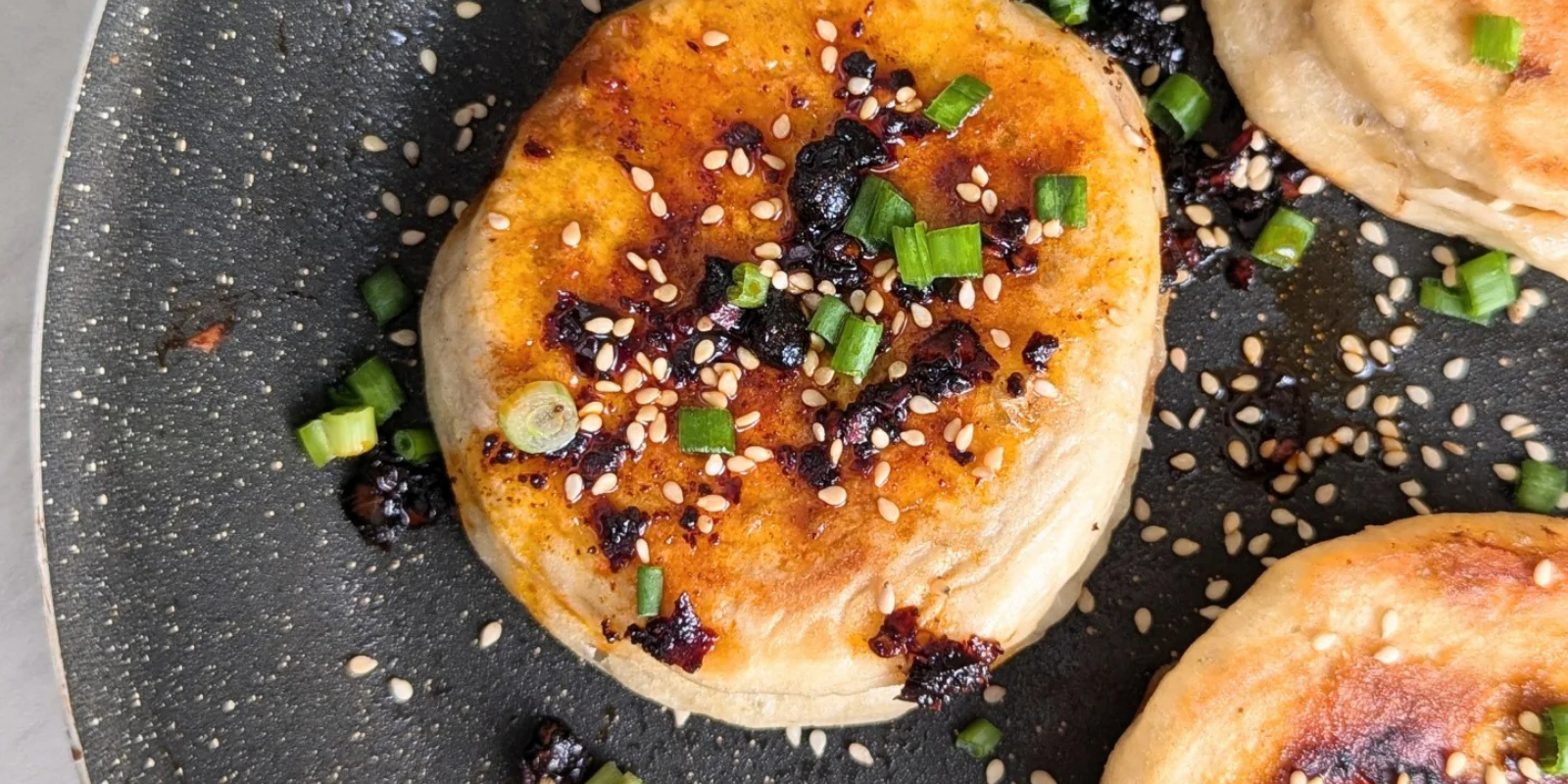
The cooking method is what creates the distinctive texture. Heat a nonstick skillet with a lid and add oil over medium heat until hot. Place the buns in the pan, pressing slightly to flatten them (this creates more surface area for crisping).
Pan-fry until the bottoms are golden, this creates the crispy base that's one of xian bing's best qualities.
Flip the buns, then immediately pour in water to just cover the bottom of the pan. Cover with the lid and cook over medium-low heat until the water has evaporated.
This steam-frying technique is key. The water creates steam that cooks the tops of the buns (making them fluffy), while the bottom continues crisping. As the water evaporates, the heat increases again and crisps the second side.
The Crispy-Chewy-Fluffy Texture
The three-texture experience Angie describes, "crispy, chewy, and fluffy all at once", comes from this cooking method:
- Crispy: From pan-frying in oil
- Chewy: From the bread flour dough
- Fluffy: From the yeast rising and steam cooking
It's a textural experience that's uniquely satisfying and distinctly Chinese.
Serving
Serve warm, ideally eaten right from the pan when they're "still hot and juicy" as Angie describes from her childhood. The filling should be hot, the exterior crispy, the interior steaming.
Accompany with chili oil and/or Chinese black vinegar for dipping. The chili oil adds heat and aromatic spice, while the black vinegar (Chinkiang vinegar) provides sharp acidity that cuts through the rich filling.
Garnish with chopped scallions and toasted sesame seeds for additional flavor and visual appeal.
The Perfect Snack or Light Meal
As Angie notes, these are "my perfect snack or light meal." They're substantial enough to be satisfying but not so heavy that you can't eat several. They work for:
- Weekend brunch (as in Angie's childhood)
- Afternoon snacks
- Light dinners
- Party appetizers
- Late-night cravings
Make-Ahead Strategy
You can assemble the buns ahead and refrigerate them, then pan-fry when ready to eat. You can also freeze assembled buns and cook from frozen (they'll need a bit more time).
The filling can be made a day ahead and refrigerated, making assembly quicker.
The Childhood Food Connection
What makes this recipe special is how it connects to Angie's childhood and family while adding her own innovation with the beans. She's not just recreating her mom's recipe exactly, she's honoring it while making it her own.
This is how food traditions continue and evolve, each generation respects what came before while adding their own touches, creating new memories for the next generation.
A Recipe Worth the Effort
While these require overnight proofing and some assembly work, the result is genuinely special. The texture combination is unique, the filling is flavorful and satisfying, and the nostalgic quality makes them more than just food they're a connection to childhood, family, and cultural tradition.
Make them on a weekend when you have time to enjoy the process. Wake up to the smell of sesame oil and pork filling your kitchen, just as Angie did as a child, and understand why these humble buns inspire such devotion.
*A Note On Our Recipes:
Every recipe here was developed and tested using farm-fresh beans from Foodocracy and Primary Beans. Older beans, anything past a year in your pantry or beans from other sources may need more coaxing. Give them a soak and add extra cooking time, and they'll get there eventually.

Related Recipes



The Heirloom Bean + Grain club
Learn More
Get impossible to find beans and grains shipped direct to your doorstep each month from small family farms.


Support small family farms
Shop Now
We support small, family owned farms across the nation. Did you know that farmers only make an average of 10 cents on every dollar you spend at the supermarket? Working directly with farms and not middle men ensures that more money goes back to the people actually growning your food.
Chinese Xian Bing (Pan-Fried Buns) With Beans
Chinese
Main Course
Creator notes My version includes mild, buttery Peruano beans, giving the filling a creamy, almost indulgent textural addition. Wrapped in a skin that's crispy, chewy, and fluffy all at once, these xian bing are my perfect snack or light meal. Serve them with a side of chili oil or Chinese black vinegar for just the right amount of kick. – Angie (@spoonful.tian)
Featured bean: Peruano

Ingredients
Filling
- ½ lb ground pork
- 3 tbsp light soy sauce (see note)
- 2 tsp dark soy sauce (see note)
- 2 tbsp oyster sauce
- 1 tsp five-spice powder
- 2-3 chopped scallions
- 1 tsp ground ginger
- 1½ cups cooked Peruano beans
Dough
- 2½ cups bread flour
- 1 tsp instant yeast
- ½ tbsp sugar
- 1 cup warm water
- ½ tbsp sesame oil
- 1 tsp salt
For serving
- Chili oil, Chinese black vinegar, chopped scallions, toasted sesame seeds
Directions
Make the filling: Mix all filling ingredients together until well combined. Add 1-2 tbsp water if necessary so the mixture becomes a paste.
Prepare the dough: Combine flour, yeast, and sugar in a medium bowl. Add warm water, sesame oil, and salt. Mix until all liquid is absorbed and the dough is sticky. Cover and proof overnight in the fridge.
Assemble: Oil your hands to prevent them from sticking to the dough. Portion out the dough into small balls about 3-4 tbsp each. Take one ball and flatten it into a disk before adding 1-2 tbsp of the filling. Wrap to enclose; as you press stretch the dough and keep pressing until fully sealed. Repeat with remaining filling and dough.
Pan-fry: Heat a nonstick skillet (with lid) with oil over medium heat until hot. Place the buns in the pan, pressing slightly to flatten, and pan-fry until the bottoms are golden. Flip buns and pour in water to just cover the bottom of the pan. Cover and cook over medium-low heat until water has evaporated.
Serve: Enjoy warm with a side of chili oil and/or Chinese black vinegar.