



Alexis DeBoschnek's Spicy Brothy Bacony Beans
It took me years to figure out how to make a good pot of beans. Time is the secret ingredient. If your beans aren't tender enough, just keep cooking them. If the liquid evaporates, add a splash of water or stock until the beans are covered and just keep cooking them some more. Taste a few; when they're soft and taste almost creamy, they're ready. Serve the beans with some crusty bread, pile them on a taco, spooned over rice, or eat them straight from the pot like I do.
The real joy of dried beans is much the same as homemade stock: you can make them to suit your tastes. I call for bacon here, but if you don't have it (or want a vegetarian option), leave it out. Fennel stalks, dried chilies, and herbs like thyme and parsley are great flavor boosters.
When it comes to the beans themselves, I'm partial to cranberry beans, but this recipe works with nearly any type, pinto, great northern beans, black beans, even chickpeas. I like to soak my beans overnight, which speeds up the cooking time the next day, but you don't have to; just know that they'll take a bit longer once on the stove. – Alexis deBoschnek
Why This Recipe Works

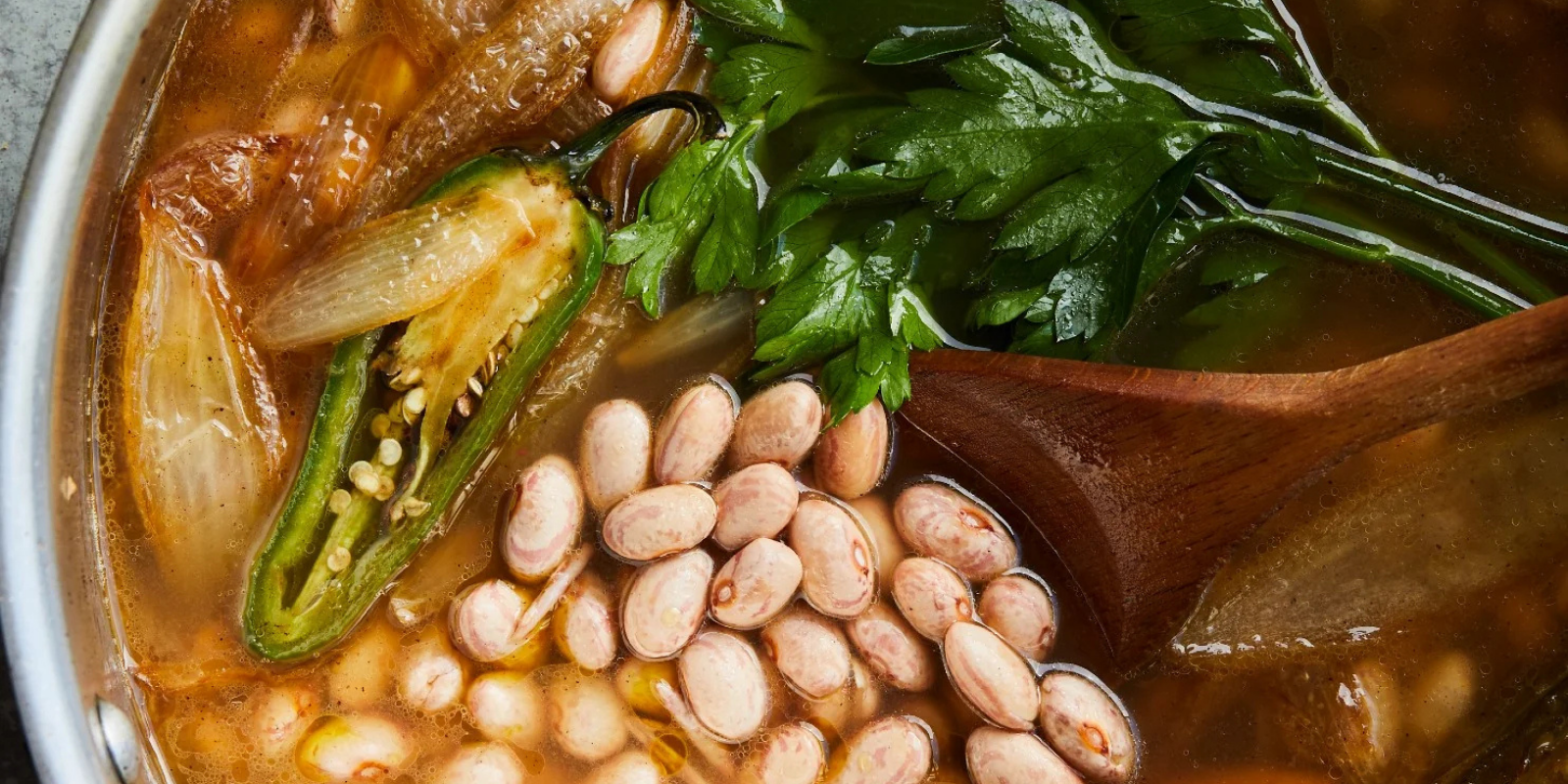
What makes a great pot of beans isn't complicated technique or exotic ingredients, it's time and patience. This recipe embraces that truth. You slowly render bacon to create a flavorful fat base. You caramelize onions in that fat, building sweetness and depth. You cook garlic and jalapeño until fragrant. Then you add the beans with chicken stock, a Parmesan rind for umami, and fresh parsley, and you simply let time do its work.
The result, after about 2 hours and 45 minutes of gentle simmering, is beans that are tender and creamy, suspended in a rich, flavorful broth that's smoky from the bacon, spicy from the jalapeño, savory from the Parmesan rind, and absolutely delicious. It's comfort food at its finest, the kind of pot you want to keep on the stove to eat from throughout the week.
The Star: Cranberry Beans

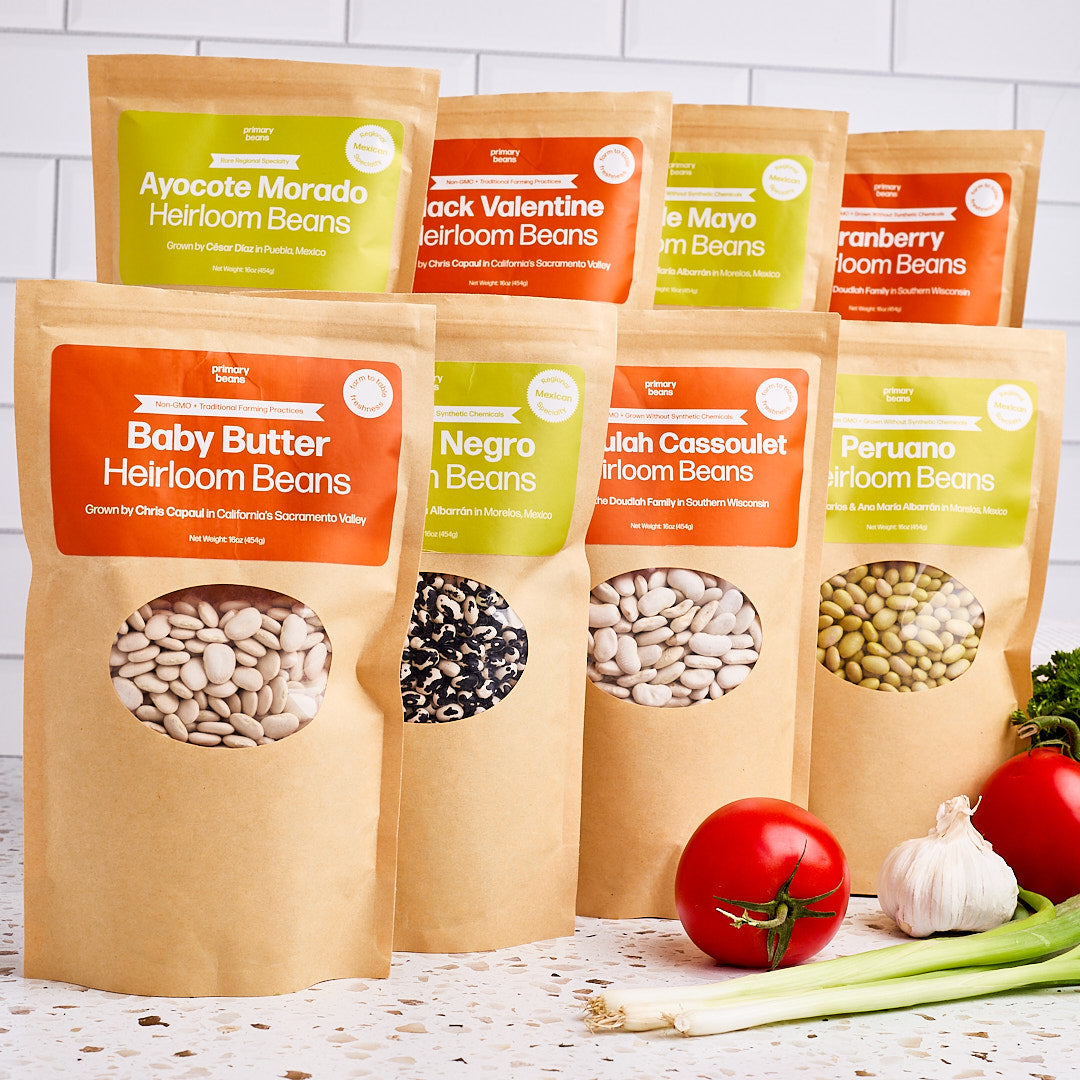
Let's talk about Cranberry beans, which Alexis is partial to and for good reason. These are Doudlah Farms' heirloom beauties, thin-skinned beans that cook down to a velvety texture with a slightly buttery, earthy flavor. What sets these particular beans apart is their remarkable versatility and nuanced flavor profile that complements rather than overpowers other ingredients.
What makes Cranberry beans perfect for this brothy preparation is their ability to become wonderfully creamy while still holding their shape. As they simmer slowly in the rich chicken stock with bacon, Parmesan rind, and aromatics, they absorb all those wonderful flavors while developing that almost creamy texture Alexis describes. Each bean becomes tender and flavorful, suspended in that delicious broth.
Our Cranberry beans come from Mark Doudlah at Doudlah Farms in Wisconsin. Mark is a 6th generation farmer who transformed his family's conventional farm into a certified regenerative organic operation. After his father was diagnosed with Mantle Cell Lymphoma, known as The Midwest Farmers' Cancer, due to long-term exposure to farm chemicals, Mark knew he had to change how they farmed. Today, Doudlah Farms goes beyond organic with Regenerative Organic Certification and continuous testing to ensure the cleanest, most nutrient-dense beans possible. Learn more about Mark and Doudlah Farms.
The Flavor Builders
This recipe is all about layering flavors. It starts with bacon, which renders its fat and gets crispy before being set aside to stir back in at the end. That bacon fat becomes the foundation for everything else, you cook the onions in it until they're browned and sweet, then add garlic and jalapeño until fragrant.
The Parmesan rind is a secret weapon. As the beans simmer, the rind softens and releases umami-rich flavor into the broth, adding depth and a subtle cheesy quality. It's the kind of ingredient that makes people wonder what that special something is.
Fresh parsley and olive oil go in with the beans and stock, adding herbaceous notes and richness. The jalapeño provides gentle heat, you can adjust by using more or less, or removing the seeds for milder beans.
The Patience Factor
As Alexis emphasizes, time is the secret ingredient. The beans simmer for about 2 hours before you even add salt (adding it too early can toughen the skins). Then they continue cooking for another 45 minutes or so until they're truly tender and creamy.
Don't rush this. If your beans aren't tender enough, keep cooking. If the liquid evaporates, add more water or stock and keep going. Taste a few beans, when they're soft and taste almost creamy, they're ready. This patience is what separates good beans from great beans.
The Versatility
What makes this recipe so valuable is how adaptable it is. Want it vegetarian? Skip the bacon and use vegetable stock instead of chicken stock. Add extra olive oil for richness and maybe some smoked paprika for that smoky quality.
Want different flavors? Try fennel stalks, dried chiles, thyme, or other herbs. Use different beans, Bayo, Ojo de Cabra, Southwest Red, or Speckled Bayo would all be excellent. The basic method works with almost any bean.
Soaking vs. Not Soaking
Alexis soaks her beans overnight, which speeds up cooking time the next day. If you do this, you'll likely need the full cooking time stated in the recipe, about 2 hours and 45 minutes total.
If you skip soaking, the beans will take longer to cook, possibly an extra hour or more. That's fine; just keep checking them and adding liquid as needed until they're tender.
Serving Suggestions
The beauty of these beans is their versatility. Serve them:
- With crusty bread for soaking up that delicious broth
- Piled on tacos with your favorite toppings
- Spooned over rice for a complete meal
- Straight from the pot with a spoon (Alexis's preferred method)
- As a side dish for grilled meats
- Over toast with a fried egg on top for breakfast
They're also excellent for meal prep. They keep in the fridge for up to a week and freeze beautifully for up to 3 months. Make a big batch and you'll have the foundation for quick, satisfying meals all week.
The Joy of Homemade Beans
As Alexis notes, the real joy of dried beans is the same as homemade stock: you can make them to suit your tastes. You control the seasoning, the richness, the spice level, everything. And when you put in the time to make a really good pot of beans, you end up with something far superior to anything from a can.
These beans are proof that simple ingredients, treated with patience and care, can be extraordinary. No fancy techniques, no exotic ingredients, just good beans, flavorful aromatics, time, and attention.
*A Note On Our Recipes:
Every recipe here was developed and tested using farm-fresh beans from Foodocracy and Primary Beans. Older beans, anything past a year in your pantry or beans from other sources may need more coaxing. Give them a soak and add extra cooking time, and they'll get there eventually.
Related Recipes



The Heirloom Bean + Grain club
Learn More
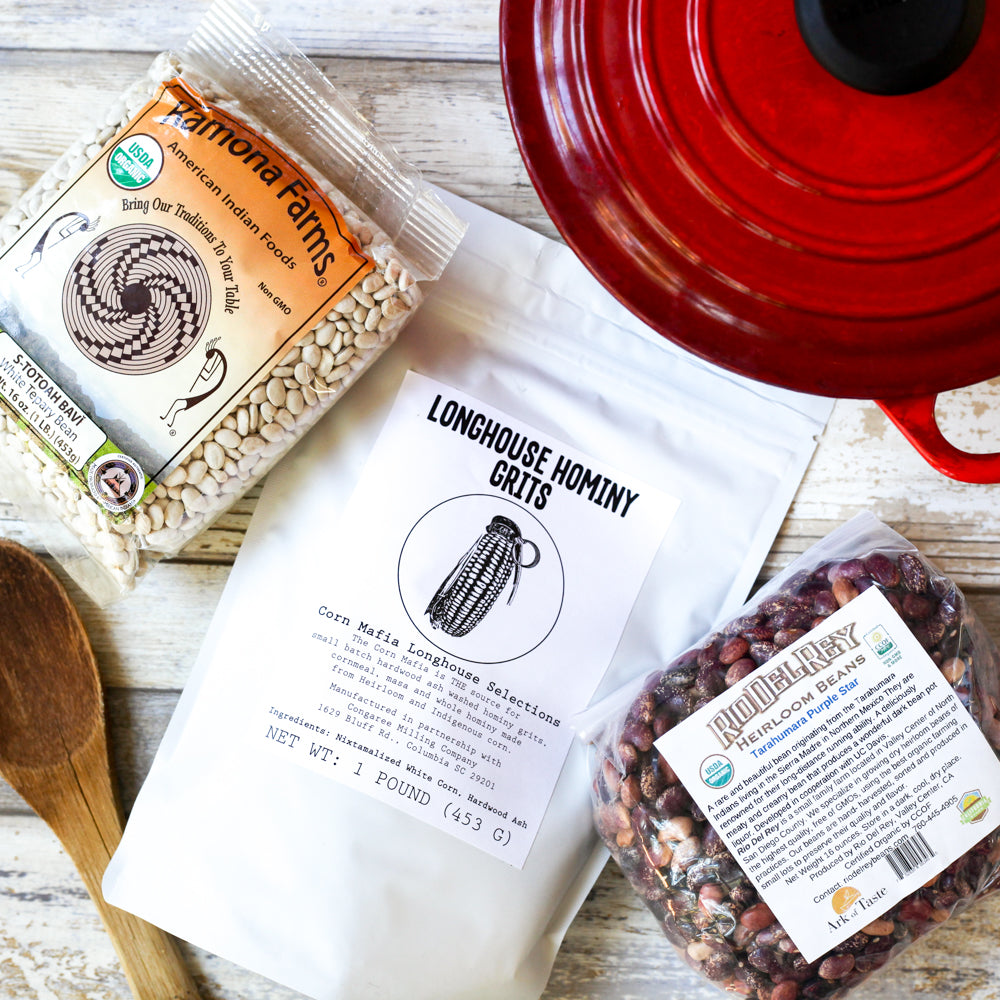
Get impossible to find beans and grains shipped direct to your doorstep each month from small family farms.


Support small family farms
Shop Now
We support small, family owned farms across the nation. Did you know that farmers only make an average of 10 cents on every dollar you spend at the supermarket? Working directly with farms and not middle men ensures that more money goes back to the people actually growning your food.
Alexis DeBoschnek's Spicy Brothy Bacony Beans
American
Main Course
It took me years to figure out how to make a good pot of beans. Time is the secret ingredient. Serve the beans with some crusty bread, pile them on a taco, spooned over rice, or eat them straight from the pot like I do. – Alexis deBoschnek
Featured bean: Cranberry
Other beans to try: Bayo, Ojo de Cabra, Southwest Red, Speckled Bayo
Ingredients
- 1 pound dried Cranberry beans or dried beans of choice
- 4 ounces bacon, cut into ½-inch slices
- 1 yellow onion, cut into eighths
- 3 large garlic cloves, lightly smashed
- 1 medium jalapeño, halved
- 6 cups chicken stock
- 1 Parmesan rind
- 5 sprigs parsley
- 2 tablespoons olive oil
- Kosher salt, to taste
Directions
Soak the beans: Pick through the beans, discarding any broken ones or other debris. Place the beans in a large bowl. Fill with cold water to cover the beans by at least 3 inches. Soak the beans at room temperature for 12 hours, or overnight. Drain the beans in a colander, shaking off any excess water.
Cook the bacon: Heat a large pot or Dutch oven over medium-high heat. Once the pot is hot, add the bacon and cook for about 8 minutes, or until crispy. Remove the bacon with a slotted spoon and transfer to a paper towel–lined plate, leaving the bacon fat in the pot.
Build the base: Add the onion to the pot and cook for about 6 minutes, stirring occasionally, or until the onion is browned at the edges and beginning to soften. Add the garlic and jalapeño and cook until the garlic is golden and fragrant, about 1 minute.
Simmer the beans: Add the beans, stock, Parmesan rind, parsley, and olive oil to the pot, making sure the beans are covered by at least 2 inches of stock. If not, add water. Bring to a simmer, then reduce the heat to medium-low, and simmer until the beans begin to soften, about 2 hours.
Finish and serve: Season with salt and cook until the beans are tender and creamy, about 45 minutes more. Stir in the bacon and taste for seasoning, adding more salt as necessary. The beans can be kept in a sealed container in the refrigerator for up to 1 week, or frozen for up to 3 months.