Free The Beans

11.99 FLAT RATE SHIPPING

0

Your Cart is Empty

SHOP
  • All The Primary Beans Set - The Foodocracy

    Primary Beans now available at Foodocracy. Shop now »

  • June 09, 2026 3 min read

    We want to talk about something that's been happening in specialty food — and something that just happened to us.

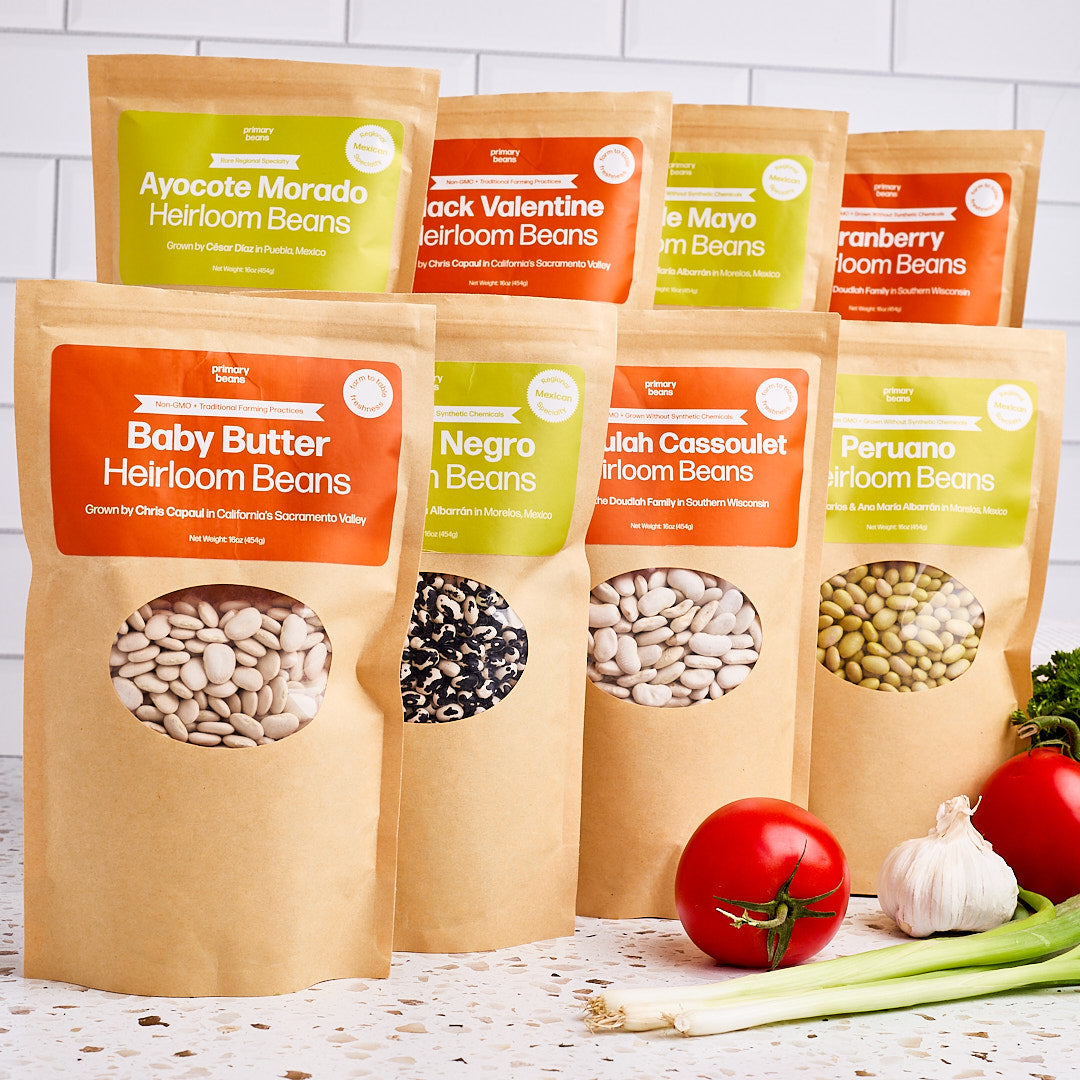
    At the beginning of this year, we made a decision about our newest bean variety, the Ayocote Medianoche. We had watched enough of the food industry's trademark land grab to know we didn't want any part of it. We decided the Medianoche's name belonged in the public domain — written into the public record so that no company, including ours, could ever claim exclusive rights to it. The Joel Rivero family, who grows it in Puebla, deserved to be able to call their bean by its name. Every farmer who might one day grow it deserved the same.

    We had the post drafted. We hadn't hit publish yet.

    Then news broke that a well-known bean company — you probably know them — had served us with a cease-and-desist over a two-word phrase that generically describes a subscription club for beans. That moved up our timeline considerably.

    A two-word phrase. For a subscription club. About beans. 

    The situation sharpened something that had already been bothering us for a while. And we think it's worth saying out loud.


    This Isn't New, But It's Getting Worse

    Nobody knows who named the Portobello mushroom. It showed up in the 1980s as a marketing strategy — a way to sell a mushroom that growers couldn't move. Someone gave an unglamorous cremini a glamorous Italian-sounding name, and an industry grew up around it. Nobody owns that name. Every mushroom grower benefits from it. The rising tide lifted all the boats.

    Frieda Caplan did the same thing with kiwi. In 1962, she was running the first wholesale produce company owned by a woman in the United States. She took a fuzzy fruit nobody wanted, called the Chinese Gooseberry, renamed it Kiwifruit, and built an entire market around that name — without ever trademarking it. Her daughters still run the company. The market she built belongs to everyone.

    That used to be how this worked.

    Now, in a world where searchable terms are more valuable than ever — where being found online can make or break a small brand — there seems to be a race to claim the most recognizable words people actually type into search bars. Not unique brand names. Generic descriptors. Common category terms. The language people use to find things.

    The harm isn't just getting a nasty lawyer letter and having to update your website. The financial impact is real. If you're a small brand that built your search presence around a descriptive category term and you're suddenly forced to abandon it, you're not just changing words. You're starting over. You're invisible again.


    Momofuku Made This Very Visible

    In early 2024, David Chang's Momofuku sent cease-and-desist letters to seven small food companies for using the terms "chili crunch" or "chile crunch" — a generic descriptor for a category of spicy condiment that has existed in various forms across Asian cuisines for decades. Most of the companies targeted were small brands founded by Asian Americans.

    Momofuku had acquired a trademark on the spelling "chile crunch" and was also claiming common law rights to "chili crunch." One lawyer representing a targeted business called it a letter campaign designed to pressure small businesses into caving because they can't afford to fight. The backlash was significant enough that Momofuku eventually backed down and said it would not defend the trademark.

    But most of the companies who received letters had already quietly complied. The chilling effect was real. The damage was done.


    Why We're Talking About This

    We believe that bean variety names, common food terms, and generic category descriptors belong to the people who grow, cook, and eat them — not to any one company. That's why we put the Medianoche in the public domain. It's why we'll keep doing that with the varieties we introduce. And it's why we're asking you to help us spread the word.

    Beans are for everyone. Their names should be too.

    If you believe that, we'd love it if you'd share this post, use the hashtag #FreeTheBeans, and help make some noise. The food system is already too consolidated. The least we can do is keep the words free.