



Spicy Pork Pozole With Beans
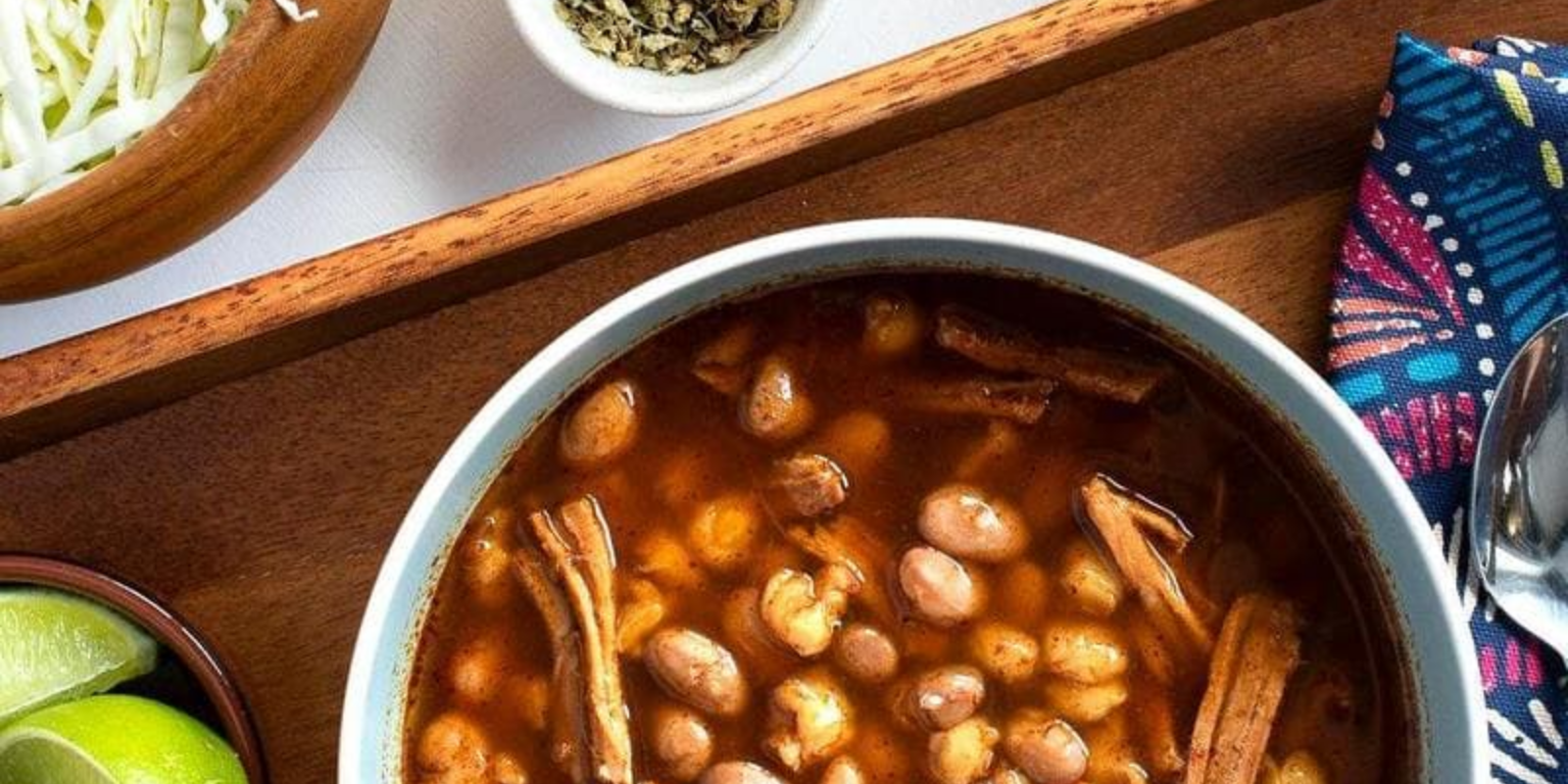
Deliciously comforting and nourishing, and fortified with hominy, chiles, and pork, it's no wonder pozole is a celebratory dish all over Mexico. Here we feature techniques from Enrique Olvera. His flagship eatery in Mexico City, Pujol, has been recognized as one of the best restaurants in the world. We love his method of toasting the chiles and spices so that they are extra aromatic.
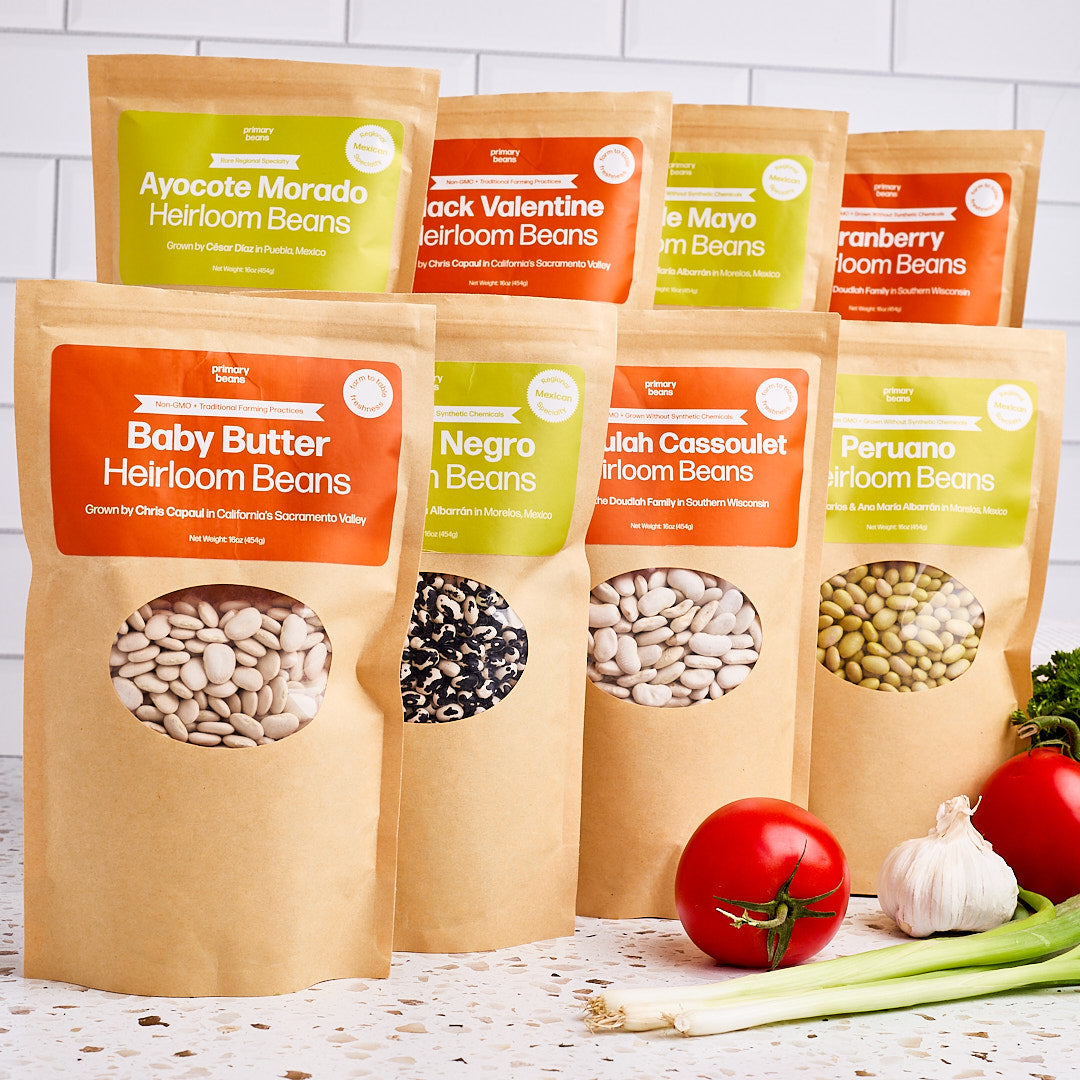
While we are deeply conscious about altering anything that is rooted in tradition, we wanted to honor Mexican bean varieties that could work well in this dish. Beans create a pleasant sense of contrast to the chewy hominy and tender pork, and they also make it possible to reduce the amount of meat and keep the high protein content.
What Makes Pozole Special

Pozole is one of Mexico's most beloved celebratory dishes, traditionally served at holidays, birthdays, and special occasions. The name comes from the Nahuatl word "pozolli," and the dish has ancient roots, it was prepared by the Aztecs long before the Spanish arrival. Traditional pozole features hominy (large corn kernels that have been treated with lime to remove the hulls), pork, and a rich chile broth, topped with fresh garnishes like radishes, cabbage, oregano, and lime.
What makes this version special is the technique borrowed from Enrique Olvera, whose restaurant Pujol is recognized as one of the best in the world. His method of toasting the dried chiles and spices before blending them creates an incredibly aromatic, complex broth with deep, smoky flavors. It's an extra step that makes all the difference.
The Addition of Beans
While we're deeply conscious about altering anything rooted in tradition, we wanted to honor Mexican bean varieties that could work well in this dish. Beans create a pleasant sense of contrast to the chewy hominy and tender pork. They add another layer of texture, creamy where the hominy is chewy, soft where the pork is tender. And they make it possible to reduce the amount of meat while keeping the high protein content, making the dish more accessible and sustainable.
The Star: Cranberry Beans

Let's talk about Cranberry beans, the beautiful medium-sized beans with mottled pink and white coloring. These are Doudlah Farms' heirloom beauties that cook down to a velvety texture with a slightly buttery, earthy flavor. What makes them perfect for pozole is their ability to become wonderfully creamy while still holding their shape during that long simmer with the pork and hominy.
As they cook in the rich chile broth, the Cranberry beans absorb all those wonderful flavors, the toasted chiles, the aromatic spices, the savory pork, while contributing their own subtle earthiness. Each bean becomes tender and flavorful, adding substance and protein to this celebratory stew.
Our Cranberry beans come from Mark Doudlah at Doudlah Farms in Wisconsin. Mark is a 6th generation farmer who transformed his family's conventional farm into a certified regenerative organic operation. After his father was diagnosed with Mantle Cell Lymphoma, known as The Midwest Farmers' Cancer, due to long-term exposure to farm chemicals, Mark knew he had to change how they farmed. Today, Doudlah Farms goes beyond organic with Regenerative Organic Certification and continuous testing to ensure the cleanest, most nutrient-dense beans possible. Learn more about Mark and Doudlah Farms.
The Chile Mixture
The heart of this pozole is the chile mixture, and this is where Olvera's technique really shines. Three types of dried chiles are used: guajillos (fruity and mild), anchos (sweet and slightly smoky), and chiles de árbol (spicy and bright). Each brings something different to the broth.
The chiles get toasted in a hot skillet until aromatic, just 30 seconds per side. This toasting releases their essential oils and deepens their flavors. Then they soak in hot water to rehydrate. Meanwhile, peppercorns, cumin seeds, and Mexican oregano get toasted in the same skillet until fragrant, filling your kitchen with incredible aromas.
Onion and garlic cloves go into the skillet next, getting charred until blackened in spots. This charring adds another layer of flavor, slightly bitter, deeply savory, complex.
Everything gets blended together, the soaked chiles, toasted spices, charred onion and garlic, creating a thick, aromatic purée that becomes the base of your broth.
The Cooking Process
The pozole comes together in stages. First, seasoned pork shoulder gets seared in batches until browned on all sides, developing a crust and deep flavor. The chile purée gets cooked in the same pot (don't wipe it clean, those browned bits add flavor) until it turns orange and darkens slightly, about 5 minutes.
Then everything goes in: the seared pork, soaked and drained hominy, dried beans, bay leaves, and water. It simmers, covered, for an hour, then uncovered for another 1 to 1½ hours until the pork is falling-apart tender, the hominy is soft and chewy, and the beans are creamy. You add water as needed to keep everything covered.
This long, slow simmer is what makes pozole so special. All those flavors have time to meld and develop. The broth becomes rich and complex. The pork becomes tender enough to shred with a spoon. The hominy and beans soak up all those wonderful flavors.
The Toppings
Pozole is as much about the toppings as the stew itself. Traditional garnishes include:
- Thinly sliced radishes for crunch and peppery bite
- Thinly sliced cabbage for freshness and texture
- Chile powder for extra heat
- Dried Mexican oregano for aromatic intensity
- Lime wedges for bright acidity
Everyone customizes their own bowl, adding as much or as little of each topping as they like. The contrast between the hot, rich stew and the cold, crisp toppings is part of what makes pozole so satisfying.
Serving
Ladle the pozole into large bowls, making sure each serving gets pork, hominy, beans, and plenty of that delicious broth. Set out all the toppings and let everyone build their own bowl.
Pozole is traditionally served with tostadas or tortilla chips on the side. Some people crumble the tostadas into their pozole, adding another textural element.
This is the kind of meal that brings people together, ladling steaming bowls from a big pot, everyone gathered around the table, customizing their servings, talking and laughing. It's celebratory in the truest sense.
Make It a Feast
While pozole is a meal in itself, it's also wonderful as part of a larger Mexican feast. Serve it with chips and guacamole topped with pomegranate seeds for color and sweetness. A green salad with persimmon, queso fresco, and toasted nuts provides a fresh contrast to the rich stew.
A Dish Worth the Effort
This pozole takes time, about 3 hours from start to finish. But it's mostly hands-off simmering time, and the result is absolutely worth it. The complex flavors from toasting the chiles and spices, the tender pork, the chewy hominy, the creamy beans, the rich broth, everything comes together into something truly special.
It's the kind of dish you make for celebrations, for special occasions, for times when you want to show people you care by feeding them something extraordinary. And with the addition of beans honoring Mexican varieties, it's a dish that respects tradition while making it more accessible and sustainable.
*A Note On Our Recipes:
Every recipe here was developed and tested using farm-fresh beans from Foodocracy and Primary Beans. Older beans, anything past a year in your pantry or beans from other sources may need more coaxing. Give them a soak and add extra cooking time, and they'll get there eventually.

Related Recipes



The Heirloom Bean + Grain club
Learn More
Get impossible to find beans and grains shipped direct to your doorstep each month from small family farms.


Support small family farms
Shop Now
We support small, family owned farms across the nation. Did you know that farmers only make an average of 10 cents on every dollar you spend at the supermarket? Working directly with farms and not middle men ensures that more money goes back to the people actually growning your food.
Spicy Pork Pozole With Beans
Mexican
Soup
Deliciously comforting and nourishing, and fortified with hominy, chiles, and pork, it's no wonder pozole is a celebratory dish all over Mexico. Here we feature techniques from Enrique Olvera.
Featured bean: Cranberry
Other beans to try: Flor de Junio, Ojo de Cabra, Bayo, Southwest Gold

Ingredients
- 2 lbs pork shoulder cut into 1-inch pieces
- Salt and freshly ground pepper
- 3 tbsp neutral oil, divided
- 5 guajillo chiles, stems and seeds removed
- 4 ancho chiles, stems and seeds removed
- 1-2 chiles de árbol (depending on how spicy you want it)
- 8 peppercorns
- 1½ tsp cumin seeds
- 2 tbsp dried Mexican oregano
- 1 onion, peeled and cut in half
- 4 garlic cloves, peeled
- 1 lb dried hominy, soaked in water 6-8 hours
- ½ lb dried Cranberry beans
- 2 bay leaves
- Toppings: thinly sliced radishes, thinly sliced cabbage, chile powder, dried Mexican oregano, lime wedges
Directions
Cook the pork: Season pork generously with salt and pepper. Heat 2 tbsp oil in a large pot over medium-high heat. Sear pork in batches until browned on all sides. Transfer to a plate.
Make the chile mixture: Heat a medium skillet over high heat. Add chiles and toast until aromatic, about 30 seconds per side. Transfer to a small bowl and cover with hot water to soak. Add peppercorns, cumin seeds, and oregano to the skillet and toast until fragrant for about 1 minute. Transfer to a blender. Place onion and garlic cloves on the skillet and cook until charred, rotating occasionally, about 15 minutes. Add onion, garlic, drained chiles, spices, and 2 tsp salt to the blender. Blend to a purée using chile soaking water to thin if necessary.
Prepare the stew: Add remaining 1 tbsp oil to the pot used to cook pork (do not wipe clean) over high heat and once hot add the chile sauce. Stir until it turns orange, about 5 minutes. Return pork to the pot and stir in drained hominy, dried beans, bay leaves, and 7 cups water. Simmer, covered, for 1 hour. Uncover and simmer for 1 to 1½ hours longer or until pork, hominy, and beans are tender, adding water as needed to keep covered.
Serve: Discard bay leaves and add salt to taste. Ladle into bowls and garnish with toppings.