



Shrimp Saganaki With Alubia Beans
If you've been to Greece, you've seen shrimp saganaki on many restaurant menus. It's a saucy appetizer featuring shrimp in tomato sauce with crumbled feta cheese. Here, I've taken a traditional shrimp saganaki and combined it with petite Alubia beans for a fantastic main course. For a little extra something, try adding a generous splash (or two!) of ouzo to the pan before adding the tomato, it goes so well with seafood and adds even more oomph to this dish. – Diana Moutsopoulos (@greek_recipes)
What Is Saganaki?

Saganaki refers to dishes cooked and served in a small two-handled frying pan called a saganaki. The term has come to mean any number of Greek dishes cooked in this pan, from fried cheese to various seafood preparations. Shrimp saganaki is one of the most beloved, plump shrimp cooked in a rich tomato sauce with herbs, topped with crumbled feta, and baked until bubbling.
It's typically served as an appetizer (mezze) with bread for soaking up the sauce. But Diana's version adds Alubia beans, transforming it into a substantial main course that's perfect for dinner with a simple salad on the side.
The Star: Alubia Beans
Let's talk about Alubia beans, Spanish white beans that Diana calls "petite." These medium-sized beans have a delicate, creamy texture and mild, slightly nutty flavor. They hold their shape beautifully through cooking, which is exactly what you want for a dish like this where the beans need to maintain their integrity while baking with the tomato sauce and shrimp.
What makes Alubia beans perfect for saganaki is how they absorb the flavors of the tomato sauce, herbs, and ouzo while staying intact. Each bean becomes infused with those wonderful Mediterranean flavors, tomato, mint, parsley, feta, while adding substance and protein that makes this a complete meal.
Diana's technique of cooking the beans just until al dente (28 minutes in the pressure cooker or 15 minutes less than usual on the stovetop) is smart. They'll finish cooking in the oven with the sauce and shrimp, so you don't want them completely tender to start or they'll become mushy.
The Tomato Sauce
The tomato sauce is the heart of saganaki. Diana uses the traditional Greek technique of grating fresh tomatoes, which creates a thick, pulpy sauce with intense tomato flavor. You halve the tomatoes and grate the cut side over a bowl using the largest holes of a box grater. The flesh goes through while the skin stays in your hand to be discarded.
This method creates a sauce that's thicker and more textured than blended tomatoes, with a rustic quality that's traditional in Greek cooking. If tomatoes aren't in season, Diana suggests using jarred whole plum tomatoes, gently mashed in the pan.
The sauce gets enriched with tomato paste for depth, fresh mint and parsley for brightness, and optionally, a generous splash of ouzo. The ouzo adds an anise-like quality that pairs beautifully with seafood, it's distinctly Greek and makes the dish feel special.
The Fresh Herbs
Mint and parsley are both essential to authentic Greek flavor. The mint might seem surprising if you're not familiar with Greek cooking, but it's traditional with tomato-based dishes and seafood. It adds a cool, bright quality that balances the rich tomato sauce.
Parsley contributes fresh, green flavor without being overpowering. Together, these herbs create a sauce that tastes distinctly Greek, bright, fresh, herbaceous.
The Shrimp
Unpeeled shrimp add flavor to the sauce as they cook, though Diana notes that frozen, peeled, and deveined shrimp work fine if that's what you can find (just defrost them first). Head-on shrimp are even more flavorful but completely optional.
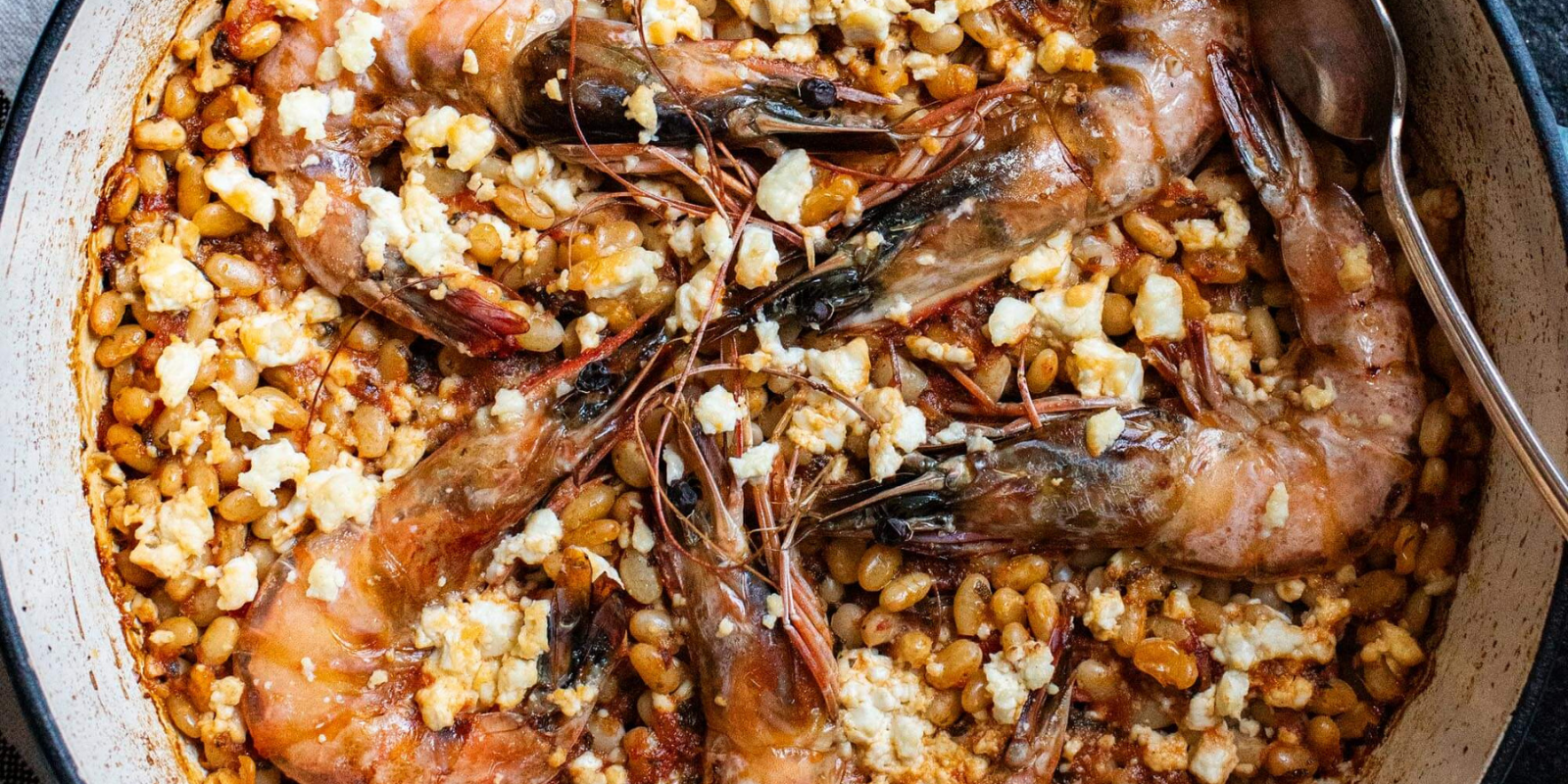
The shrimp get arranged evenly over the bean-and-tomato mixture, then everything gets topped with crumbled feta before going into the oven. The shrimp cook through in 15-20 minutes, becoming tender and pink while the feta melts slightly and browns around the edges.
If you want extra browning on the feta, Diana suggests turning on the broiler for the final 2-3 minutes. This creates those golden, slightly crispy bits of cheese that are so delicious.
The Feta
Feta is non-negotiable in saganaki. It adds salty, tangy richness that's essential to the dish's character. As it bakes, some of it melts into the sauce while some stays in distinct crumbles, creating pockets of creamy, salty cheese throughout.
The saltiness of feta is why Diana cautions about over-salting the tomato sauce. You'll be adding a generous amount of feta on top, which will season the dish as it melts. It's better to undersalt the sauce initially and adjust at the end if needed.
Assembly and Baking
The assembly is straightforward but creates something beautiful. The al dente beans get stirred into the thickened tomato sauce. Everything gets transferred to a baking dish (or left in an oven-safe sauté pan). Shrimp are arranged evenly on top, then feta gets crumbled generously over everything.
The dish bakes at 400°F for 15-20 minutes until the shrimp are cooked through and opaque. The sauce bubbles around the beans and shrimp, the feta melts and browns, and your kitchen fills with the most incredible aromas, tomato, herbs, seafood, cheese.
Serving
Serve this straight from the pan or baking dish while it's hot and bubbling. It's meant to be eaten family-style, with everyone digging in with spoons and lots of good crusty bread for soaking up that delicious sauce.
The bread is essential, you need it to mop up every last bit of sauce. Greek bread, Italian bread, or any crusty artisan loaf would be perfect.
This works beautifully as a main course for 4-6 people, or as an appetizer for a larger gathering. Serve it with a simple Greek salad (tomatoes, cucumbers, onions, olives, feta) and maybe some roasted potatoes on the side.
A Brilliant Adaptation
What makes Diana's version so clever is how she's taken a traditional appetizer and transformed it into a substantial main course by adding beans. The beans don't detract from the classic saganaki flavors, they enhance them while making the dish more filling and satisfying.
It's the kind of adaptation that honors tradition while making it more practical for everyday cooking. Instead of serving shrimp saganaki as a small appetizer, you can make this your dinner. The beans add protein and fiber, stretch the more expensive shrimp, and create a complete meal.
Greek Comfort Food
This is Greek comfort food at its best, rich tomato sauce, succulent shrimp, creamy beans, salty feta, fresh herbs, all baked until bubbling and delicious. It's the kind of dish that makes you want to gather people around the table, pour some wine, and enjoy good food and good company.
And with the addition of beans, it's substantial enough to be truly satisfying while still feeling light and fresh, exactly what you want from Mediterranean cooking.
*A Note On Our Recipes:
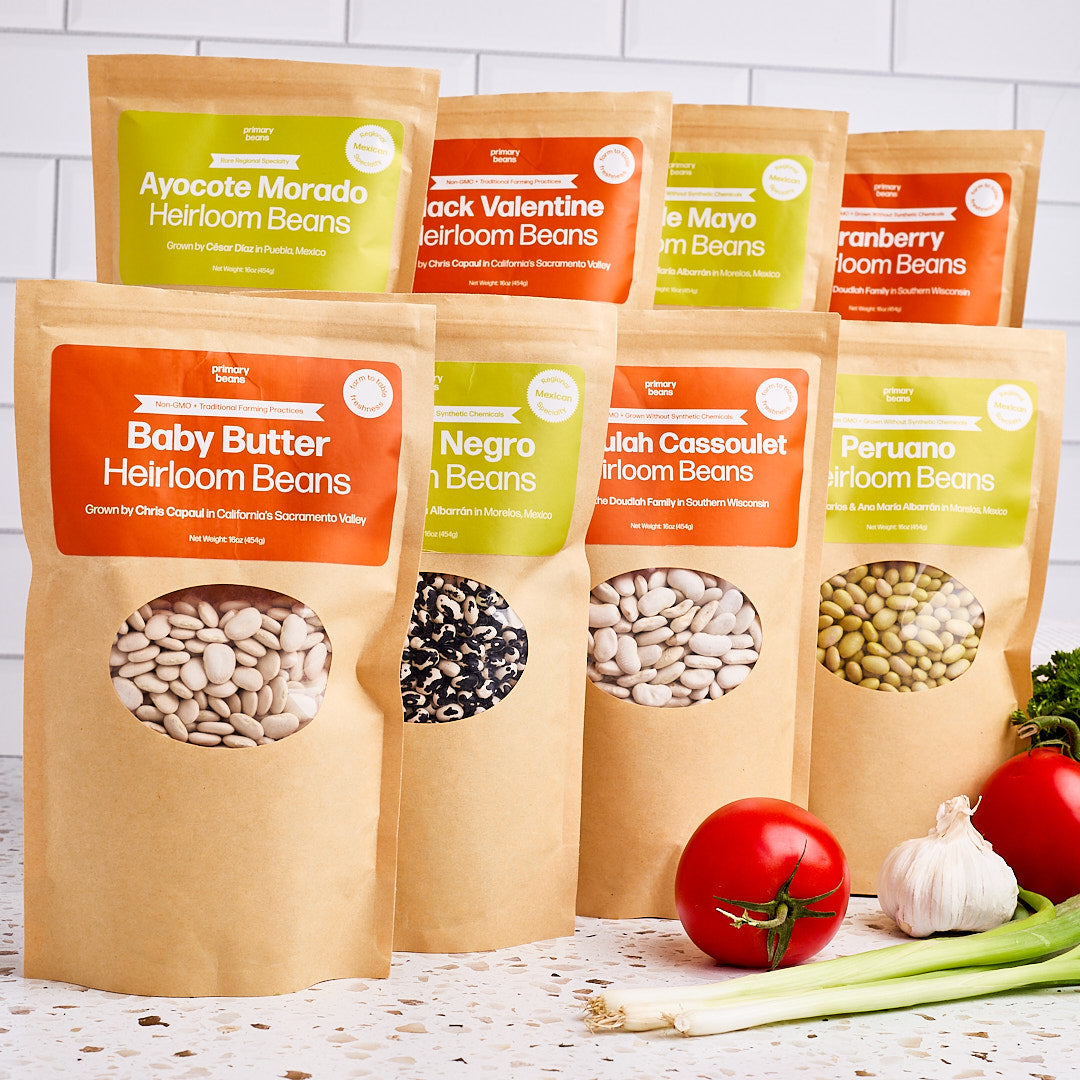
Every recipe here was developed and tested using farm-fresh beans from Foodocracy and Primary Beans. Older beans, anything past a year in your pantry or beans from other sources may need more coaxing. Give them a soak and add extra cooking time, and they'll get there eventually.

Related Recipes



The Heirloom Bean + Grain club
Learn More
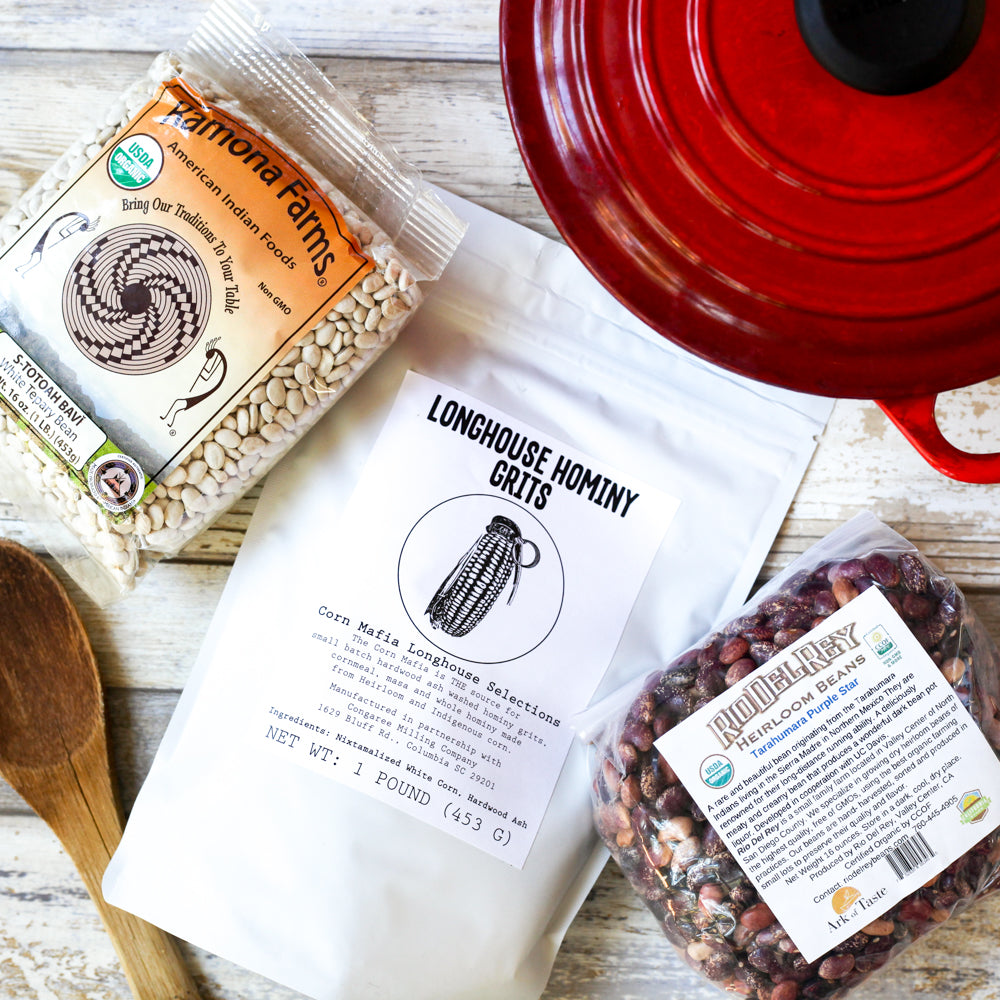
Get impossible to find beans and grains shipped direct to your doorstep each month from small family farms.


Support small family farms
Shop Now
We support small, family owned farms across the nation. Did you know that farmers only make an average of 10 cents on every dollar you spend at the supermarket? Working directly with farms and not middle men ensures that more money goes back to the people actually growning your food.
Shrimp Saganaki With Alubia Beans
Greek
Main Course
If you've been to Greece, you've seen shrimp saganaki on many restaurant menus. Here, I've taken a traditional shrimp saganaki and combined it with petite Alubia beans for a fantastic main course. For a little extra something, try adding a generous splash (or two!) of ouzo to the pan before adding the tomato. – Diana Moutsopoulos (@greek_recipes)
Featured bean: Alubia

Ingredients
- 1 lb Primary Beans Alubia beans
- 4 large tomatoes
- Splash or 2 of ouzo (optional)
- ¼ cup olive oil
- 1 shallot, grated
- 2 tbsp tomato paste
- 3 tbsp finely chopped mint
- 2 tbsp finely chopped parsley
- Salt and pepper
- 1 lb unpeeled shrimp, deveined (head-on is optional)
- 10 oz feta, crumbled
- Good bread, for serving
Directions
Prepare the beans: Prepare dried beans according to the Primary Beans cooking guide. If using a pressure cooker, set the time to 28 minutes instead of the recommended 30 minutes. If cooking on the stovetop, cook beans until just al dente, about 15 minutes less than you would normally cook them.
Prepare tomatoes: Prepare tomatoes by halving each, then grating the cut side over a bowl using the largest holes of a box grater. Once you have grated all the flesh, discard the skin. Repeat with all remaining tomato halves.
Make the sauce: Preheat the oven to 400 degrees F. Heat olive oil in a large sauté pan over medium heat and add shallot. Cook gently until soft but not browned. Increase heat, then add ouzo (if using) and stir until mostly absorbed. Add grated tomato, tomato paste, herbs, and a pinch of salt and pepper. Simmer gently, uncovered, until the sauce is thickened and reduced, about 10-15 minutes.
Combine and bake: Meanwhile, drain the cooked beans and reserve the broth for another use. Once the tomato sauce is thickened, add the beans and stir well. Taste and add additional salt and pepper, if desired (though keep in mind you'll be adding additional salty feta to the top). Arrange shrimp evenly over the top, then crumble over the feta. Bake in the preheated oven for 15 to 20 minutes, until shrimp is cooked through and opaque. If you'd like to brown feta slightly, turn on the broiler for the final 2 to 3 minutes.
Serve: Serve as a main dish or an appetizer with lots of good bread.