



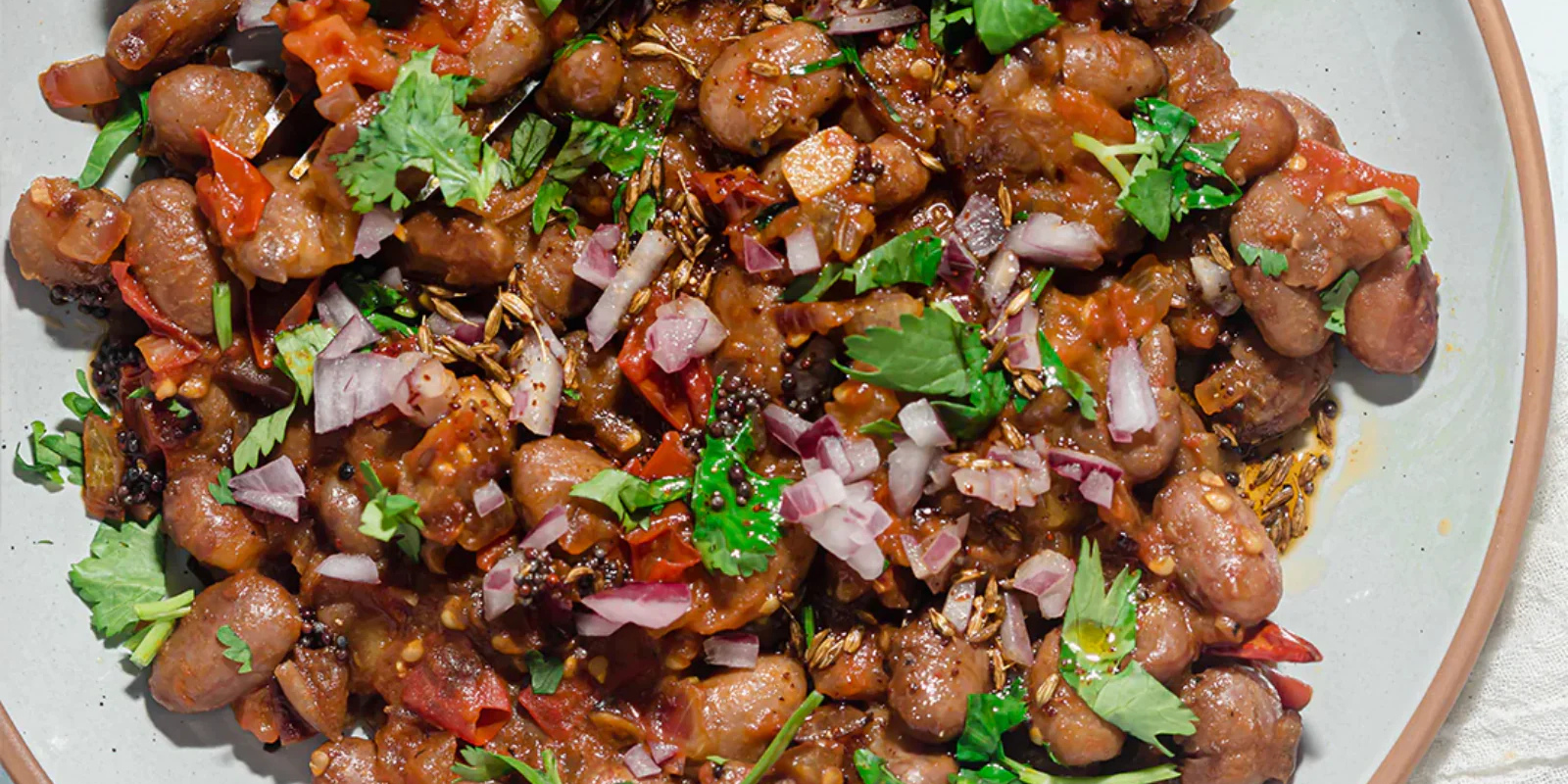

Indian-Inspired Bean Tadka
Creator notes Why I love this: Creamy cranberry beans pair nicely with fat and spice, ideal for Indian cooking. Tadka is a South Asian technique used to bloom spices in oil to extract their essential flavor compounds (more on that here). Here, I sauté the beans with an aromatic tomato-onion mixture and top it with a flavorful mustard-cumin seed tadka. – Karishma Pradhan, founder, Home Cooking Collective
As seen in 1 pot of beans, 5 tasty meals.
Why This Recipe Works

What makes this bean tadka so successful is how it adapts South Asian cooking techniques to work beautifully with Cranberry beans. The aromatic tomato-onion base provides a savory foundation, while the tadka, those sizzling spices bloomed in hot oil, adds an explosion of flavor and aroma that transforms simple beans into something special.
The technique of tadka (also called tempering or chaunk) is fundamental to Indian cooking, used to finish dals, curries, and vegetable dishes. By applying it to Cranberry beans, Karishma demonstrates how these techniques work across different ingredients and culinary traditions.
The Star: Cranberry Beans

Let's talk about Cranberry beans and why they're ideal for Indian-inspired cooking. As Karishma notes, these creamy beans "pair nicely with fat and spice", exactly what Indian cooking requires. Cranberry beans have a velvety texture and slightly buttery, earthy flavor that stands up to bold spices while absorbing the aromatic oil from the tadka.
What makes Cranberry beans perfect for this preparation is their ability to become wonderfully creamy while maintaining enough structure to be sautéed without falling apart. They create a substantial, satisfying dish that feels rich and indulgent even though it's primarily beans and vegetables.
Our Cranberry beans come from Mark Doudlah at Doudlah Farms in Wisconsin. Mark is a 6th generation farmer who transformed his family's conventional farm into a certified regenerative organic operation. Today, Doudlah Farms goes beyond organic with Regenerative Organic Certification and continuous testing to ensure the cleanest, most nutrient-dense beans possible. Learn more about Mark and Doudlah Farms.
About Tadka
Tadka (also called tarka, chaunk, or tempering) is a South Asian cooking technique where whole spices are briefly fried in hot oil or ghee to release their essential oils and aromatic compounds. The sizzling, fragrant oil and spices are then poured over the finished dish, adding an explosion of flavor and aroma.
This technique is used throughout India, Pakistan, Bangladesh, and other South Asian countries to finish dals (lentil dishes), vegetables, rice, and curries. It's what gives many Indian dishes their distinctive aromatic quality, that wonderful smell when you open a container of dal or curry.
The key is high heat and quick cooking, the spices should sizzle immediately when they hit the hot oil, releasing their aromatics without burning.
The Aromatic Base
Before the tadka, you build a flavorful base for the beans. Garlic and onions cook in oil until "nicely golden brown", this caramelization is important for developing sweet, complex flavors. Diced tomatoes go in next and cook until their liquid evaporates and the mixture becomes paste-like.
This concentrated tomato-onion mixture (similar to a masala) provides the savory foundation. Turmeric powder gets added for its earthy flavor and golden color, then the cooked beans go in and sauté for a couple of minutes to combine everything. Season with salt to taste.
The Tadka
This is where the magic happens. In a separate tadka pan (a small pan specifically for this purpose) or small saucepot, you heat oil until very hot. Mustard seeds go in first, they'll pop and sizzle dramatically. Then cumin seeds join them until everything is sizzling and aromatic.
Turn the heat off (this is important, you don't want to burn the chili powder), then swirl in chili powder. The residual heat will bloom the chili powder without burning it, releasing its color and flavor into the oil.
This fragrant, spice-infused oil gets poured immediately over the beans, where it sizzles on contact and infuses everything with its aromatic intensity.
The Technique Details
A few important notes about making tadka successfully:
- Hot oil is essential: The oil must be hot enough that spices sizzle immediately
- Work quickly: Spices burn easily in hot oil, so have everything ready
- Mustard seeds pop: They'll jump and sizzle, this is normal and desired
- Turn off heat for chili powder: It burns easily, so add it off heat
- Pour immediately: The tadka is most aromatic right after making it
Serving Suggestions
As Karishma notes, serve this with:
- Roti or naan: Traditional Indian breads for scooping
- Dollop of yogurt: Cooling, creamy contrast to the spices
- Mango achaar or tart hot sauce: Additional acidity and heat
The combination of warm spiced beans, cool yogurt, and tangy-spicy pickle or hot sauce is classic Indian flavor balancing, rich, cooling, and bright all together.
You could also serve this over rice for a complete meal, or as part of a larger Indian spread with other curries and vegetable dishes.
Part of a Weekly Strategy
This recipe is featured in "1 pot of beans, 5 tasty meals", a guide to cooking beans once and transforming them into multiple dishes throughout the week. Bean tadka is perfect for this strategy because it takes cooked beans and transforms them in about 20 minutes using pantry spices and basic aromatics.
It's the kind of quick transformation that makes meal prep practical and prevents bean fatigue, same beans, completely different dish.
Adaptability
While the recipe provides general proportions rather than exact measurements (encouraging you to cook by taste and preference), the technique works with various beans. The key is choosing creamy beans that can handle sautéing, Bayo, Flor de Junio, or even chickpeas would work well.
You can also adjust the spice level (more or less chili powder), add other aromatics (ginger, curry leaves, fresh chiles), or include vegetables (spinach stirred in at the end is traditional).
A Gateway to South Asian Cooking
For people unfamiliar with Indian cooking techniques, this is an excellent introduction to tadka. It's simpler than making dal from scratch but demonstrates the fundamental technique and how transformative it can be.
Once you understand tadka, you can apply it to all sorts of dishes, plain rice becomes aromatic, steamed vegetables become exciting, simple yogurt becomes raita. It's a technique worth learning and mastering.
Quick and Satisfying
What makes this recipe so valuable is how quickly it transforms cooked beans into something that tastes complex and deeply flavored. The aromatic base takes maybe 15 minutes, the beans warm through in a few minutes, and the tadka itself takes less than a minute. But the result tastes like you spent much longer developing those flavors.
It's proof that technique matters as much as time, knowing how to bloom spices properly and build flavors efficiently can create dishes that taste extraordinary without requiring hours of cooking.
*A Note On Our Recipes:
Every recipe here was developed and tested using farm-fresh beans from Foodocracy and Primary Beans. Older beans, anything past a year in your pantry or beans from other sources may need more coaxing. Give them a soak and add extra cooking time, and they'll get there eventually.

Related Recipes



The Heirloom Bean + Grain club
Learn More
Get impossible to find beans and grains shipped direct to your doorstep each month from small family farms.


Support small family farms
Shop Now
We support small, family owned farms across the nation. Did you know that farmers only make an average of 10 cents on every dollar you spend at the supermarket? Working directly with farms and not middle men ensures that more money goes back to the people actually growning your food.
Indian-Inspired Bean Tadka
Indian-Inspired
Main Course
Creator notes Why I love this: Creamy cranberry beans pair nicely with fat and spice, ideal for Indian cooking. Tadka is a South Asian technique used to bloom spices in oil to extract their essential flavor compounds. Here, I sauté the beans with an aromatic tomato-onion mixture and top it with a flavorful mustard-cumin seed tadka. – Karishma Pradhan, founder, Home Cooking Collective
As seen in 1 pot of beans, 5 tasty meals.
Featured bean: Cranberry

Ingredients
Oil
Garlic, minced
Onion, diced
Tomato, diced
Turmeric powder
Cooked Cranberry beans
Salt
Mustard seeds
Cumin seeds
Chili powder
Directions
Heat oil in a sauté pan and cook garlic and onion until nicely golden brown. Add tomato and cook until the liquid evaporates and the mixture appears paste-like. Add in turmeric and sauté beans for a couple of minutes until combined. Season with salt.
Heat oil in a separate tadka pan or small saucepot. Add mustard seeds and cumin seeds until sizzling. Turn heat off, then swirl in chili powder. Pour over beans immediately.