



Fall Chickpea Salad With Charred Chicories
Italians' devotion to chicories is downright inspiring, whether grilled, sautéed, or eaten raw, the vegetables are paired with the right levels of salt, fat, and acid to tame the distinct bitterness and allow the complexity to shine through. This recipe was adapted from Asha Loupy's Grilled Chicory Salad with Chile-Fennel Dressing, where she expertly applies a high-heat method to bring out the natural sweetness of chicories: "Something truly magical happens when you grill chicories." Lemony marinated chickpeas, salty crumbled feta, and a silky spicy dressing round out the charred chicories. Best of all, it's satisfying enough as a standalone dish.
Why This Recipe Works

What makes this salad so successful is how it balances the bitter chicories with complementary flavors and textures. The charring transforms the chicories from aggressively bitter to sweet and complex. The lemony chickpeas provide protein and brightness. The roasted delicata squash adds autumn sweetness. The chile-fennel dressing brings heat, aromatics, and silky richness. The crumbled feta contributes salty, tangy creaminess.
Each element plays a specific role in creating balance, the salt, fat, and acid that tame bitterness while allowing complexity to shine through. It's sophisticated salad-making that creates something "satisfying enough as a standalone dish" rather than just a side.
The Star: Chickpeas

Let's talk about chickpeas in this fall salad. Our chickpeas are tiny and intensely nutty, with a firm texture that holds up beautifully when tossed with lemon and olive oil while still warm.
What makes chickpeas perfect for this preparation is their size (they distribute evenly throughout the salad), their firm texture (they don't get mushy when dressed), and their nutty flavor (they complement rather than compete with the bitter chicories and sweet squash).
When marinated warm with lemon zest, lemon juice, olive oil, salt, and pepper, plus a couple spoonfuls of the chile-fennel dressing, the chickpeas become flavor bombs distributed throughout the salad.
About Chicories
Chicories are a family of bitter greens including radicchio, Belgian endive (both red and green), escarole, frisée, and more. Italians love them for their distinctive bitterness and complexity, flavors that Americans often find challenging but Italians celebrate.
The key to making chicories delicious is, as the recipe notes, "pairing with the right levels of salt, fat, and acid to tame the distinct bitterness and allow the complexity to shine through." That's exactly what this recipe does.
The recipe calls for 2-3 pounds of mixed chicories, Belgian endive (red and green) and/or escarole. Choose a mix for visual interest and varied texture and flavor.
The Charring Transformation
As Asha Loupy notes, "Something truly magical happens when you grill chicories." The high heat caramelizes their natural sugars, creating sweetness that balances the bitterness. The charred edges add smoky, complex flavors. The wilting softens the leaves while maintaining some structure.
The chicories get trimmed (keeping stems intact so sections hold together), halved or quartered depending on size, brushed generously with olive oil, seasoned with salt and pepper, and seared on all sides in a hot grill pan or heavy skillet until golden and slightly charred but still holding their shape.
This transformation is the heart of the dish, taking potentially challenging vegetables and making them delicious through proper technique.
The Chile-Fennel Dressing
The dressing is complex and builds flavor through careful technique:
- Toast fennel seeds in a dry skillet until golden and fragrant (1-2 minutes)
- Bloom garlic in hot olive oil for 30 seconds (fragrant but not browned)
- Grind fennel, garlic, fresh chiles (fresno and serrano, with seeds for heat), and salt in a mortar and pestle into a chunky paste
- Macerate the paste in lemon juice for at least 10 minutes
- Whisk in olive oil to create a silky, emulsified dressing
This process develops layers of flavor, toasted fennel aromatics, sweet bloomed garlic, fresh chile heat, bright lemon acidity, rich olive oil. The maceration in lemon juice mellows the raw garlic and chiles slightly while allowing flavors to meld.
A couple spoonfuls get added to the chickpeas, and the rest gets whisked with olive oil for dressing the assembled salad.
The Delicata Squash
Delicata squash is perfect for fall salads because its skin is edible (no peeling required), it's naturally sweet, and it roasts beautifully. Cut into quarter-inch half-moons, it creates attractive pieces that distribute well throughout the salad.
The squash gets tossed with olive oil, lemon zest, raw fennel seeds, minced garlic, salt, and pepper, then roasted at 350°F for about 30 minutes until fork-tender but not mushy, flipping halfway through.
The lemon zest and fennel seeds tie the squash to the other components, creating cohesion. The roasting concentrates the sweetness and creates slight caramelization.
The Assembly
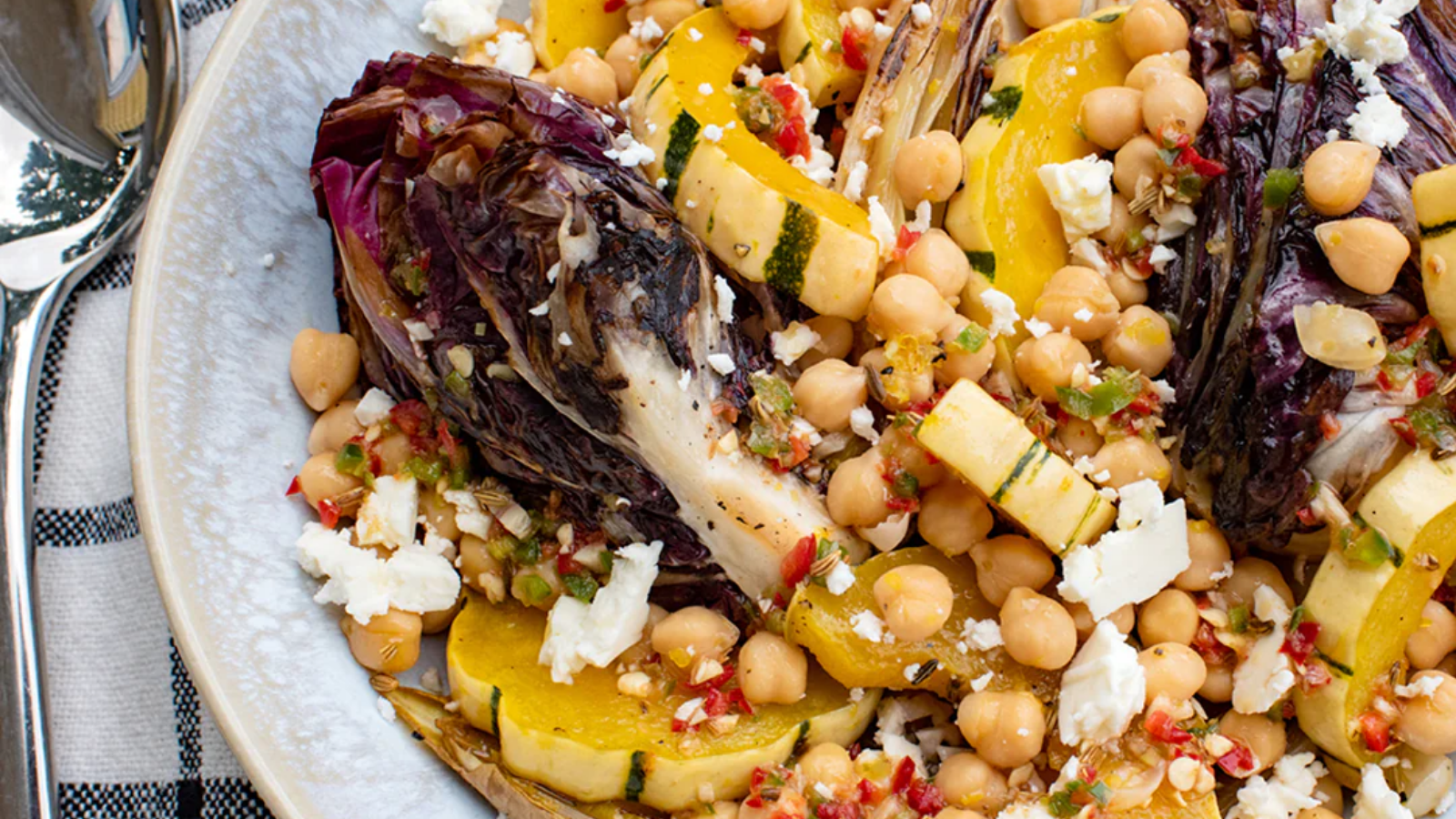
The assembly is artful rather than just dumping everything in a bowl. Divide the charred chicories onto plates, then layer with roasted squash, lemony chickpeas, and crumbled feta. Give the dressing a final whisk and spoon it over everything to taste.
This layered plating creates visual appeal, you see all the components, the colors (green and red chicories, orange squash, tan chickpeas, white feta), and the textures. It's restaurant-quality presentation that makes the salad feel special.
The Feta
Crumbled feta provides essential salty, tangy creaminess that ties everything together. As the feta softens slightly from the warm chicories and squash, it creates little pockets of creamy richness throughout the salad.
Use good-quality feta, preferably sheep's milk feta that's creamy and tangy rather than dry and salty. The quality matters in a dish this simple.
The Italian Inspiration
The recipe opens by praising Italians' "downright inspiring" devotion to chicories. This salad exemplifies Italian cooking wisdom: take a challenging ingredient (bitter chicories), apply proper technique (charring), and balance with appropriate accompaniments (salt from feta, fat from olive oil, acid from lemon and dressing).
It's the kind of sophisticated vegetable cookery that Italian cuisine excels at, making vegetables the star rather than an afterthought.
A Standalone Dish
As the recipe notes, this is "satisfying enough as a standalone dish", it's not just a side salad. The chickpeas provide protein, the squash adds carbs, the chicories contribute volume and vitamins, and the dressing ties everything together with fat and flavor.
Serve it as a light main course with good bread, or as part of a larger spread of fall dishes. Either way, it feels substantial and complete.
The Asha Loupy Adaptation
This recipe is adapted from Asha Loupy's work, and her expertise shows in the techniques, the charring method for chicories, the mortar-and-pestle dressing that builds complex flavors, the thoughtful balancing of bitter, sweet, salty, fatty, and acidic elements.
Fall Perfection
This salad is perfect for fall when delicata squash is in season, when you're craving something substantial but not heavy, when you want vegetables but need them to feel satisfying. The charred chicories, roasted squash, and warming spices (fennel, chiles) feel right for cooler weather while still being bright and fresh.
*A Note On Our Recipes:
Every recipe here was developed and tested using farm-fresh beans from Foodocracy and Primary Beans. Older beans, anything past a year in your pantry or beans from other sources may need more coaxing. Give them a soak and add extra cooking time, and they'll get there eventually.

Related Recipes



The Heirloom Bean + Grain club
Learn More
Get impossible to find beans and grains shipped direct to your doorstep each month from small family farms.


Support small family farms
Shop Now
We support small, family owned farms across the nation. Did you know that farmers only make an average of 10 cents on every dollar you spend at the supermarket? Working directly with farms and not middle men ensures that more money goes back to the people actually growning your food.