



Roasted Carrots Over Cannellini And Hazelnut Purée
If you're looking for the final puzzle piece for your Thanksgiving spread, this festive recipe from Catherine Owens of @countercollaborative is for you! It's incredibly flavorful on its own, but even more outstanding with the usual suspects: cranberry sauce, green beans, and rolls.
"Yes, you could cook the carrots significantly faster at a higher temperature, but the key to getting the most delicious result is to cook them low and slow so that the natural sugars have time to caramelize. They're worth the wait! And if you're like me and are loath to waste good carrot tops, the following gremolata-ish herb topper can be made as a garnish but it's not necessary to the overall flavors of the dish. Be sure to have nice crusty bread on hand to swipe up every last bit." – Catherine Owens
Why This Dish Works

What makes this recipe so special is the combination of textures and flavors. Slow-roasted rainbow carrots become wrinkly, caramelized, and intensely sweet, glazed with a maple-lemon sauce that's both bright and rich. They're served over a smooth, nutty purée made from Cannellini beans and toasted hazelnuts that's luxurious and unexpected.
It's elegant enough for a holiday table but not fussy or complicated. And as Catherine notes, it works beautifully alongside traditional Thanksgiving dishes while offering something different, a vegetable-forward dish that vegetarians will love and omnivores will find just as satisfying as any meat.
The Star: Cannellini Beans

Let's talk about Cannellini beans, creamy Italian white beans that are perfect for purées. These medium-sized beans have a smooth, silky texture when cooked and a mild, slightly nutty flavor. When blended with hazelnuts, garlic, rosemary, and olive oil, they create a purée that's rich, elegant, and absolutely delicious.
What makes Cannellini beans ideal for this dish is their ability to become incredibly smooth when pureed. They don't have the starchy, grainy quality that some beans can develop when blended. Instead, they create something silky and luxurious, almost like a very refined hummus but with hazelnut richness instead of tahini.
The beans are cooked with garlic, rosemary, olive oil, salt, and pepper, which flavors them from the inside out. This means the purée has depth of flavor before you even add the other ingredients.
The Hazelnut Element
Raw hazelnuts add richness, nuttiness, and a distinctive flavor that makes this purée special. Hazelnuts have a sweet, buttery quality that pairs beautifully with beans and creates something that feels indulgent and sophisticated.
The hazelnuts also add body and a slight graininess (in a good way) that gives the purée substance. It's not just smooth, it has texture and interest. The combination of beans and nuts creates something greater than either ingredient alone.
The Slow-Roasted Carrots
Here's where Catherine's technique really shines. The carrots roast at a low temperature, just 300°F, for 45 to 90 minutes depending on their thickness. This slow roasting allows the carrots' natural sugars to caramelize gradually, developing deep, sweet, complex flavors.
Rainbow carrots (a mix of orange, purple, yellow, and white carrots) aren't just pretty, different colors have slightly different flavors, creating more complexity. But regular orange carrots would work fine too.
The carrots get scrubbed but not peeled (the skin adds flavor and texture), then laid flat in an oven-safe dish where they're "a bit cramped width-wise." This crowding helps them steam slightly while roasting, keeping them tender.
The Maple-Lemon Glaze
The glaze is brilliant, maple syrup for sweetness, lemon juice for brightness, fresh thyme for herbaceous notes, and olive oil for richness. It's whisked together and poured over the carrots before roasting, then the carrots get basted with it every 25 minutes or so.
This repeated basting does two things: it keeps the carrots moist and helps build up layers of glaze that caramelize on the surface. The result is carrots that are wrinkly, soft, intensely flavorful, and coated in a reduced, slightly sticky glaze that's sweet, tart, and aromatic.
The Optional Herby Topper
If you're someone who hates waste (like Catherine), the carrot fronds become a fresh, herbaceous topper. Minced with tarragon, garlic, lemon zest, and olive oil, they create something like gremolata, bright, fresh, punchy.
This is completely optional, as Catherine notes. The dish is delicious without it. But if you have nice, fresh carrot tops, it's a lovely way to use them and add another layer of flavor and color.
The Purée Technique
Making the purée is straightforward but requires attention to consistency. The cooked beans go into a food processor with hazelnuts, minced rosemary, garlic, and olive oil. As the processor runs, you add reserved bean broth a quarter cup at a time until you reach the desired consistency, about 1¼ cups total.
The key is that the purée will thicken as it cools, so you want it slightly looser than your final desired consistency. Let it sit before discarding excess broth so you can see how thick it becomes.
And salt liberally. Beans and nuts both need generous seasoning to really shine. Taste and adjust until it's well-seasoned and delicious on its own.
Assembly
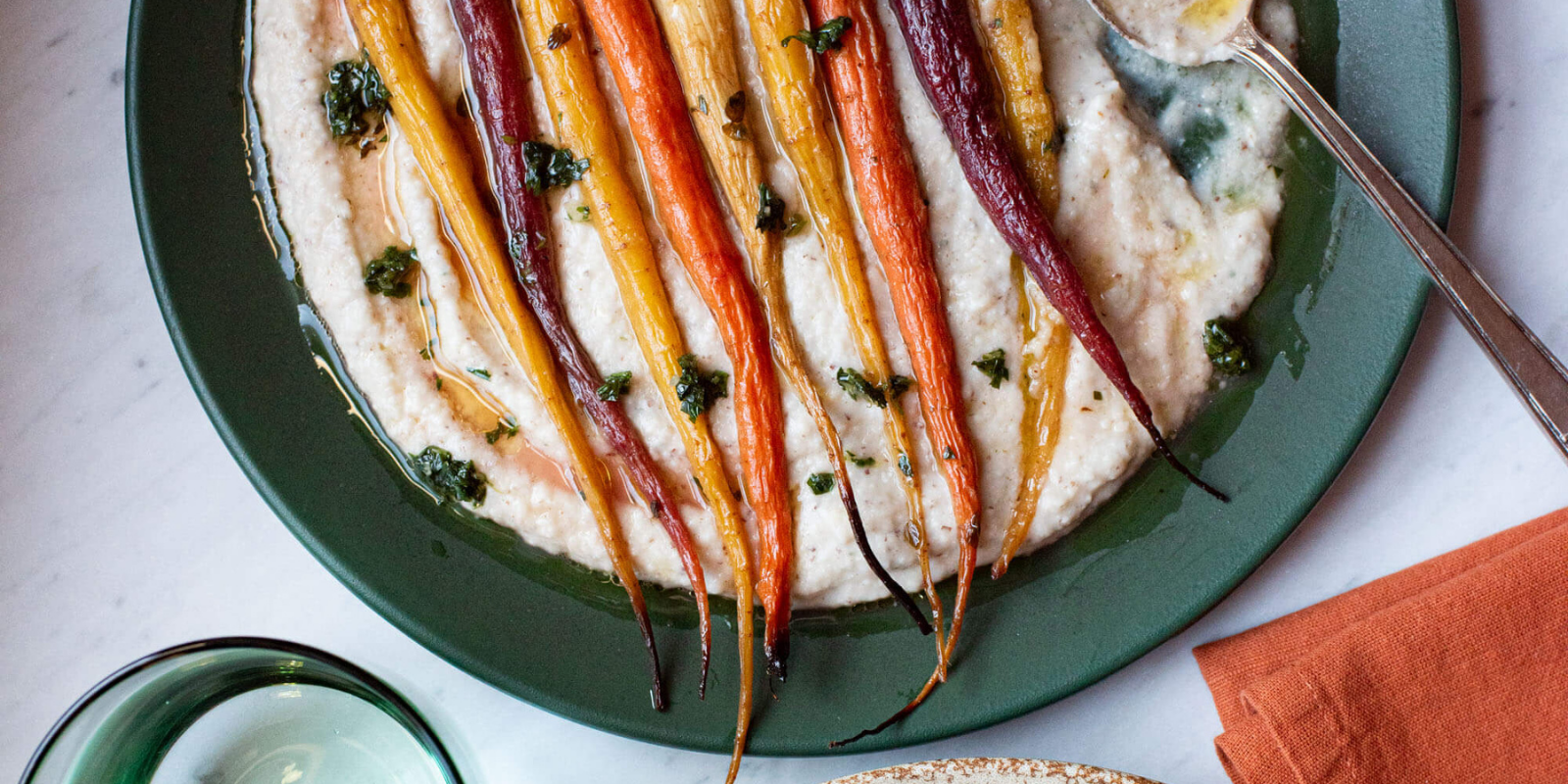
The presentation is beautiful and simple. Spread the Cannellini-hazelnut purée on a serving platter, creating a base. Arrange the roasted carrots on top, they'll be beautifully caramelized and wrinkly. Drizzle with spoonfuls of that delicious sauce from the roasting pan. If using the herby topper, dab it over everything for pops of bright green.
The visual is stunning, creamy pale purée, colorful roasted carrots, glossy glaze, bright green herbs. It looks special and festive, perfect for a holiday table.
Serving Temperature
As Catherine notes, this dish works well warm or at room temperature. This makes it perfect for Thanksgiving when oven space is at a premium and timing is tricky. You can roast the carrots earlier in the day and serve them at room temperature, or make the purée ahead and gently reheat before serving.
The flexibility takes pressure off while still delivering a dish that looks and tastes impressive.
Why It's Perfect for Thanksgiving
This dish solves several Thanksgiving challenges. It's vegetable-forward, making vegetarians happy. It's visually stunning, adding color to the table. It can be made partially ahead, easing timing issues. And it's interesting and special without being weird or unfamiliar, carrots and beans are accessible to everyone.
As Catherine says, it's incredibly flavorful on its own but even better with cranberry sauce, green beans, and rolls. It fits seamlessly into the Thanksgiving spread while offering something a bit different from the usual suspects.
Don't Forget the Bread
Catherine's reminder about crusty bread is important. That Cannellini-hazelnut purée is too good to waste. You'll want bread to swipe up every last bit from the platter. It's as delicious as the most refined hummus or bean dip, and it would be a crime to leave any behind.
For more inspiration from Catherine, check out her Alubia Beans with Rose Harissa and Orange and her Tips for Building a Beautiful Grazing Board.
*A Note On Our Recipes:
Every recipe here was developed and tested using farm-fresh beans from Foodocracy and Primary Beans. Older beans, anything past a year in your pantry or beans from other sources may need more coaxing. Give them a soak and add extra cooking time, and they'll get there eventually.

Related Recipes



The Heirloom Bean + Grain club
Learn More
Get impossible to find beans and grains shipped direct to your doorstep each month from small family farms.


Support small family farms
Shop Now
We support small, family owned farms across the nation. Did you know that farmers only make an average of 10 cents on every dollar you spend at the supermarket? Working directly with farms and not middle men ensures that more money goes back to the people actually growning your food.
Roasted Carrots Over Cannellini And Hazelnut Purée
American
Side Dish
If you're looking for the final puzzle piece for your Thanksgiving spread, this festive recipe from Catherine Owens of@countercollaborativeis for you!
"Yes, you could cook the carrots significantly faster at a higher temperature, but the key to getting the most delicious result is to cook them low and slow so that the natural sugars have time to caramelize. They're worth the wait!" – Catherine Owens
Featured bean: Cannellini
Other beans to try: Alubia

Ingredients
Carrots and purée
- 1½ cup dried Cannellini beans
- 3 cloves garlic, 2 sprigs rosemary, glug of olive oil, salt & pepper (for flavoring beans)
- ½ cup raw hazelnuts
- 1 tsp finely minced rosemary
- 2 cloves of garlic
- 4 tbsp olive oil + ¼ cup olive oil
- 3 bunches thin rainbow carrots (tops removed and saved for optional herby topper)
- ½ cup lemon juice
- 1½ tbsp maple syrup
- 5 sprigs fresh thyme, leaves picked
- Salt and freshly ground pepper
Herby topper (optional)
- 1 cup packed carrot fronds (discard any fibrous stems)
- 2 tbsp packed tarragon (leaves only)
- Zest from 1 lemon (microplaned)
- 1 clove garlic
- 1 tbsp olive oil
- Salt to taste
Directions
Cook the beans: Cook beans via the Primary Beans Bean Cooking Guide using your preferred method. Once cooked, remove rosemary sprigs, strain, and reserve broth.
Make the purée: Add strained beans to the food processor along with hazelnuts, minced rosemary, 2 cloves garlic, and 4 tbsp olive oil. While the food processor is running, add reserved broth ¼ cup at a time until desired consistency is achieved, about 1¼ cups in total. (The purée will thicken as it cools, so let it sit for a bit before discarding excess broth.) Salt liberally to taste.
Roast the carrots: Preheat the oven to 300 degrees F. Scrub carrots (do not peel) and place in a walled, oven-safe dish where they can lay flat lengthwise but are a bit cramped width-wise. Whisk together lemon juice, maple syrup, thyme leaves, and remaining ¼ cup olive oil, and season with salt and pepper. Pour over carrots, making sure they all get coated. Place, uncovered, in the oven and roast until carrots are wrinkly and soft but still maintain a soft bite, basting carrots in the sauce every 25 minutes or so. Total cook time should be 45 to 90 minutes, depending on the thickness of the carrots.
Make the optional herby topper: Mince carrot fronds, tarragon, and garlic. Stir together with lemon zest and olive oil, and salt to taste.
Assemble and serve: Spread a base of Cannellini-hazelnut purée on a serving plate (this is a good time to double check that the consistency and seasoning of your purée are as you'd like them), place carrots on top, and drizzle with spoonfuls of sauce from the pan. Dab with optional herb topper if desired. This dish works well warm or at room temperature.