


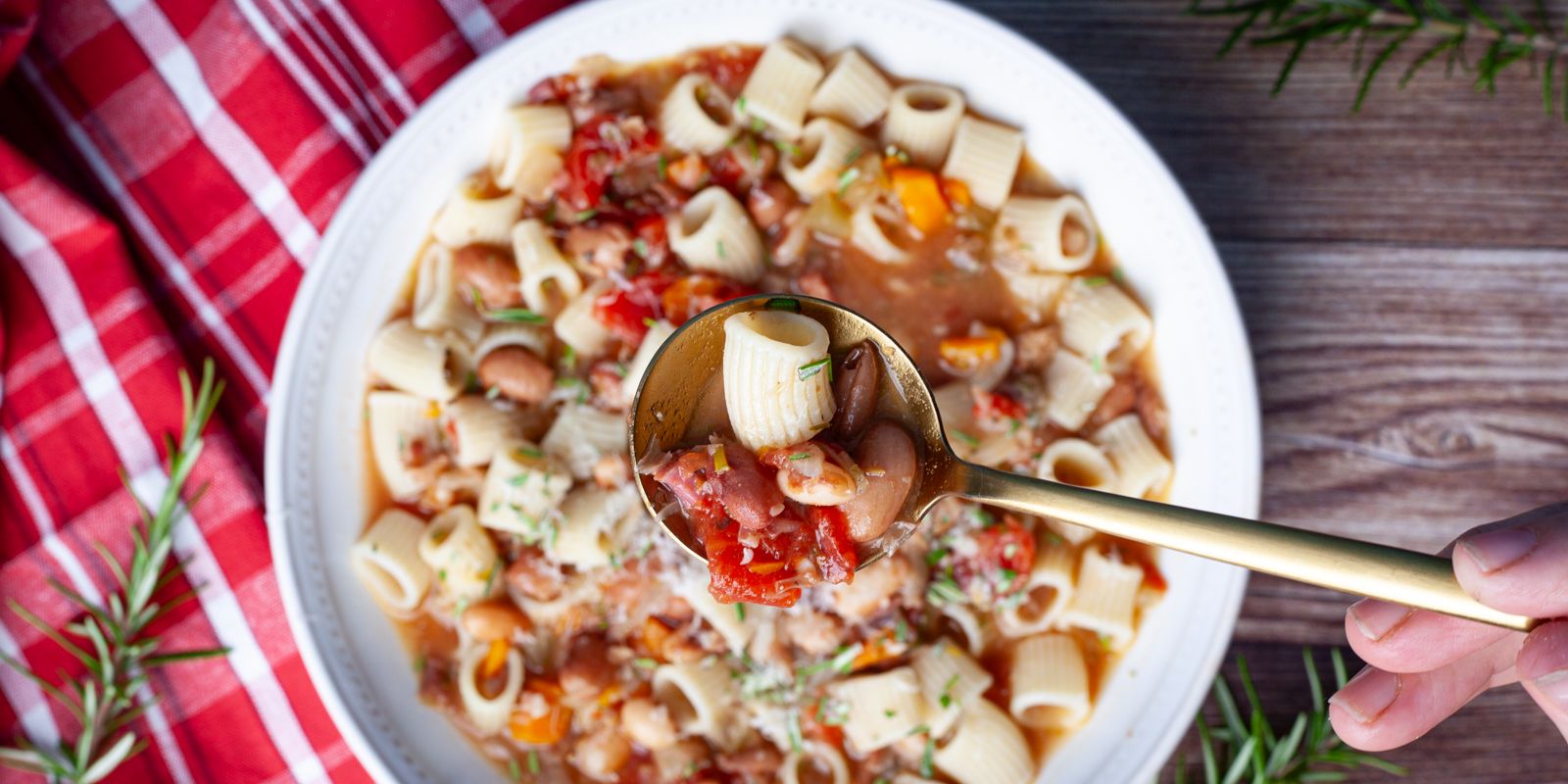

Pasta e fagioli
With as many variations as there are bean varieties, this Italian favorite is the perfect way to show off brothy beans in all their glory. My husband is obsessed with this soup, so I spent a lot of time researching what makes an authentic pasta e fagioli. Turns out, the key difference between this and minestrone is the rosemary. While you'll find tons of variations out there, pancetta and rosemary show up consistently in the traditional versions. This is the kind of simple, soul-warming Italian food that makes you understand why nonna's cooking is legendary.
Pasta e fagioli is one of the cornerstones of cucina povera, the "poor kitchen" or peasant cooking that fed Italian families working in the fields for centuries. The name translates litteraly to "pasta and beans," you don't get a lot more basic than that. What Italian peasants created out of necessity with just beans, pasta, and whatever vegetables they had on hand has become one of Italy's most beloved dishes. These days you'll find pasta e fagioli on fancy restaurant menus, but the soul of the dish remains the same: it's about transforming humble ingredients into something deeply satisfying. At the heart of a great pasta e fagioli is the cranberry bean (called borlotti in Italy), those gorgeous speckled beauties that Italian cooks have relied on for generations.
Why Doudlah Regeneratively Grown Cranberry Beans Are Everything

Here's the thing about cranberry beans: they're not all created equal. The Doudlah regeneratively grown cranberry beans we sell cook up faster than any cranberry beans we've ever tested. And I mean significantly faster. But speed is just the beginning.
These beans get incredibly creamy while still holding their shape. The texture is just ridiculous. But what really blew my mind is the broth they create. It's thick and luxurious, almost velvety, and deeply flavorful. This is the kind of bean broth that makes pasta e fagioli sing. It's the difference between a good soup and one you'll be thinking about all week.
A Word About The Pasta

Traditionally you cook the pasta right in the bean broth, which does flavor it beautifully. But here's the problem: if you're not eating the soup immediately, the pasta will continue to soak up all that gorgeous broth and get soft and mushy, like something out of a can.
To avoid this, cook your pasta separately and add it to each bowl just before serving to warm it up. This way leftovers actually stay good instead of turning into pasta mush. We're in love with the artisanal ditalini from Etto for this soup. It's got the perfect texture and that slightly rough surface that catches the broth just right.

Related Recipes



The Heirloom Bean + Grain club
Learn More
Get impossible to find beans and grains shipped direct to your doorstep each month from small family farms.


Support small family farms
Shop Now
We support small, family owned farms across the nation. Did you know that farmers only make an average of 10 cents on every dollar you spend at the supermarket? Working directly with farms and not middle men ensures that more money goes back to the people actually growning your food.
PASTA E FAGIOLI
Lisa Riznikove
Italian
Soup
This beloved Italian classic is a testament to the country's artful simplicity in the kitchen.

Ingredients
- 4 oz. pancetta (optional but recommended)
- 1-2 tablespoons olive oil
- 1/4 cup carrot chopped
- 1/4 cup celery chopped
- 1 yellow (white) onion chopped
- 4 garlic cloves minced
- 1 tablespoon finely chopped rosemary
1 parmesan rind
- 2 bay leaves
- generous amounts of freshly ground pepper
- 1 teaspoon kosher salt plus more to taste
- 1 cup dry cranberry beans
6 cups water
- 4-5 whole san marzano tomatoes peeled (from a can) roughly chopped
1 ½ cups pasta (ditalini is the most common, but any small shape will work)
Directions
Add the pancetta to the bottom of a dutch oven or heavy pot and saute until slightly brown on the edges.
- Drizzle a tablespoon of olive oin in the pan and add the garlic, carrot, celery onion and rosemary.
- Saute until the onions are translucent. add salt and pepper, water and well rinsed dry beans.
- Add the water, add another tablespoon of olive oil, bay leaves and parmesan rind. Bring to a boil and then reduce to a simmer for 1- 1.5 hours until the beans are tender and creamy.
- Remove the parmesan rind and bay leaves. Add the tomatoes and the pasta. Cook for 6-8 minutes until the pasta is al dente. Taste and adjust seasoning.
- Top bowls with grated parmesan and a sprinkle of chopped rosemary and serve.