


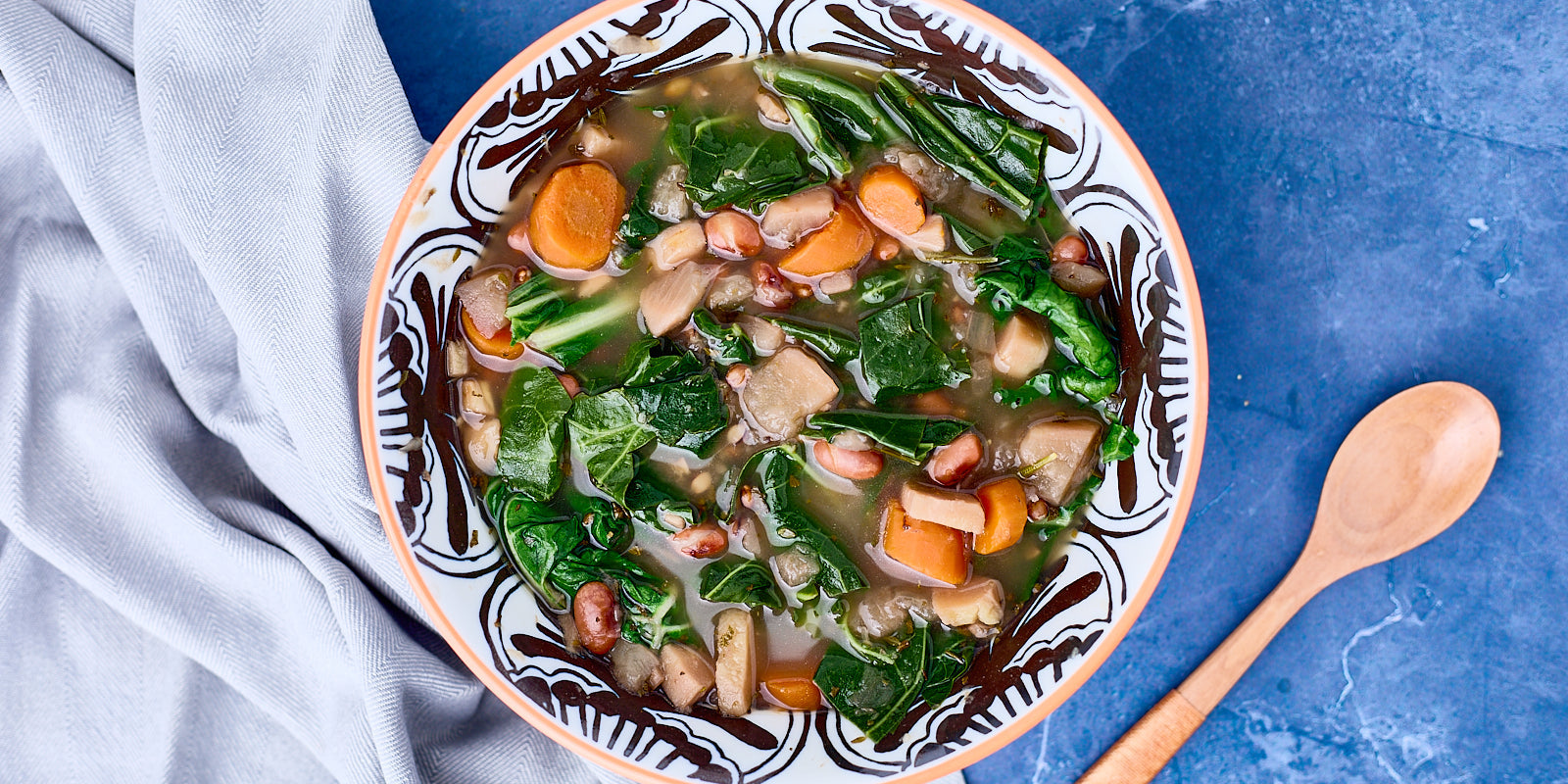

Winter Bean and Vegetable Detox Soup
If your New Year's wellness goals include eating more fiber, supporting your gut health, or reducing inflammation, this one-pot wonder checks every single box. This isn't some sad January deprivation soup – this is a deeply satisfying bowl packed with earthy root vegetables, creamy Bayo beans, nutty purple barley, and dark leafy greens that actually tastes like something you'd want to eat all winter long.
The secret? Every ingredient in this pot is working overtime to support your health goals without you having to think about it. You're not just eating "clean" or "detoxing" in some vague wellness-speak way. You're flooding your body with exactly what it needs: fiber to feed your microbiome, antioxidants to fight inflammation, and minerals to support every system in your body.

Why This Soup Hits All Your Wellness Goals
The Fiber Powerhouse Effect
Let's talk about fiber, because this soup is absolutely loaded with it. Between the beans, barley, and greens, you're getting both soluble and insoluble fiber in one bowl – the kind of fiber diversity your gut microbiome actually craves.
Bayo beans alone deliver about 15 grams of fiber per cup when cooked. Add in the purple barley (another 6 grams per serving), plus all those root vegetables and leafy greens, and you're looking at a serious fiber feast. This is the kind of eating that supports healthy digestion, keeps you satisfied for hours, and feeds the beneficial bacteria in your gut that do everything from producing vitamins to regulating your immune system.
This is what we like to call "fibermaxxing" done right – not through processed fiber supplements or weird powders, but through whole, unprocessed plant foods the way humans have been eating them for thousands of years.
Microbiome Support Built In
Your gut microbiome thrives on diversity, and this soup delivers it in spades. The prebiotic fiber from the beans, barley, and root vegetables feeds your beneficial gut bacteria, while the kombu (seaweed) adds minerals and compounds that support digestive health.
Here's something most people don't know: the kombu isn't just flavoring. The glutamates in kombu enhance the flavor of everything in the pot (kind of like nature's MSG), but more importantly, the amino acids help soften the beans' outer skin, making them more digestible. This is ancient food wisdom meeting modern gut health science.
Anti-Inflammatory Eating, Naturally
When you eat this way – whole foods, fiber-rich, plant-forward – you're naturally eating an anti-inflammatory diet. The colorful root vegetables are loaded with antioxidants, the leafy greens provide vitamins and minerals that support your body's natural anti-inflammatory processes, and the beans deliver plant protein without the inflammatory compounds found in many processed foods.
This is food that reduces inflammation not because it's eliminating everything (the deprivation approach), but because it's including exactly what your body needs to function optimally.
Meet Your Ingredients (And Why They Matter)
Bayo Beans + Purple Barley: The Soluble Fiber Power Duo
This soup's real magic happens when you combine Bayo beans with purple barley – two of the best sources of soluble fiber you can eat. Together, they create a detoxifying powerhouse that actually works with your body's natural systems.

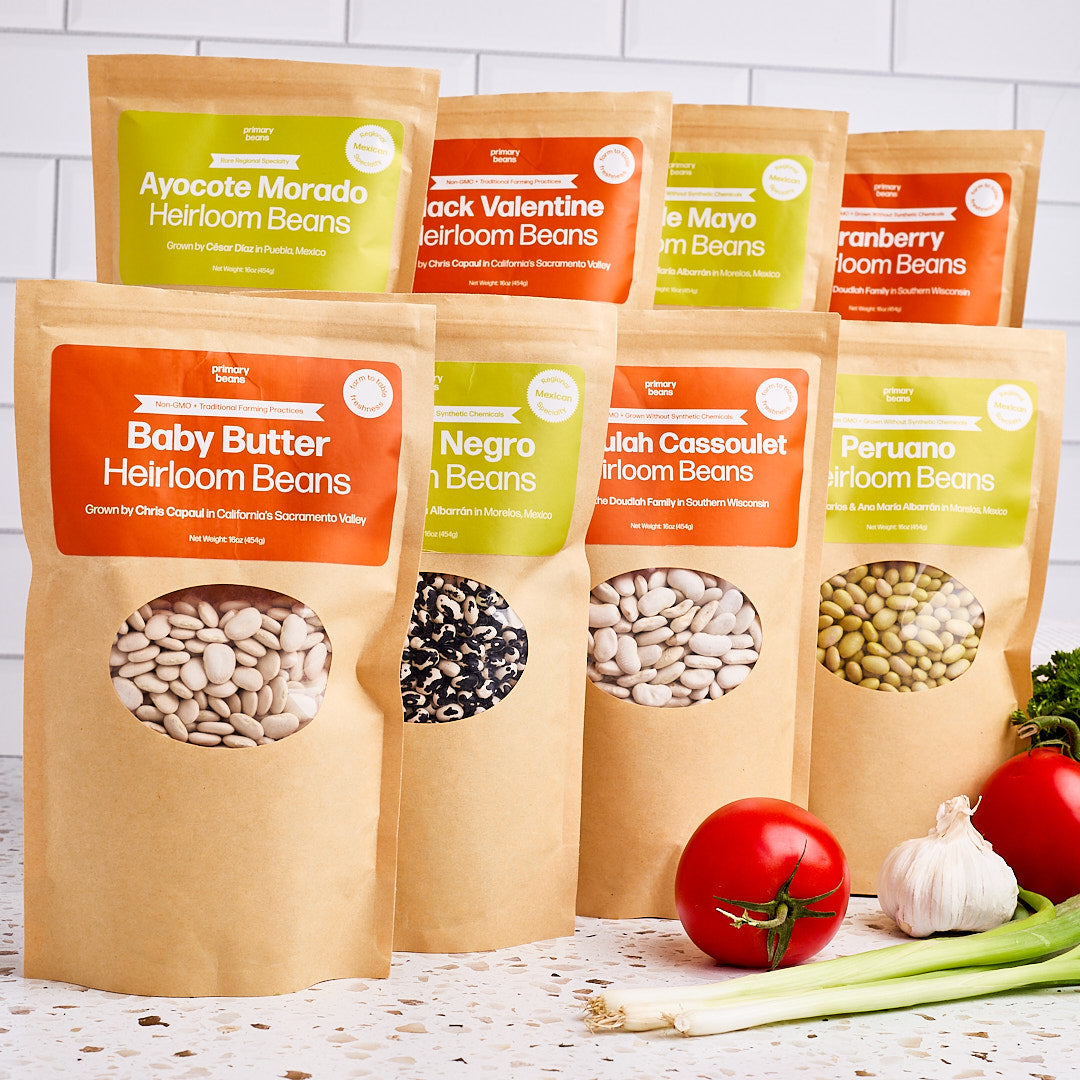
I chose Bayo beans for this soup for two specific reasons: their incredible creamy texture that holds its shape in soup, and their subtle bacony, savory flavor that makes this taste rich and satisfying without any meat. These heirloom beans from organic family farms have a depth of flavor you simply won't find in conventional beans plus you know they were never treated with glyphosate or dangerous chemicals. They're packed with fiber, plant-based protein, iron, and folate, and they're naturally low-glycemic, meaning they help stabilize blood sugar rather than spiking it.
Purple barley is an ancient, unhulled grain that retains all its nutrients in the outer layers – including anthocyanins, the same antioxidant compounds that make blueberries blue. It has a nutty, slightly sweet flavor and a wonderfully chewy texture that makes this soup more substantial. Barley is one of the best sources of beta-glucan, a type of soluble fiber that's been extensively studied for its ability to support heart health and healthy cholesterol levels.
But here's where this duo really earns its "detox" credentials: that soluble fiber from both the beans and barley doesn't just feed your microbiome – it actually helps remove microplastics from your system. The soluble fiber binds to microplastic particles in your digestive tract and helps escort them out of your body. Meanwhile, the anthocyanins in purple barley provide additional antioxidant protection against oxidative stress from environmental toxins.
This is real detoxification, not marketing hype. When you eat fiber-rich foods like beans and barley regularly, you're supporting your body's natural ability to eliminate environmental toxins we're all exposed to daily. Combined with the beans, you're also getting a complete protein and a serious fiber boost. [Learn more about how beans protect you from microplastics here](link to microplastics blog post).

Root Vegetables: Winter's Nutrient Density
Carrots, parsnips, and turnips (or rutabaga) aren't just filler vegetables. These root vegetables are concentrated sources of vitamins, minerals, and fiber. And here's a pro tip: scrub them well instead of peeling them. The peel is where much of the fiber and nutrients live.
Parsnips deliver folate and vitamin C. Carrots provide beta-carotene (that orange color is pure antioxidant power). Turnips or rutabaga add vitamin C and glucosinolates – compounds that support your body's natural detoxification processes. This is what real detox looks like: giving your body the nutrients it needs to do its job.
Kombu: The Secret Weapon
Kombu is a strip of dried kelp (seaweed), and it's your secret weapon for both flavor and nutrition. The glutamates enhance the umami taste of everything in the pot, while the minerals – iodine, calcium, magnesium, iron – add serious nutrient density.
But here's the real magic: kombu makes beans more digestible. The amino acids help break down the complex sugars that can cause gas, while adding trace minerals that support thyroid function and overall cellular health. Don't skip this ingredient.
Dark Leafy Greens: Last-Minute Nutrition Boost
Collards and chard (or any dark leafy green you have) add the final layer of nutrition. They're loaded with vitamins A, C, and K, plus minerals like calcium and iron. Adding them at the end preserves their nutrients and keeps their color vibrant.
I specifically chose collards and chard over kale for this recipe because they're actually more nutrient-dense. While kale gets all the press, collards rank significantly higher on nutrient density scales, and chard brings beautiful color along with impressive mineral content. The combination of cooking the collards briefly and just wilting the chard means you get the best of both worlds – some greens broken down for easier digestion, and some still fresh and nutrient-dense.
Want to take this soup to the next level? If you can find fresh watercress, throw a handful on top just before serving. Watercress ranks #1 in nutrient density among all fruits and vegetables, scoring a perfect 100 on the CDC's Powerhouse Fruits and Vegetables list. It adds an intense peppery bite that cuts through the richness of the beans and barley beautifully. This isn't just garnish – it's a genuine nutrition upgrade.
Why This Works for Your Whole Year
Here's the thing about New Year's wellness goals: they only work if you actually want to keep eating this way after January. This soup isn't punishment food or deprivation. It's deeply nourishing, genuinely delicious, and works with your body instead of against it.
The fiber feeds your microbiome. The nutrients support your immune system. The anti-inflammatory compounds help your body do what it does best. And most importantly, it tastes good enough that you'll actually make it again in February, March, and every cold month after that.
This is what sustainable wellness looks like – not restriction, not elimination, not suffering through sad salads. Just real, whole, properly prepared plant foods that have been nourishing humans for generations.
Now go make a big pot, freeze half of it, and thank yourself every time you pull out a container for an easy, nourishing lunch.
*A Note On Our Recipes:
Every recipe here was developed and tested using farm-fresh beans from Foodocracy and Primary Beans. Older beans, anything past a year in your pantry or beans from other sources may need more coaxing. Give them a soak and add extra cooking time, and they'll get there eventually.

Related Recipes


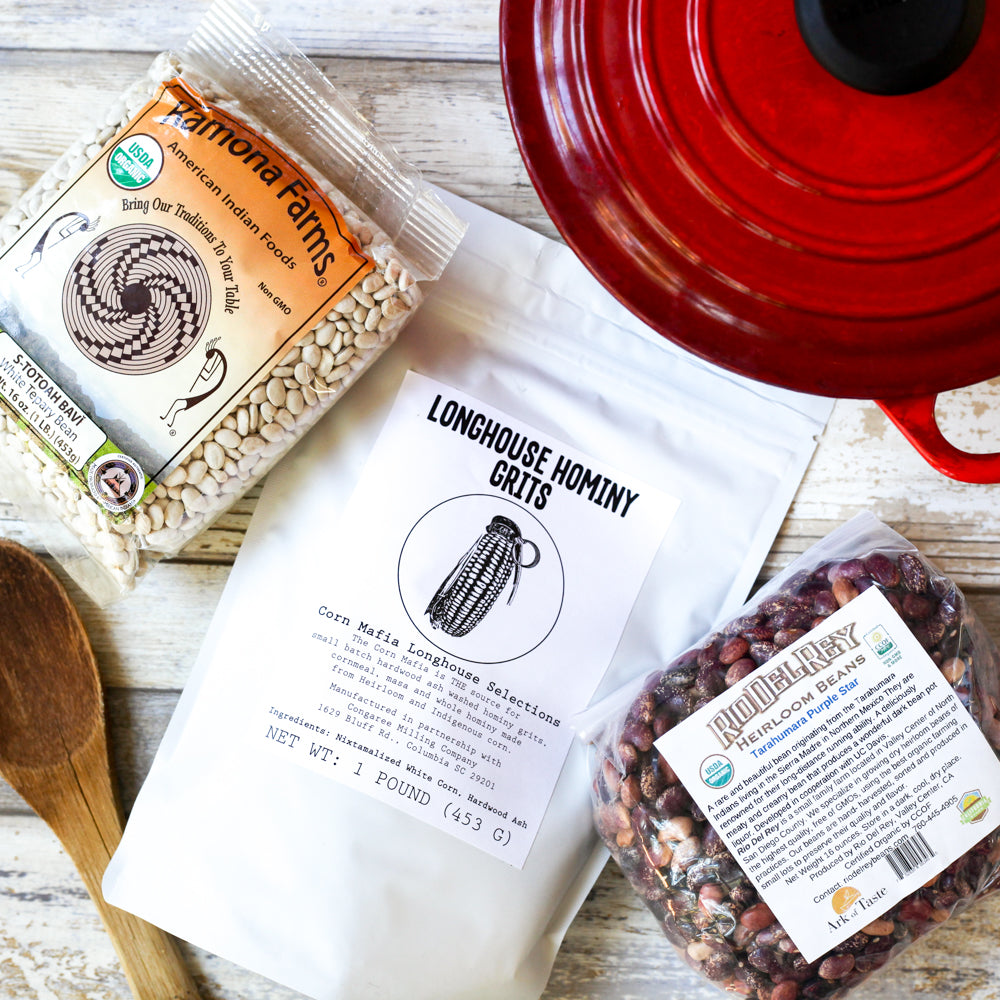

The Heirloom Bean + Grain club
Learn More
Get impossible to find beans and grains shipped direct to your doorstep each month from small family farms.


Support small family farms
Shop Now
We support small, family owned farms across the nation. Did you know that farmers only make an average of 10 cents on every dollar you spend at the supermarket? Working directly with farms and not middle men ensures that more money goes back to the people actually growning your food.
Winter Bean and Vegetable Detox Soup
Lisa Riznikove
Soup
This fiber-rich Winter Bean and Vegetable Detox Soup features creamy Bayo beans, purple barley, and root vegetables for gut health and anti-inflammatory nutrition.

Ingredients
- 1½ cups purple barley, rinsed and drained
- 1 cup dry Bayo beans, rinsed and picked through
- 1 medium onion, minced
- 4-6 cloves garlic, chopped
- 2 tablespoons olive oil
- 1 cup chopped carrots (about 1 large carrot)
- 1 chopped parsnip
- 1 cup cubed turnip or rutabaga (1 small)
- 1 teaspoon dried oregano
- 2 sprigs fresh thyme
- 1 sprig fresh rosemary
- 1 (4-inch) strip kombu
- 2 bay leaves
- 1 tablespoon salt
- Plenty of freshly ground black pepper
- 5 cups water
- 2 cups chopped collard greens (rinsed, stemmed, and chopped)
- 2 cups chopped chard (rinsed, stemmed, and chopped)
Directions
Instant Pot Directions
Sauté the aromatics: Turn your Instant Pot to sauté mode and drizzle in the olive oil. Add the minced onion and chopped garlic and cook for 3-4 minutes until soft and fragrant.
Add everything else: Add the carrots, parsnips, turnip, Bayo beans, purple barley, oregano, thyme, rosemary, kombu, bay leaves, salt, pepper, and water. Stir everything together.
Pressure cook: Close the lid and set the valve to sealing. Cook on high pressure for 35 minutes. When the timer goes off, allow the pressure to release naturally (this takes about 15 minutes and helps the beans finish cooking perfectly).
Finish with greens: Remove the bay leaves and herb stems. Pull out the kombu, chop it up, and return it to the pot. Turn the Instant Pot back to sauté mode. Add the collard greens, cover with the lid (no need to seal), and let them wilt for about 5 minutes. Turn off the Instant Pot, stir in the chard, and let it just wilt in the residual heat. Taste and adjust salt and pepper.
Stovetop Method:
In a large, heavy-bottomed pot, heat the olive oil over medium heat. Sauté the onion and garlic until soft, about 5 minutes.
Add all the vegetables, beans, barley, herbs, kombu, bay leaves, salt, pepper, and water. Bring to a boil, then reduce to a simmer.
Cover and simmer for 60-90 minutes, checking occasionally to make sure there's enough liquid. The beans and barley should be tender.
Remove the bay leaves and herb stems. Remove the kombu, chop it, and return it to the pot. Stir in the collard greens and let them cook for 5 minutes until tender. Turn off the heat and stir in the chard to just wilt it.