



No-Fail Refried Beans
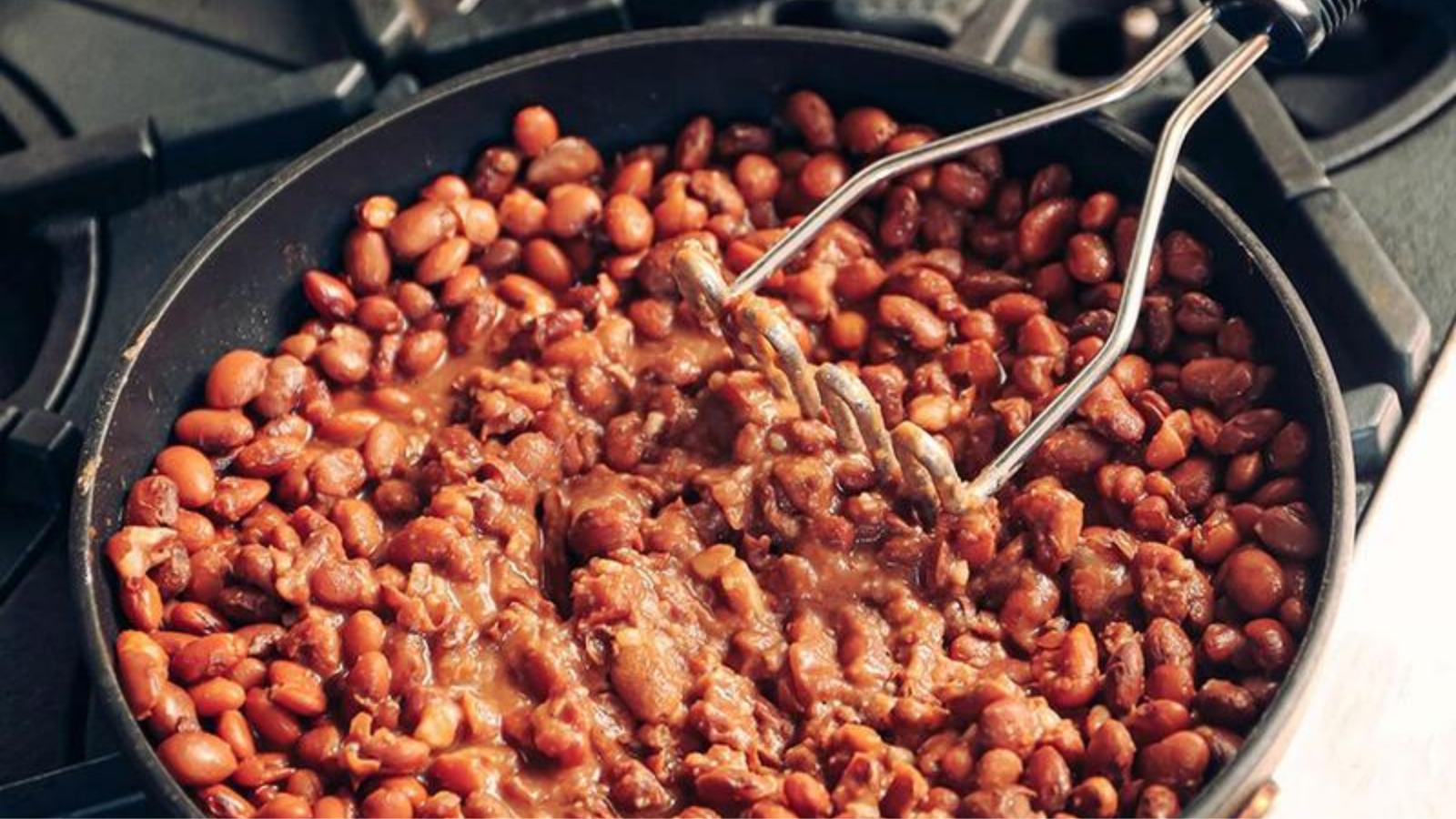
Once you've made a pot of beans using our guide, you've allllmost made refried beans. All you need is a little more fat to fry everything up. If you can find quality, pasture-raised lard, use it for the best flavor. Then, the magic comes during the mashing process, performed right in the skillet, adding just enough bean broth so that the consistency is velvety. We LOVE refried beans and all that they offer. Smear them, slather them, use them as stuffing, or devour them by the forkful.
Why This Recipe Works
The beauty of refried beans is in their simplicity and versatility. You're taking perfectly cooked beans and transforming them through technique, frying in fat, mashing to the right consistency, developing flavor through caramelization. The result is something creamy, rich, and endlessly useful.
What makes this recipe "no-fail" is the approach: generous fat, hot skillet, proper mashing technique, and using the bean broth to adjust consistency. Follow these principles and you'll get velvety, delicious refried beans every time.
The Star: Bayo Beans

Let's talk about Bayo beans, beautiful tan beans that make the richest, most flavorful refried beans. These beans are firm on the outside and creamy on the inside, and when mashed, they create that perfect velvety texture you want. The full-bodied, golden broth they produce is unlike anything else, it's what gives refried beans their distinctive richness.
What makes Bayo beans ideal for refried beans is how they break down when mashed. They become creamy without getting gluey or pasty. Their rich flavor means the refried beans taste deeply satisfying even with minimal seasoning. And that golden broth they produce? It's liquid gold for adjusting consistency and adding flavor.
Our Bayo beans come from Carlos and Ana María Albarrán's certified organic small family farm in the heart of Morelos, Mexico. Their farm has lovingly preserved these precious seeds for generations using time-honored traditional farming methods. These gems are grown using the ancient Milpas technique, where corn, squash, beans, and chiles flourish together in perfect harmony. Learn more about Carlos and Ana María.
The Fat Matters
Quality fat is essential to great refried beans. Lard, especially pasture-raised lard, is traditional and creates the most authentic, delicious flavor. It has a subtle pork flavor and richness that's hard to beat. As it heats in the skillet, it starts to turn golden, which is exactly what you want.
If you can't find or don't want to use lard, neutral oil works fine. Or use a combination, some lard for flavor, some oil to round it out. You need about a quarter cup of fat for every 4 cups of beans. This might seem like a lot, but it's what creates that rich, unctuous quality that makes refried beans special.
The Technique
The technique is straightforward but important. You heat the fat in a large cast-iron or heavy-bottomed skillet until very hot. If using lard, it will start to turn golden, don't be afraid of this, it's developing flavor.
Diced onions go in and cook until they begin to brown around the edges. This caramelization adds sweetness and depth. If using a fresh or dried chile for heat, add it with the onions.
Then the beans go in with some of their broth, about 1 cup for every 4 cups of beans. Everything simmers for a few minutes, allowing the beans to heat through and the flavors to meld.
The Mashing
This is where the magic happens. Using a wire masher (potato masher), you mash the beans right in the hot skillet. You're not just breaking them down, you're working them until they're velvety and smooth. The hot fat and bean broth emulsify with the mashed beans, creating that creamy, luscious texture.
Keep mashing until very smooth, or leave some texture if you prefer. The consistency should be thick and spreadable but not dry or pasty. If it's too thick, add more bean broth. If it's too thin, cook longer to evaporate moisture and thicken.
The Consistency

Getting the right consistency is crucial. Refried beans should be thick enough to hold their shape on a spoon but creamy enough to spread easily. They'll thicken as they cool, so err on the side of slightly looser while they're hot.
The bean broth is your tool for adjustment. Keep it nearby and add splashes as needed while mashing and cooking. That flavorful broth not only adjusts consistency, it reinforces the bean flavor throughout.
Seasoning
The beans should already be well-seasoned from when you cooked them. But taste the refried beans and adjust if needed. They should be properly salted, beans need generous seasoning to really shine. The caramelized onions add sweetness and depth. The optional chile adds heat.
Sometimes simple is best. Well-cooked beans with good fat and proper seasoning don't need much else.
Versatility
As the recipe notes, the options are endless:
- Bean tostadas: Spread on crispy corn tortillas, top with lettuce, cheese, crema, salsa
- Bean burritos: Smear on warm flour tortillas with rice, cheese, and your favorite fillings
- Breakfast tacos: Serve with scrambled eggs, hot sauce, avocado, and warm corn tortillas
- Taco filling: Use as a base layer in tacos before adding meat or vegetables
- Nachos: Spread on chips before adding cheese and toppings
- Bean dip: Serve warm with chips for dipping
- Tortas: Spread on Mexican sandwiches for richness and protein
- By the forkful: Honestly, sometimes the best way
Make-Ahead and Storage
Refried beans keep beautifully in the fridge for up to a week. They'll thicken considerably as they cool, just reheat gently with a splash of water or broth to loosen them up. Some people swear they're better the next day as the flavors meld.
You can also freeze refried beans in portions for quick weeknight meals. Thaw and reheat with a little liquid to restore the creamy consistency.
A Staple Worth Making
Once you make refried beans from scratch with quality beans and good fat, it's hard to go back to canned. The flavor is so much richer, the texture is better, and you control the consistency and seasoning.
They're not difficult, if you can mash potatoes, you can make refried beans. And they're incredibly useful to have on hand, turning simple ingredients (tortillas, eggs, cheese) into satisfying meals.
The Bayo Difference
While the recipe lists several beans you can use (Mayocoba, Ojo de Cabra, Flor de Junio, Flor de Mayo), Bayo beans really do make the richest, most flavorful refried beans. That golden broth, that creamy texture, that distinctive flavor, it's what refried beans should taste like.
If you've only had refried beans made from pinto beans or from a can, try making them with Bayo beans and good lard. It's a revelation, rich, velvety, deeply satisfying. The kind of refried beans you want to eat by the forkful.
*A Note On Our Recipes:
Every recipe here was developed and tested using farm-fresh beans from Foodocracy and Primary Beans. Older beans, anything past a year in your pantry or beans from other sources may need more coaxing. Give them a soak and add extra cooking time, and they'll get there eventually.

Related Recipes



The Heirloom Bean + Grain club
Learn More
Get impossible to find beans and grains shipped direct to your doorstep each month from small family farms.


Support small family farms
Shop Now
We support small, family owned farms across the nation. Did you know that farmers only make an average of 10 cents on every dollar you spend at the supermarket? Working directly with farms and not middle men ensures that more money goes back to the people actually growning your food.